
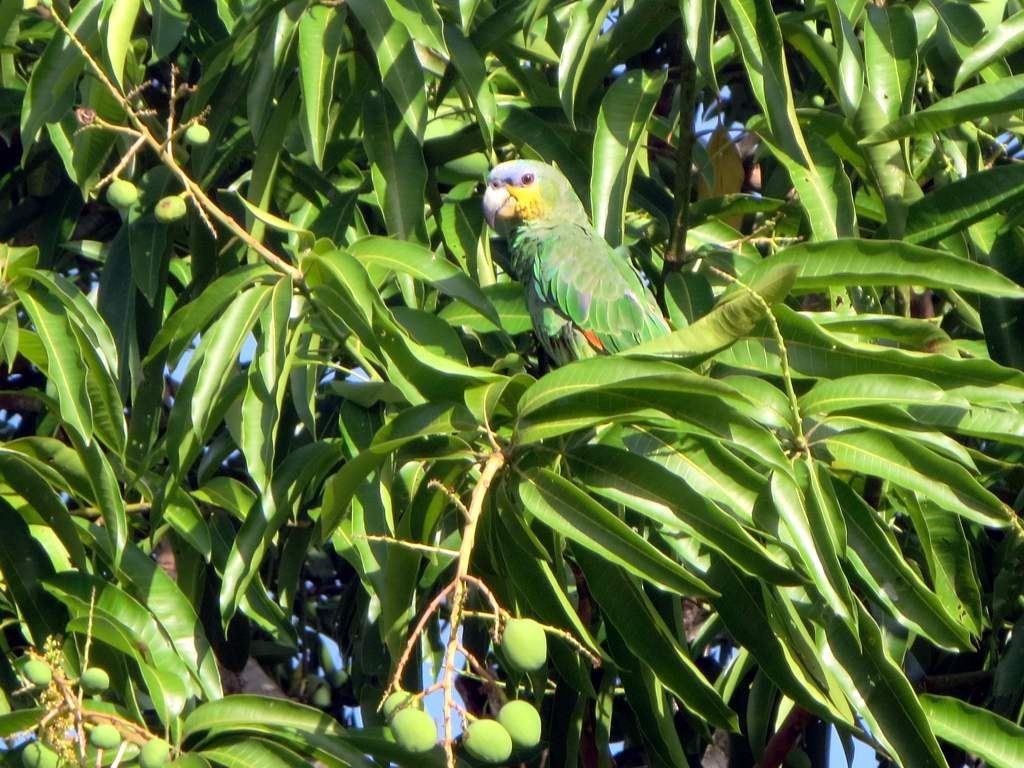
Orange-winged Amazon
Amazona amazonica
A common and widespread Amazon parrot with a blue-and-yellow face and an orange patch visible in the wing during flight.
- Size
- About 33 cm (13 in) long
- Habitat
- Lowland tropical forest, forest edge, savanna, and mangroves across the Amazon Basin and Trinidad
- Type
- parrot
Spotted a bird like this?
Identify any bird from a photo, free.
Overview
The Orange-winged Amazon is a medium-sized, adaptable parrot widely distributed across the Amazon Basin and parts of northern South America, including Trinidad. It is named for the bright orange patch on its secondary flight feathers, most visible when the bird is in flight.
Appearance
- Body: green overall with darker feather edging
- Face: blue around the eyes with yellow on the cheeks and forehead area, giving a multicolored facial pattern
- Wing: orange speculum patch on the secondary flight feathers, plus a small red patch at the bend of the wing
- Crown: often shows a patch of blue
- Bill: pale horn to grayish
- Eyes: orange-red iris with a whitish bare eye-ring
Sexes look alike, and this is one of the smaller and slimmer-bodied Amazon parrots.
How to identify it
Key field marks
- Blue-and-yellow facial pattern around the eyes and cheeks
- Bright orange patch in the wing, most obvious in flight
- Smaller, slimmer build compared to other Amazon parrots
- Common and vocal, often seen in large flocks including near towns and cities
Similar species
- Yellow-crowned Amazon and Blue-fronted Amazon both have a red (not orange) wing patch and different head coloring, with the Blue-fronted showing a blue forehead rather than a blue crown/face wash.
- Mealy Amazon is larger and paler green overall, lacking the blue-and-yellow face pattern.
The orange (rather than red) wing patch combined with the blue-yellow face is the most reliable way to identify this species in flight or at rest.
Habitat & range
Range
The Orange-winged Amazon has an extensive range across northern and central South America, including the Amazon Basin, the Guianas, Venezuela, Colombia, and the island of Trinidad.
Habitat
It is highly adaptable, occurring in lowland tropical forest, forest edge, savanna, mangroves, and disturbed or semi-urban areas, including parks and gardens in some cities within its range.
Movements
The species is generally non-migratory but forms large communal roosts, with birds commuting daily between roosting and feeding sites, sometimes covering considerable distances.
Behavior & voice
Social behavior
Orange-winged Amazons are often seen in pairs or small groups during the day, converging into large, noisy communal roosts of hundreds of birds at dusk, particularly in cities such as Manaus and Georgetown.
Voice
Calls include loud shrieks and squawks, especially around dawn and dusk as flocks move to and from roosts; the species can also mimic sounds.
Feeding
It feeds on fruits, seeds, nuts, blossoms, and palm fruits, foraging both in forest canopy and in more open or disturbed habitats, which contributes to its adaptability and wide distribution.
Nesting and breeding
Pairs nest in tree cavities, often high in large trees, laying a typical clutch of three to four eggs. This species is considered one of the more common and resilient Amazon parrots due to its tolerance of varied and altered habitats.
Frequently asked questions
How do you identify an Orange-winged Amazon?
Look for a blue-and-yellow facial pattern around the eyes and cheeks along with an orange patch in the wing, most visible in flight.
Where is the Orange-winged Amazon found?
It has a wide range across the Amazon Basin and northern South America, including the Guianas, Venezuela, Colombia, and Trinidad, in forest, savanna, and even semi-urban habitats.
Is the Orange-winged Amazon endangered?
No, it is classified as Least Concern due to its wide range, large population, and tolerance of disturbed habitats.
Why do Orange-winged Amazons gather in large flocks at dusk?
They form large communal night roosts, with birds commuting daily between feeding areas and shared roost sites, often creating noisy gatherings at dawn and dusk.
What is the difference between Orange-winged and Yellow-crowned Amazons?
The Orange-winged Amazon has an orange (not red) wing patch and a blue-and-yellow face, while the Yellow-crowned Amazon has a red wing patch and a simple yellow crown patch without the blue facial wash.
Orange-winged Amazon guides
In-depth guides for identifying, finding, and understanding Orange-winged Amazon.
Other birds you may enjoy
Eclectus Parrot
35-42 cm (14-16.5 in) long
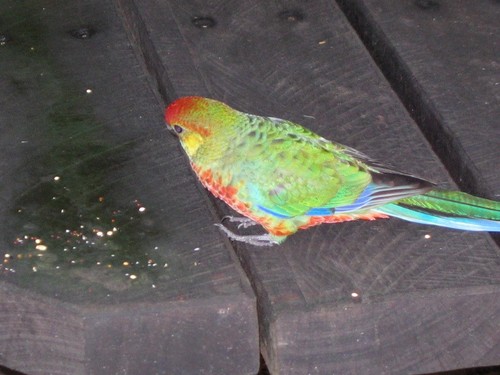
Western Rosella
25-30 cm (10-12 in) long
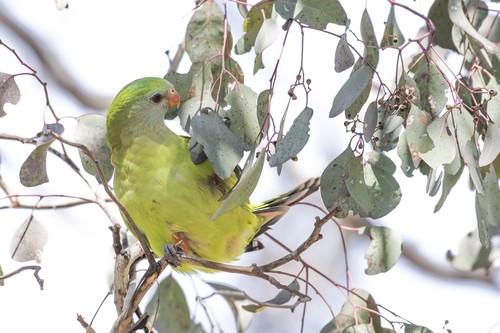
Superb Parrot
About 40 cm (16 in) long including a long tail
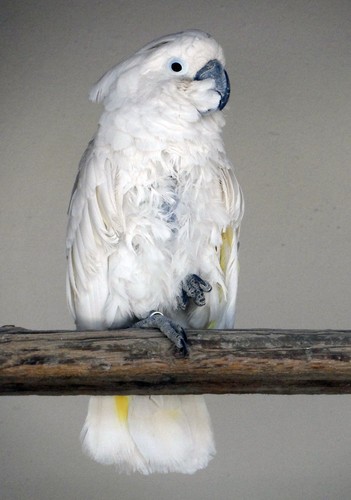
Umbrella Cockatoo
About 46 cm (18 in) long
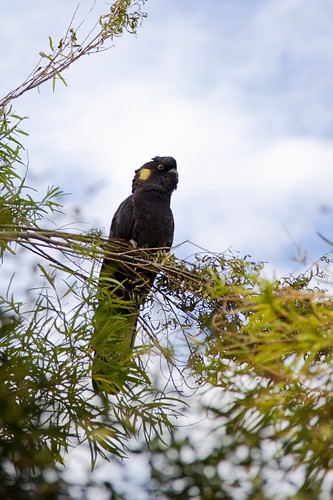
Yellow-tailed Black Cockatoo
55-65 cm long; wingspan up to about 130 cm
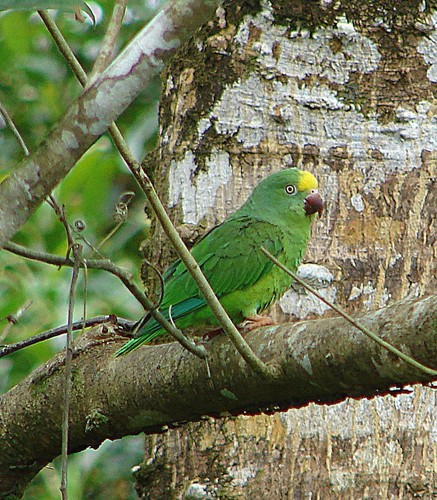
Yellow-crowned Amazon
About 35-38 cm (14-15 in) long
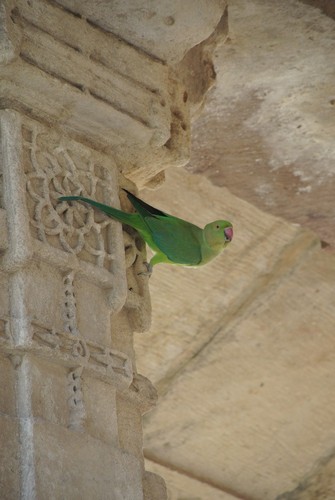
Rose-ringed Parakeet
40 cm (16 in) long including long tail
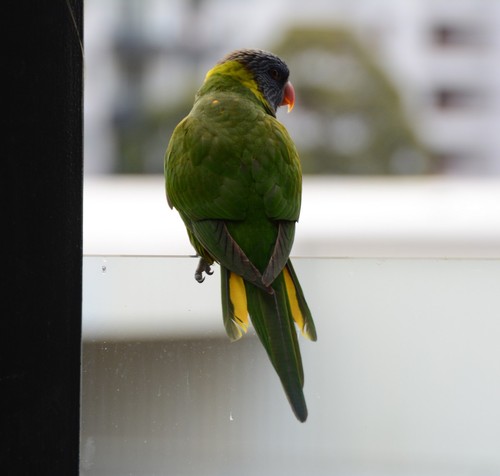
Rainbow Lorikeet
25-30 cm (10-12 in) long
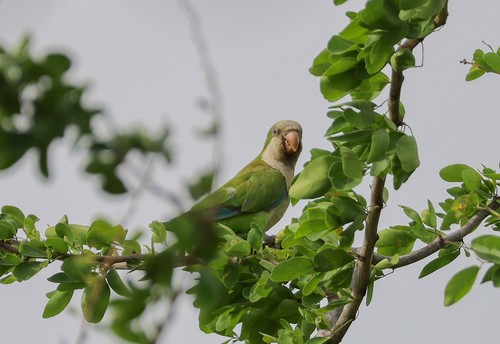
Quaker Parrot
28-31 cm (11-12 in) long
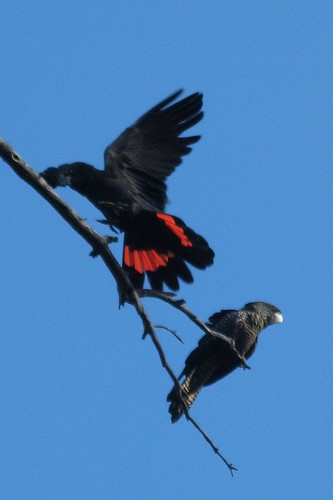
Red-tailed Black Cockatoo
55-65 cm long
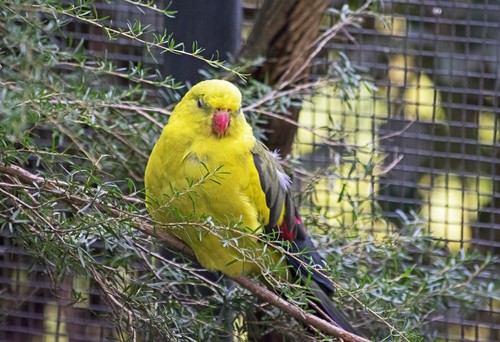
Regent Parrot
37-42 cm (15-17 in) long, including a long tail
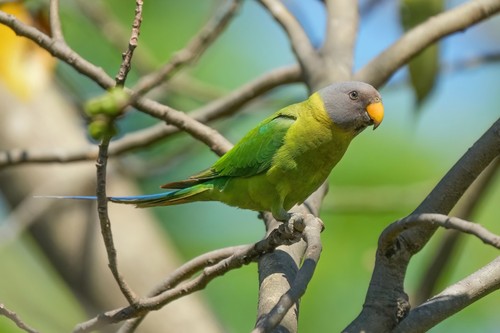
Plum-headed Parakeet
33 cm (13 in) long including tail