
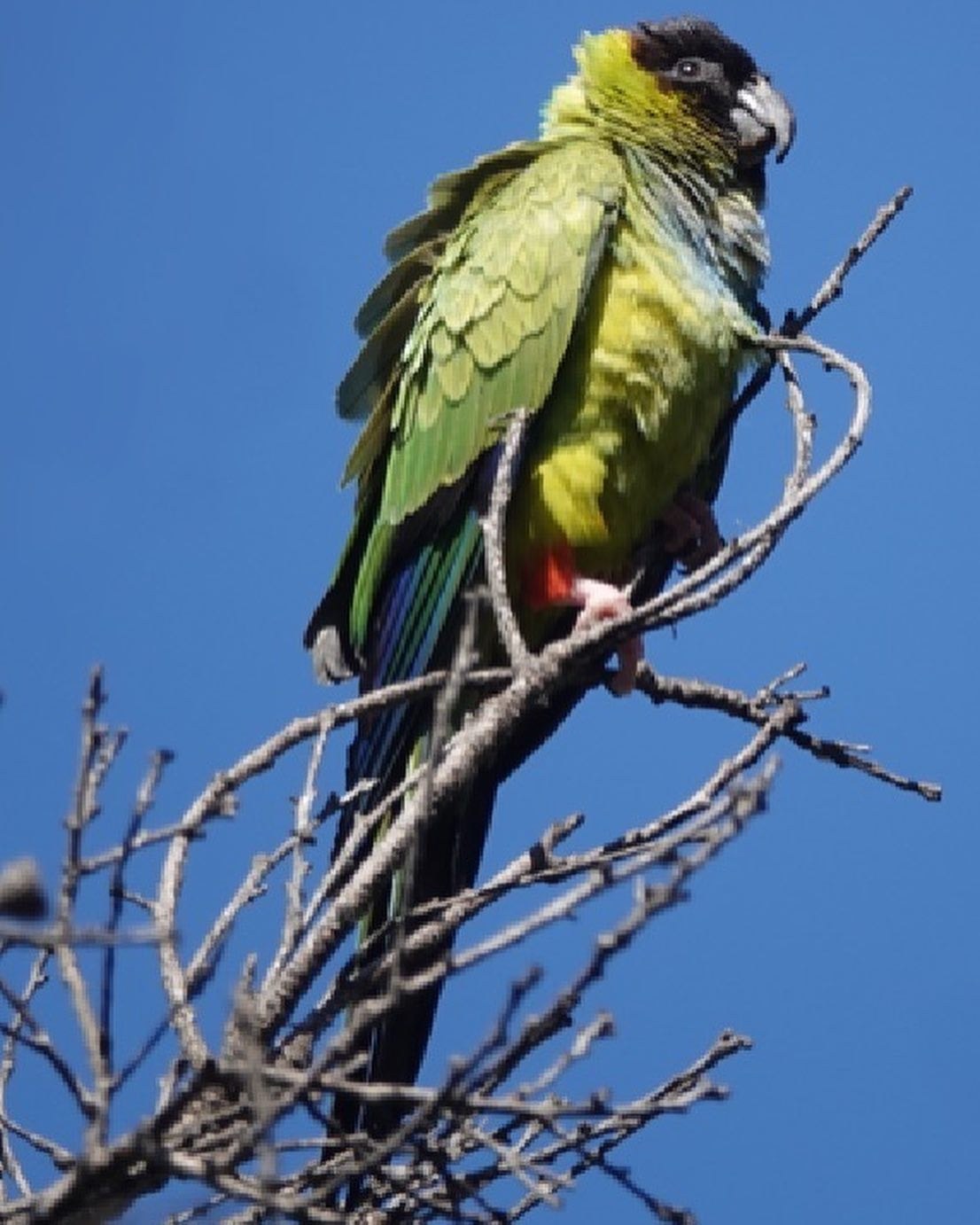
Nanday Conure
Aratinga nenday
A green South American parakeet with a striking black head 'hood', blue-washed wings, and red thighs.
- Size
- About 30 cm long
- Habitat
- Palm savanna, marshland edges, and cultivated farmland in South America
- Type
- parrot
Spotted a bird like this?
Identify any bird from a photo, free.
Overview
The Nanday Conure, also called the Black-hooded Parakeet, is a medium-sized, mostly green parakeet with a bold, glossy black hood covering the entire head and throat, sharply set off against the green body. Blue tinges the flight feathers and lower breast, and the thighs show a small patch of red.
Appearance
- Solid black feathering covering the head, forehead, and throat, forming a distinct hood
- Bright green body, back, and wings
- Blue-tinged primaries and a blue wash across the breast
- Small red patch on the thighs, often the last field mark noticed
- Long, tapered green tail
How to identify it
Key field marks
- Complete black hood covering the whole head, unlike any partial crown patch
- Green body with a blue-washed breast and blue flight feathers
- Small but diagnostic red thigh patch
Similar species
The Blue-crowned Conure shows blue restricted to the forehead/crown rather than a full black hood. Mitred and other Aratinga parakeets with head color typically show red, not black. No other common conure combines an all-black head with a green body and red thighs, making the Nanday Conure distinctive.
Habitat & range
Range
Native to south-central South America, including Bolivia, Paraguay, western Brazil, northern Argentina, and Uruguay; feral populations have also established in parts of Florida and California in the United States.
Habitat
Inhabits open palm savanna, marsh edges, gallery woodland, and agricultural land, favoring open country over dense forest; generally non-migratory within its native range.
Behavior & voice
Behavior
Highly gregarious, typically found in noisy flocks that forage and roost communally, sometimes gathering in the hundreds at favored roost sites.
Voice
Gives loud, harsh, repeated screeching and chattering calls, among the more vocal of the conure group.
Feeding
Forages on the ground and in trees for seeds, fruit, berries, and blossoms, and readily exploits cultivated grain fields.
Nesting and breeding
Nests in tree cavities and palm hollows, and in some areas has been observed nesting in earthen banks; lays a clutch of several white eggs incubated mainly by the female.
Frequently asked questions
Why is it called the Black-hooded Parakeet?
The name refers to the solid black feathering that covers the entire head and throat like a hood, contrasting sharply with the green body.
Where do Nanday Conures live in the wild?
They are native to south-central South America, including Bolivia, Paraguay, Brazil, and Argentina, and feral populations also exist in Florida and California.
How do you tell a Nanday Conure from a Blue-crowned Conure?
The Nanday Conure has a full black hood over the whole head, while the Blue-crowned Conure has blue limited to the forehead and crown with a green face.
What color are a Nanday Conure's thighs?
They show a small but distinctive patch of red on the thighs, a useful field mark alongside the black hood and blue-washed wings.
Nanday Conure guides
In-depth guides for identifying, finding, and understanding Nanday Conure.
Other birds you may enjoy
Eclectus Parrot
35-42 cm (14-16.5 in) long
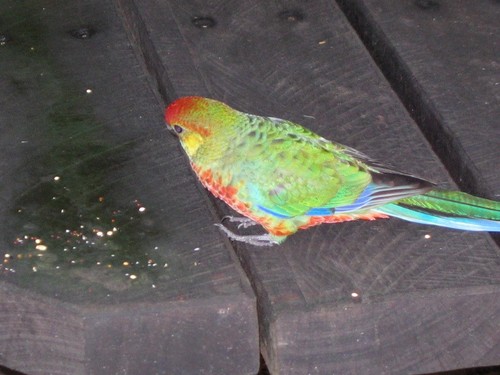
Western Rosella
25-30 cm (10-12 in) long
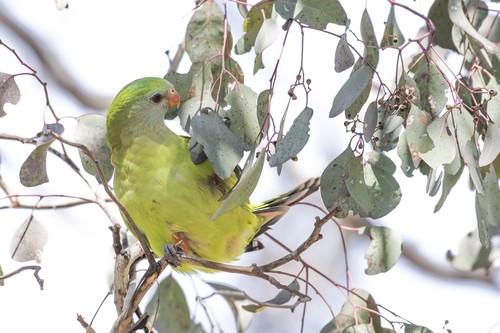
Superb Parrot
About 40 cm (16 in) long including a long tail
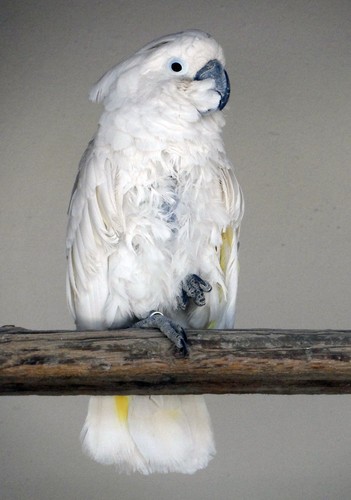
Umbrella Cockatoo
About 46 cm (18 in) long
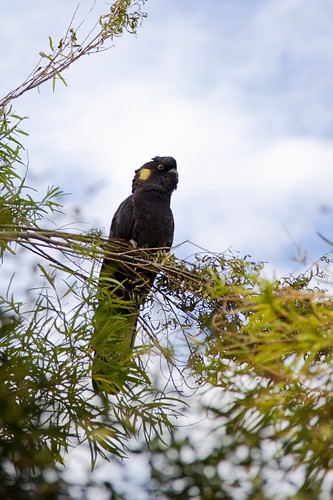
Yellow-tailed Black Cockatoo
55-65 cm long; wingspan up to about 130 cm
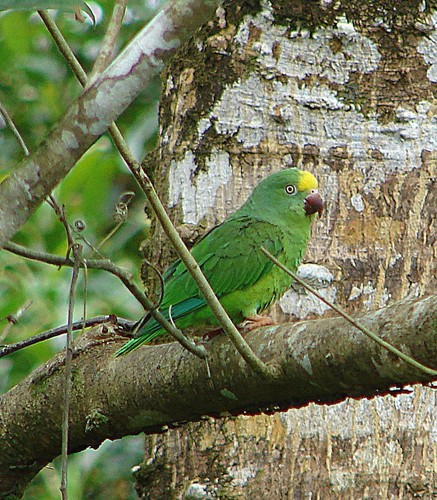
Yellow-crowned Amazon
About 35-38 cm (14-15 in) long
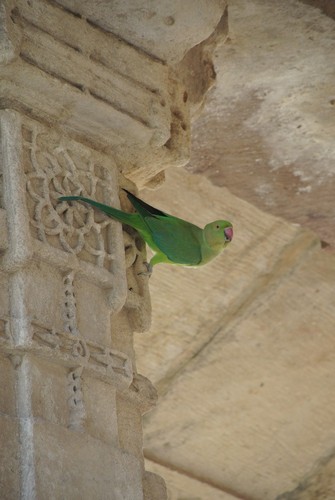
Rose-ringed Parakeet
40 cm (16 in) long including long tail
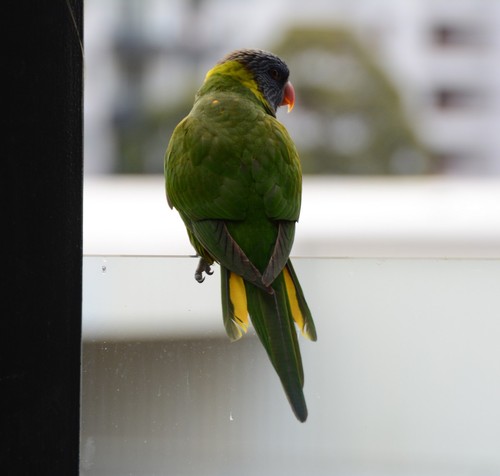
Rainbow Lorikeet
25-30 cm (10-12 in) long
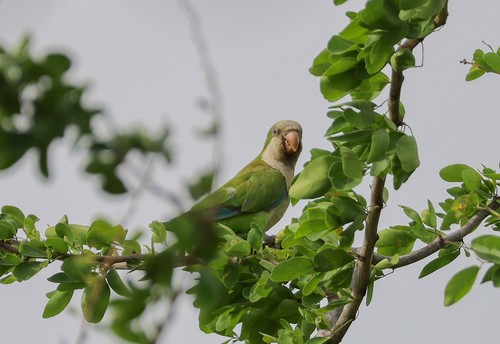
Quaker Parrot
28-31 cm (11-12 in) long
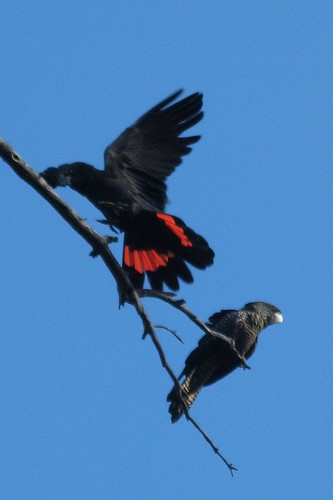
Red-tailed Black Cockatoo
55-65 cm long
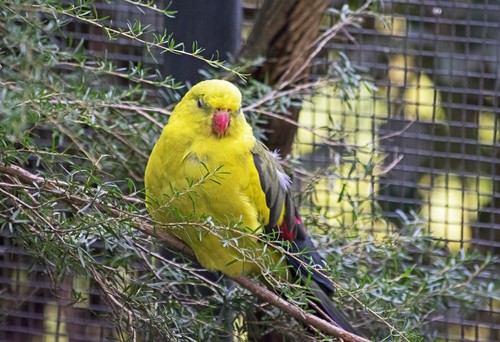
Regent Parrot
37-42 cm (15-17 in) long, including a long tail
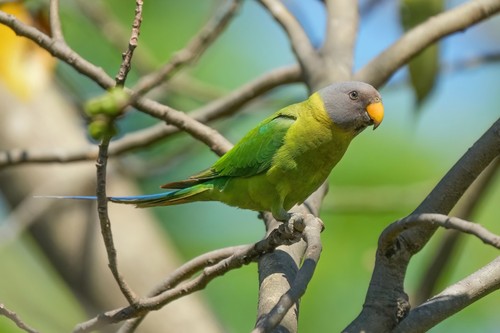
Plum-headed Parakeet
33 cm (13 in) long including tail