
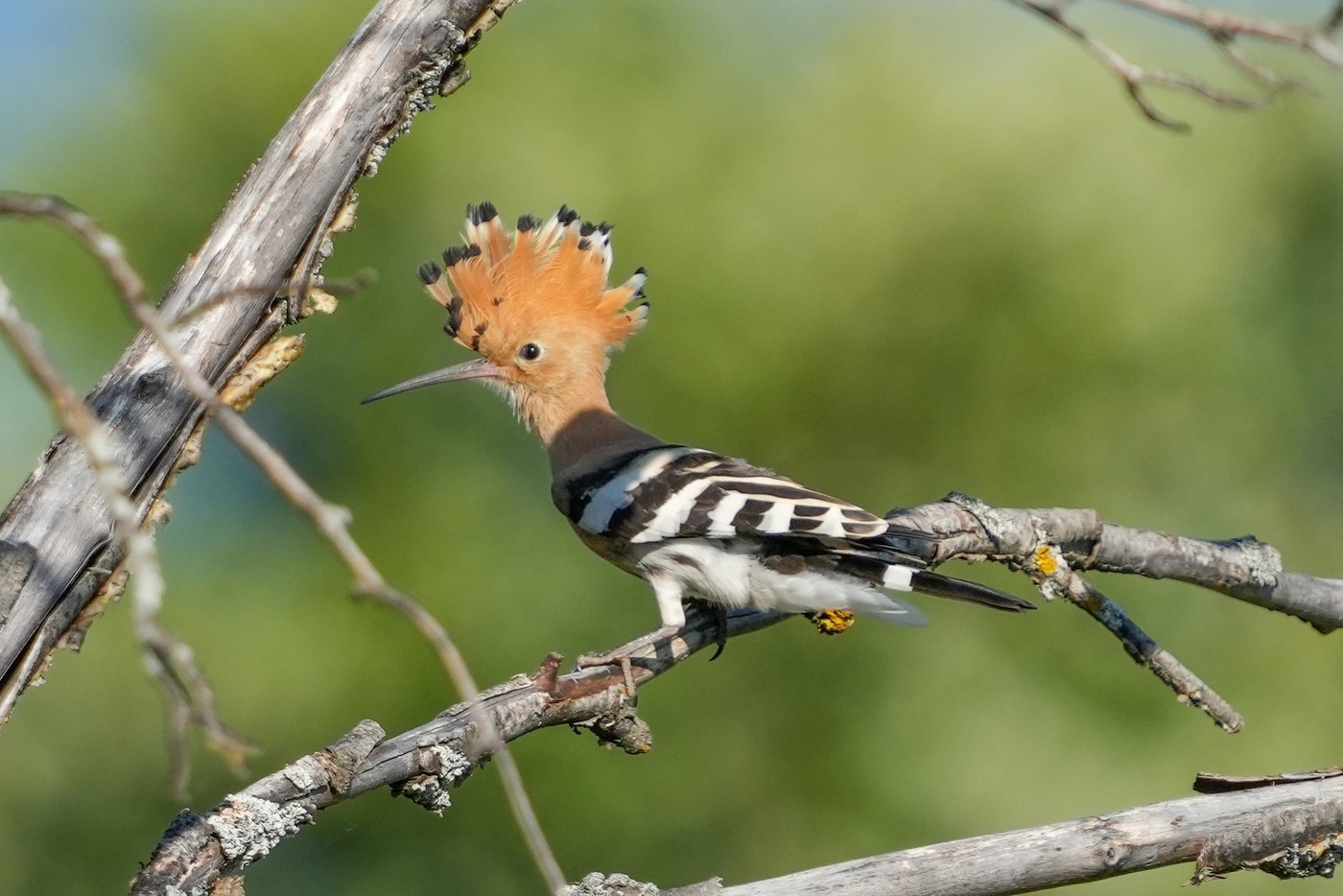
Eurasian Hoopoe
Upupa epops
An unmistakable pinkish-brown bird with a tall erectile crest, boldly barred wings, and a long curved bill, named for its distinctive call.
- Size
- 25-32 cm (10-12.5 in) long, 44-48 cm wingspan
- Habitat
- open country, orchards, farmland, and parkland with bare or sparse ground
- Type
- other
Spotted a bird like this?
Identify any bird from a photo, free.
Overview
The Eurasian Hoopoe is one of the most distinctive birds in its range, with warm pinkish-cinnamon plumage, dramatically barred black-and-white wings and tail, and a long, slender, downcurved bill used for probing soil. Its most striking feature is a tall, fan-shaped crest of feathers tipped in black, normally held flat but raised into a spectacular display when the bird is alarmed or excited.
Its common name, like its scientific name, imitates its soft, hollow call, and it has long held cultural significance across its range, appearing in ancient art and folklore from Egypt to Persia.
How to identify it
Key field marks
- Pinkish-cinnamon body plumage
- Bold black-and-white barring on wings and tail
- Long, thin, downcurved bill
- Tall, erectile crest, often raised briefly on landing or when alarmed
- Distinctive soft, hollow "oop-oop-oop" call
- Bouncy, undulating flight with broad, rounded, boldly patterned wings
Similar species
- No other European bird shares this combination of crest, curved bill, and bold black-and-white wing barring; it is essentially unmistakable when seen well.
The crest, bold wing pattern, and curved bill make the Eurasian Hoopoe one of the easiest European birds to identify on sight.
Habitat & range
Habitat
Favors open country with sparse or short vegetation for ground-foraging, including orchards, vineyards, farmland, parkland, and semi-arid open woodland.
Range
Breeds across southern and central Europe, North Africa, and much of Asia; a scarce but regular migrant further north, including occasional breeding in Britain.
Migration
European populations are migratory, wintering in sub-Saharan Africa, though some populations in warmer parts of its range, such as southern Iberia, are resident.
Behavior & voice
Behavior
Forages mainly on the ground, walking with a jerky gait and probing soil and leaf litter with its long bill for grubs, occasionally flicking its crest up when alert or during interactions with other Hoopoes.
Voice
The soft, far-carrying, triple "oop-oop-oop" call, low and hollow in tone, gives the species both its English and scientific names.
Feeding
Specializes in large soil-dwelling invertebrates, particularly mole cricket nymphs and other beetle and cricket larvae, extracted by probing with its long, curved bill.
Nesting and breeding
Nests in cavities in trees, walls, or banks. Females lay 5-8 eggs and incubate alone for about 15-18 days, during which they and later the chicks can produce a foul-smelling secretion thought to help deter predators.
Frequently asked questions
Why does the Hoopoe raise its crest?
The crest is usually held flat but is raised into a fan shape when the bird is alarmed, excited, or interacting with other Hoopoes.
Where does the Hoopoe get its name?
Both the English name and the scientific name imitate its soft, hollow "oop-oop-oop" call.
What does the Eurasian Hoopoe eat?
Mainly large soil-dwelling insects and larvae, especially mole crickets, extracted with its long curved bill.
Is the Hoopoe found in the UK?
It is a scarce migrant visitor to Britain and only very rarely breeds there, being much more common across southern Europe.
Where does the Hoopoe nest?
In cavities such as tree holes, wall crevices, or banks.
Eurasian Hoopoe guides
In-depth guides for identifying, finding, and understanding Eurasian Hoopoe.
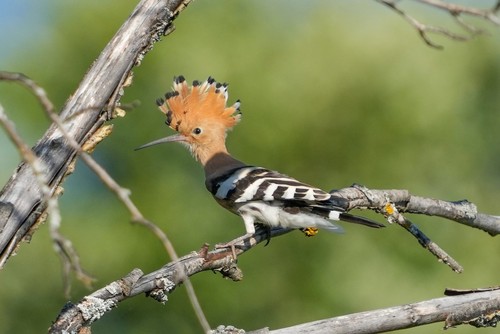
Eurasian Hoopoe identified by the community
Real birds identified with Bird Identifier.
Other birds you may enjoy
Kiwi
35-55 cm (14-22 in) long; roughly chicken-sized
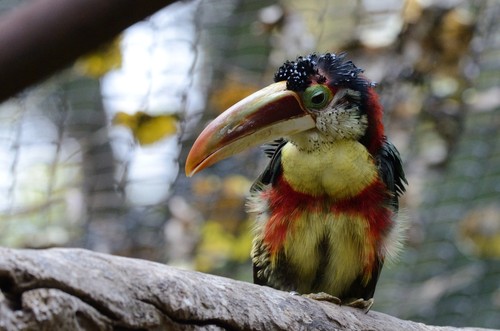
Curl-crested Aracari
41-46 cm (16-18 in) long, including a long bill and tail
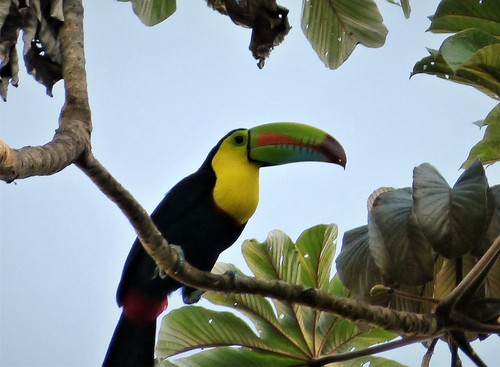
Keel-billed Toucan
42-55 cm (17-22 in) long including bill
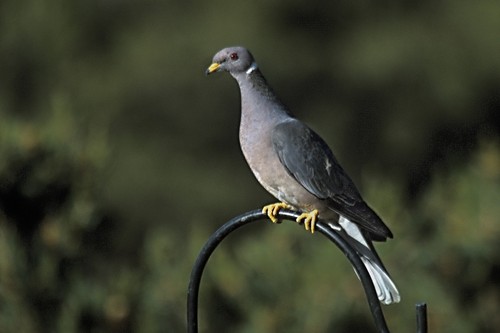
Band-tailed Pigeon
33-38 cm (13-15 in) long, wingspan about 66 cm (26 in)
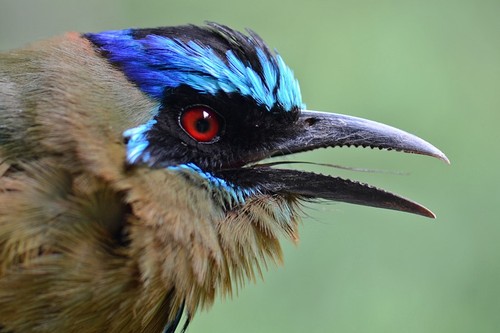
Blue-crowned Motmot
38-43 cm (15-17 in) long including tail
White-tipped Dove
27-30 cm (10.5-12 in) long, 38-43 cm wingspan
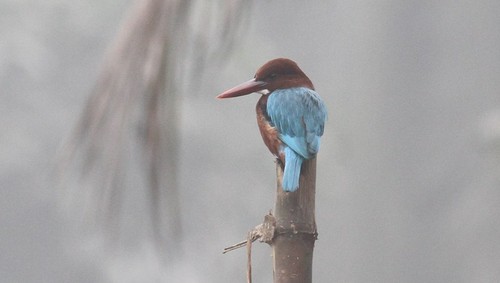
White-throated Kingfisher
27-28 cm (10.5-11 in) long
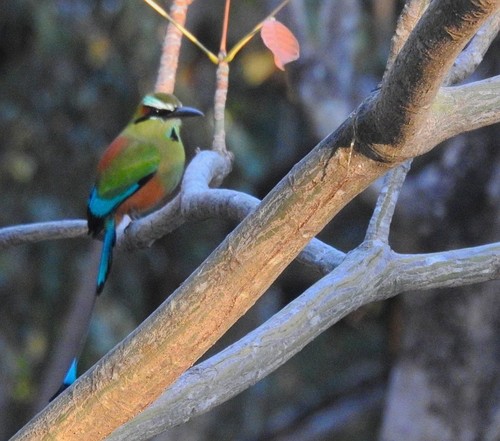
Turquoise-browed Motmot
34 cm (13 in) long including tail
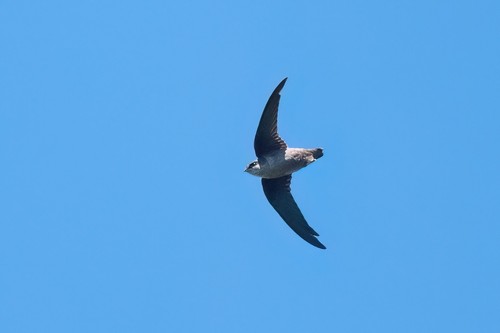
Vaux's Swift
10-12 cm (4-4.5 in) long, 27-30 cm wingspan
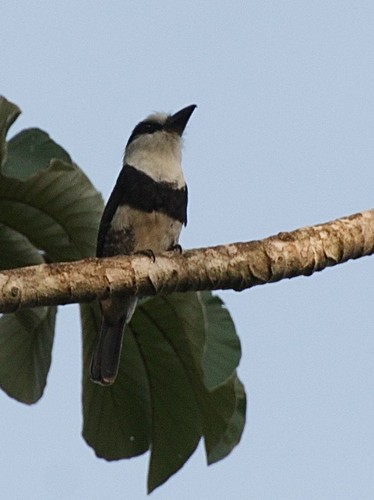
White-necked Puffbird
22-24 cm (8.5-9.5 in) long
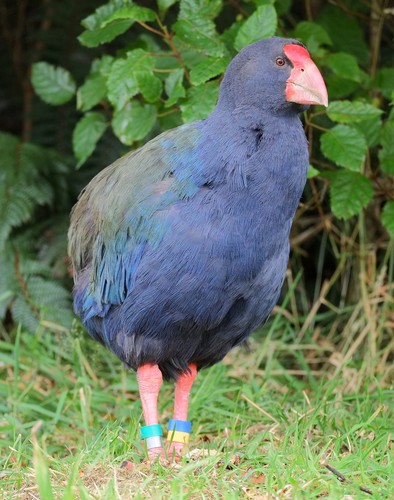
Takahe
50 cm (20 in) long, up to 3.5 kg; flightless
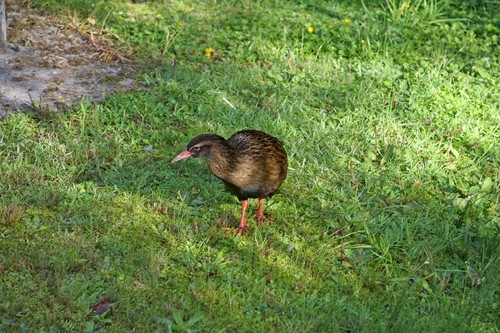
Weka
50-60 cm (20-24 in) long; flightless