
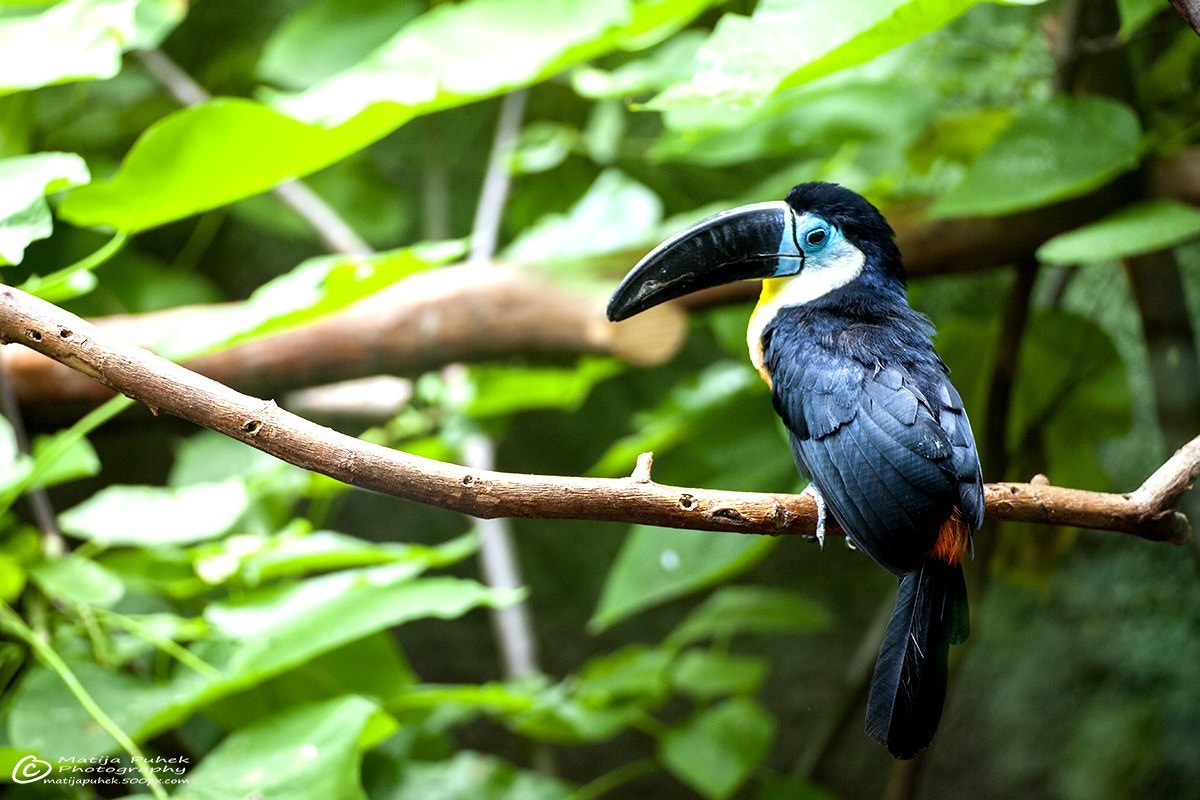
Channel-billed Toucan
Ramphastos vitellinus
A large South American toucan with black plumage, a yellow-orange throat and breast, and a robust, mostly black bill with a colorful base.
- Size
- 48-56 cm (19-22 in) long including bill
- Habitat
- lowland and foothill tropical rainforest
- Type
- other
Spotted a bird like this?
Identify any bird from a photo, free.
Overview
The Channel-billed Toucan is a large, striking toucan of South American forests, with predominantly black plumage broken by a bright yellow-orange bib on the throat and chest, a red or crimson patch beneath the tail, and blue skin around the eye. Its sizeable bill is mostly black with a base often washed in shades of yellow, green, or blue depending on subspecies, giving the species a somewhat more subdued look than its rainbow-billed relatives.
Like other toucans, it is a canopy-dwelling fruit specialist that moves through the forest in small, vocal groups, using its long bill both to reach fruit on slender branches and, opportunistically, to prey on the eggs and young of other birds.
How to identify it
Key field marks
- Mostly black body with a bright yellow-orange throat and chest patch
- Large, mostly black bill, often with a colorful (yellow, green, or blue) basal area
- Red or crimson undertail coverts
- Blue bare skin around the eye
Similar species
- Keel-billed Toucan shows a much more boldly multicolored bill striped in green, orange, red, and blue, rather than the mostly black bill of the Channel-billed Toucan.
- Chestnut-mandibled (Black-mandibled) Toucan is larger overall with a chestnut-brown lower mandible and a longer, more elongated bill shape.
Habitat & range
Habitat
Inhabits lowland and foothill tropical rainforest, forest edge, and gallery forest, generally favoring the canopy.
Range
Found widely across northern and central South America, including the Amazon basin, the Guiana Shield, and parts of eastern Brazil.
Migration
Non-migratory, though flocks may shift locally in response to fruit availability.
Behavior & voice
Behavior
Social and often noisy, traveling in small flocks through the canopy, hopping between branches; known to raid the nests of smaller birds for eggs and nestlings.
Voice
A repetitive, croaking or yelping call, often given persistently from a prominent perch.
Feeding
Feeds mainly on fruit, supplemented with insects and the eggs or chicks of other birds.
Nesting
Nests in natural tree cavities, often reusing old woodpecker holes; lays 2-4 white eggs incubated by both parents.
Frequently asked questions
How do you identify a Channel-billed Toucan?
Look for a mostly black toucan with a bright yellow-orange throat and chest and a large, mostly black bill with a colorful base.
How is the Channel-billed Toucan different from the Keel-billed Toucan?
The Channel-billed Toucan has a mostly black bill with limited color at the base, while the Keel-billed Toucan has a boldly rainbow-striped bill in green, orange, red, and blue.
What does a Channel-billed Toucan eat?
Mostly fruit, along with insects and occasionally the eggs or nestlings of other birds.
Where does the Channel-billed Toucan live?
In lowland and foothill rainforest across northern and central South America, including the Amazon basin.
Channel-billed Toucan guides
In-depth guides for identifying, finding, and understanding Channel-billed Toucan.
Other birds you may enjoy
Kiwi
35-55 cm (14-22 in) long; roughly chicken-sized
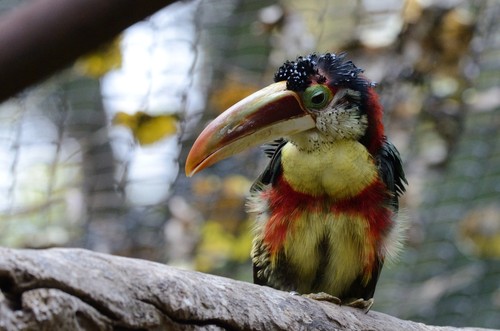
Curl-crested Aracari
41-46 cm (16-18 in) long, including a long bill and tail
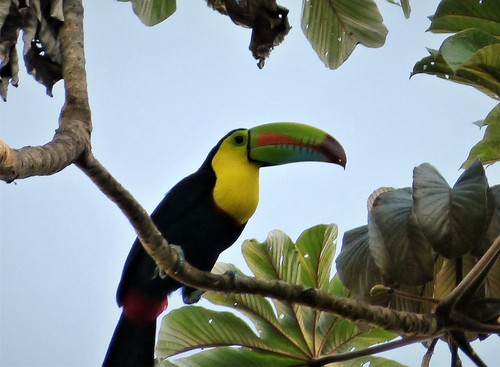
Keel-billed Toucan
42-55 cm (17-22 in) long including bill
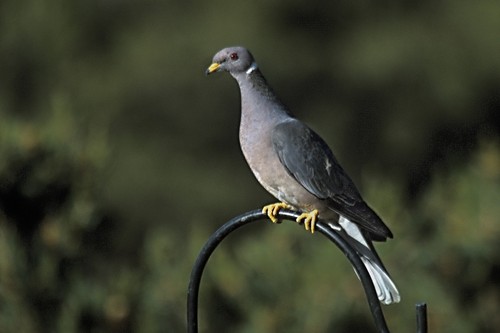
Band-tailed Pigeon
33-38 cm (13-15 in) long, wingspan about 66 cm (26 in)
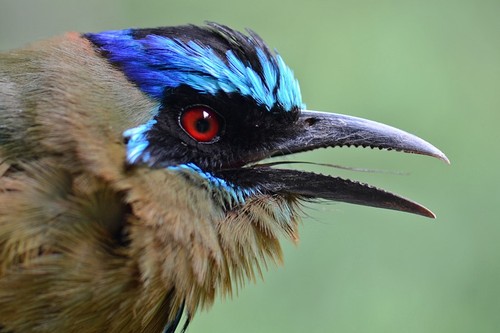
Blue-crowned Motmot
38-43 cm (15-17 in) long including tail
White-tipped Dove
27-30 cm (10.5-12 in) long, 38-43 cm wingspan
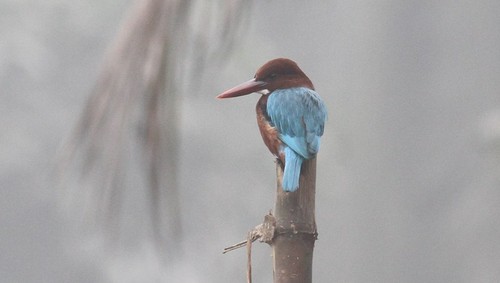
White-throated Kingfisher
27-28 cm (10.5-11 in) long
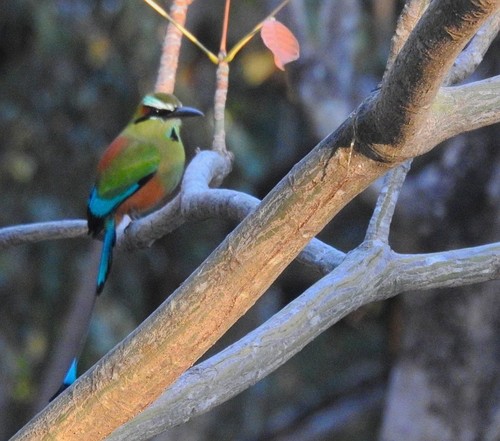
Turquoise-browed Motmot
34 cm (13 in) long including tail
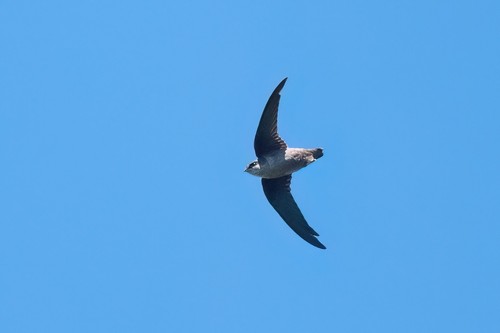
Vaux's Swift
10-12 cm (4-4.5 in) long, 27-30 cm wingspan
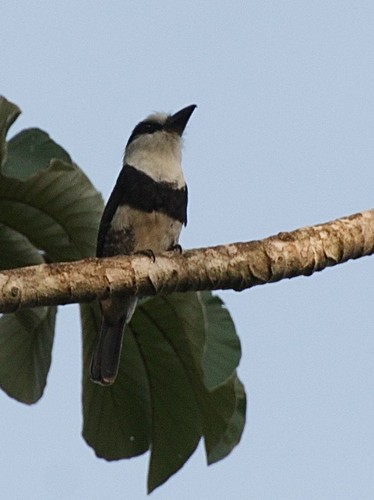
White-necked Puffbird
22-24 cm (8.5-9.5 in) long
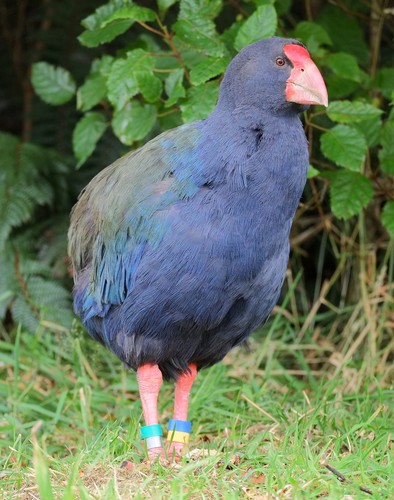
Takahe
50 cm (20 in) long, up to 3.5 kg; flightless
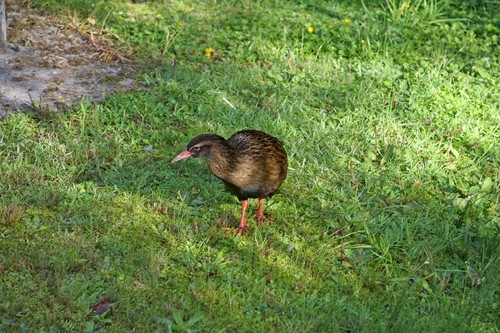
Weka
50-60 cm (20-24 in) long; flightless