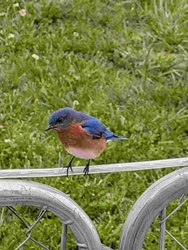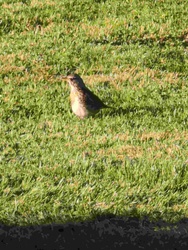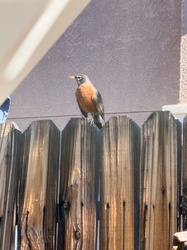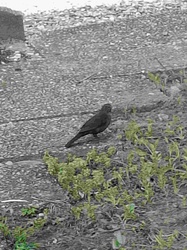
Order: Passeriformes, Family: Turdidae
American Robin
Turdus migratorius
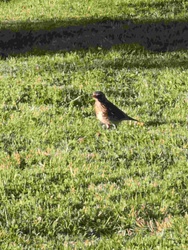
A familiar North American songbird known for its bright reddish-orange chest and cheerful, flute-like song. Often seen running and stopping on lawns while foraging for earthworms.
Explore American Robin in the encyclopedia →Identify your own birds.
Get a report just like this from any photo or call, free.
Plumage & appearance
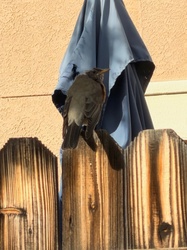
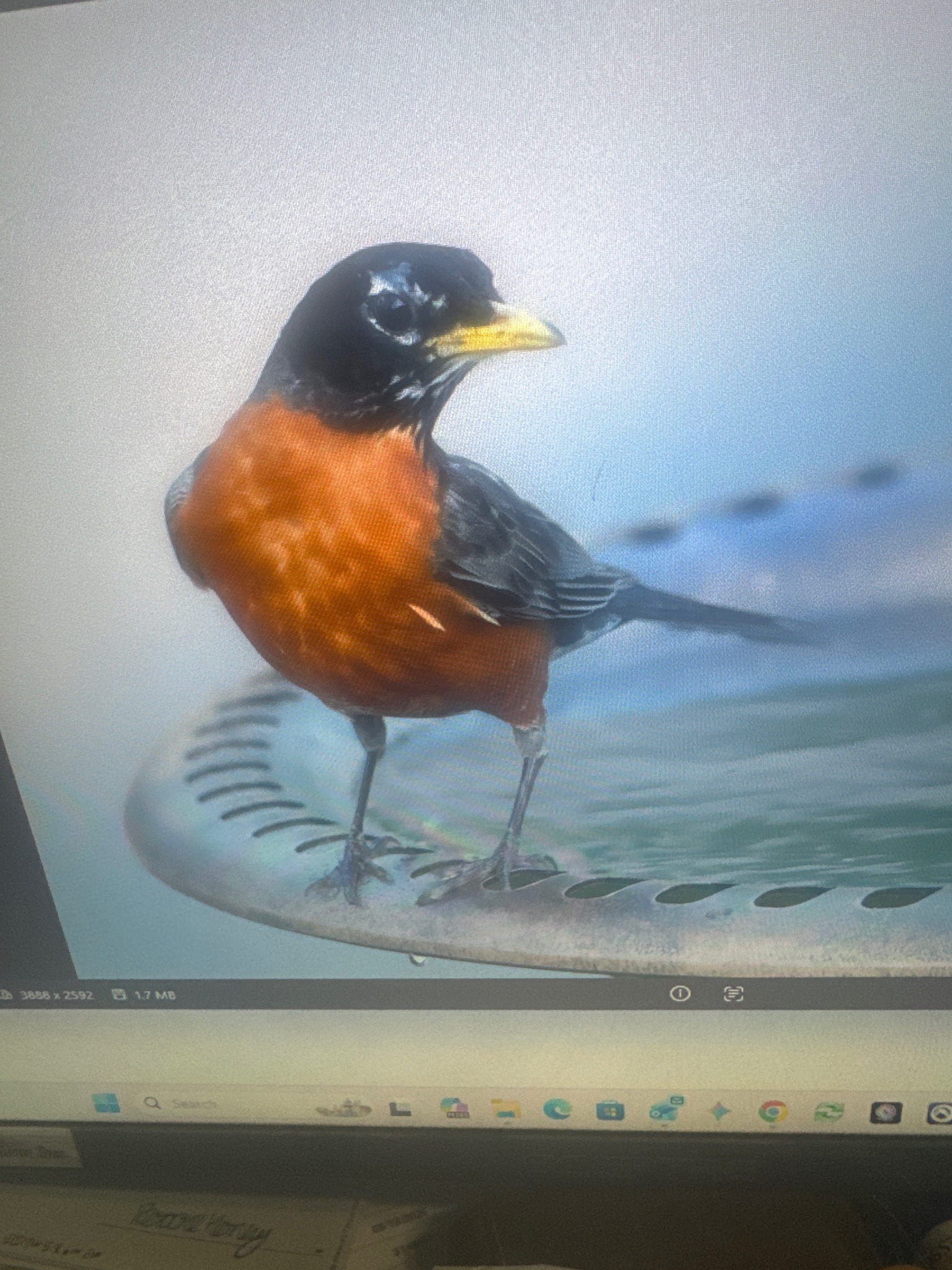
Adult males have a dark charcoal to black head, bright orange-red breast, grayish back, and white undertail coverts with broken white eye-arcs. Females are typically paler and duller, with a brownish head and a lighter orange breast. Juveniles are speckled heavily on the breast and have spotted upperparts.
Key field marks
Bright orange-red breast, dark gray-black head and back, yellow bill, and broken white eye arcs.
Size & weight
Length: 9.1-11.0 inches (23-28 cm), Wingspan: 12.2-15.8 inches (31-40 cm), Weight: 2.7-2.7 oz (77-77 g)
Voice — call & song
A cheerful, rich, caroling song often described as 'cheer up, cheerily, cheer up,' along with a sharp 'tut' or 'seep' alarm call.
Diet & foraging
Invertebrates such as earthworms, caterpillars, and beetles, supplemented heavily by fruits and berries in fall and winter.
Habitat
Woodlands, forests, suburban neighborhoods, parks, orchards, and cultivated lands.
Migration & movement
Partial migrant; northern populations migrate south for the winter, while southern populations are generally year-round residents.
Nesting & breeding
Builds a sturdy cup nest of grass, twigs, and mud, placed in the fork of a tree or on a building ledge. Clutch size is typically 3 to 5 blue eggs, raised over 2 to 3 broods per season.
Similar species
Varied Thrush, which features a prominent black breast band and orange wing bars, distinguishing it from the American Robin.
Ecological significance
Acts as an important seed disperser for various fruit-bearing plants and helps control invertebrate pest populations in gardens and forests.
Conservation status
Least Concern, with a stable and widespread population trend.
Observation tips
Look for them on suburban lawns, parks, and golf courses, especially after rain when earthworms come to the surface. Providing a clean birdbath is a great way to attract them.
Interesting facts
Despite being called a robin, they are actually part of the thrush family and are closely related to the European Blackbird rather than the European Robin.
More like this