Order: Passeriformes; Family: Turdidae
Eastern Bluebird
Sialia sialis
A small, stocky thrush with a big head and large eyes. It is known for its upright posture and frequent perching on wires and fences to hunt for insects.
Explore Eastern Bluebird in the encyclopedia →Identify your own birds.
Get a report just like this from any photo or call, free.
Plumage & appearance
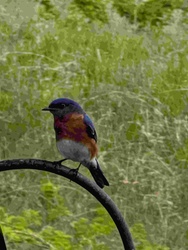
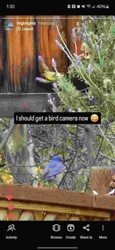
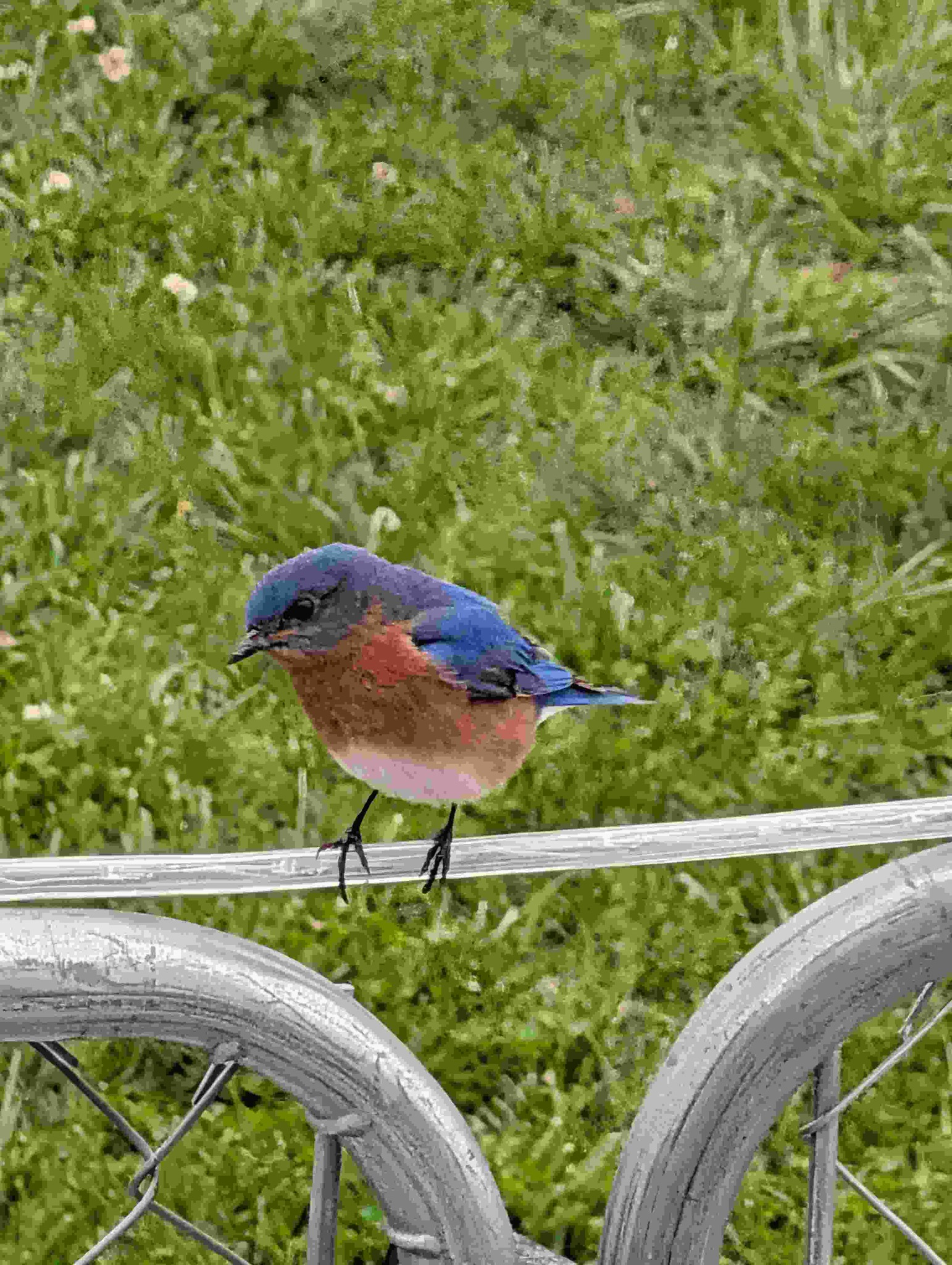
Adult males (like the one pictured) have a vibrant deep blue head, back, and wings with a rusty reddish-orange throat and breast. Females are duller with more grey-blue on top and lighter orange on the breast. Juveniles are brownish with blue in the wings and tail and have spotted breasts.
Key field marks
Blue upperparts, rusty-red throat and breast, white belly, and a fairly short, thin bill.
Size & weight
Length: 6-8 in (16-21 cm); Wingspan: 9-12 in (25-32 cm); Weight: 0.9-1.2 oz (27-34 g).
Voice — call & song
A soft, melodious 'tu-a-wee' or 'purity' song. The call is a short, low-pitched 'pew' or 'mew'.
Diet & foraging
Mainly insects (beetles, crickets, grasshoppers) and spiders during the breeding season; fruits and berries (mistletoe, sumac, cedar) during winter.
Habitat
Open woodlands, farmlands, orchards, parks, and suburban gardens with scattered trees and low ground cover.
Migration & movement
Resident in the southern US and Mexico; migratory in the northern US and Canada, moving south in late autumn.
Nesting & breeding
Secondary cavity nesters. They use old woodpecker holes or nest boxes. The female builds a cup-shaped nest of grass. Clutch size is typically 2-7 pale blue eggs.
Similar species
Western Bluebird (has a blue throat instead of orange); Mountain Bluebird (entirely sky-blue without the red breast).
Ecological significance
Acts as a natural pest controller by consuming large quantities of insects. They are also important cavity nesters and compete for nesting sites, helping maintain biodiversity in secondary cavity-nesting communities.
Conservation status
Least Concern (IUCN). Populations are increasing due to widespread installation of bluebird nest boxes.
Observation tips
Look for them in open fields, orchards, and along roadsides. Providing a nest box or mealworms in a tray feeder is a reliable way to attract them to gardens.
Interesting facts
The Eastern Bluebird is the state bird of both Missouri and New York. They were once in serious decline due to competition with invasive House Sparrows and European Starlings, but have made a massive recovery thanks to human-made nest boxes.
More like this