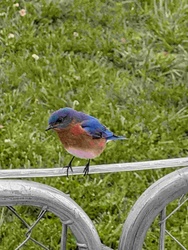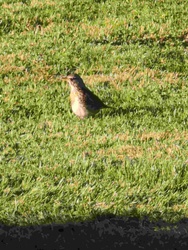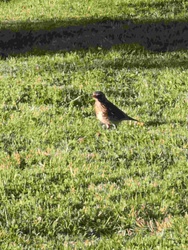
Order: Passeriformes, Family: Turdidae
American Robin
Turdus migratorius
A familiar medium-sized songbird with a cheerful orange breast and dark head, often seen hopping across lawns in search of earthworms.
Explore American Robin in the encyclopedia →Identify your own birds.
Get a report just like this from any photo or call, free.
Plumage & appearance
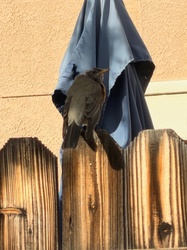
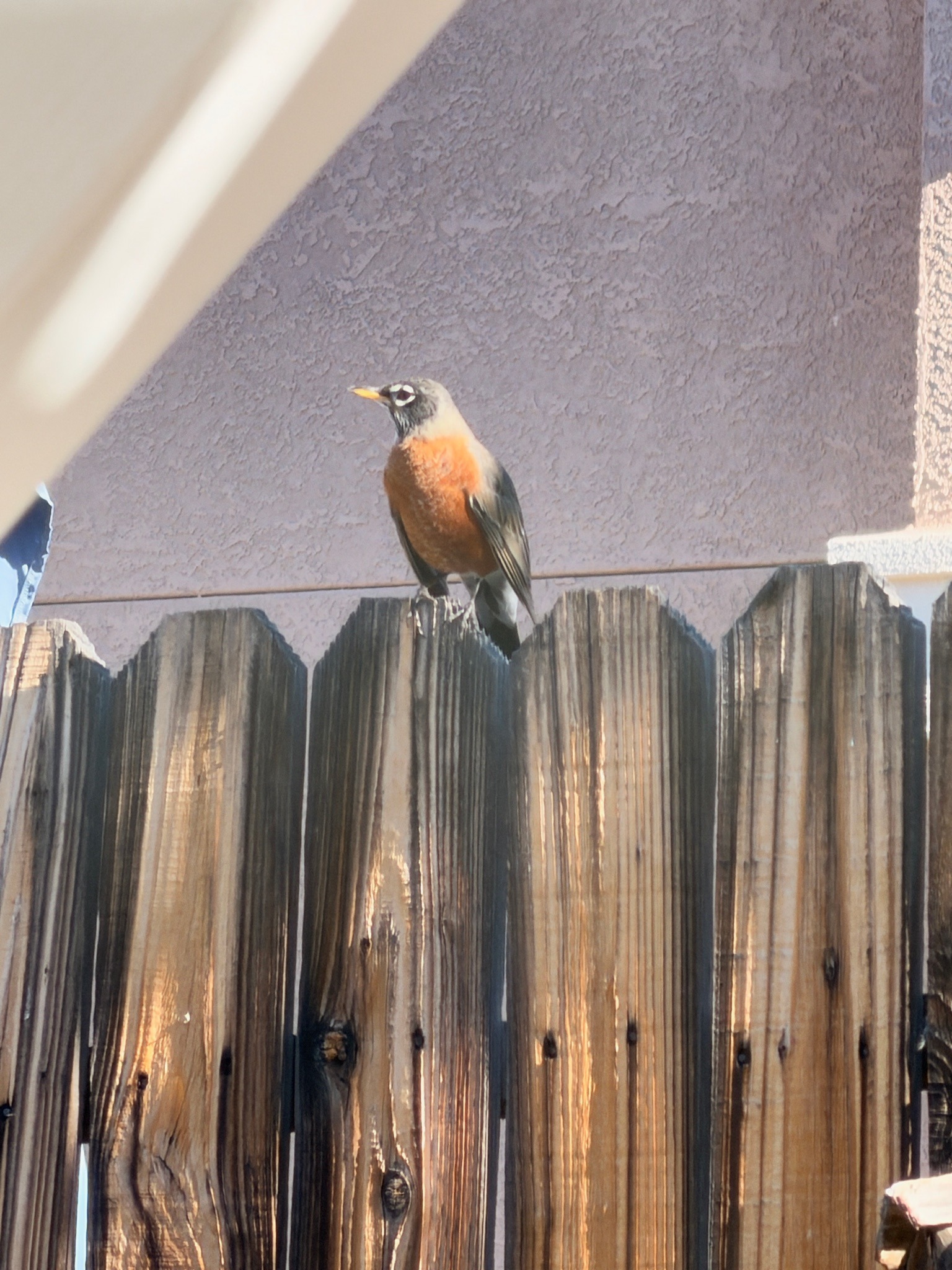
Adults have a dark gray to blackish head, a warm brick-red to orange breast, brownish-gray back and wings, and a white lower belly. Females tend to be slightly paler overall with a less distinct dark head contrasting with the back. Juveniles have spotted breasts and paler upperparts.
Key field marks
Brick-red breast, dark gray back and head, yellowish bill, and broken white eye-ring.
Size & weight
Length: 9.1-11.0 inches (23-28 cm), Wingspan: 14.2-15.8 inches (36-40 cm), Weight: 2.7-2.7 oz (77-77 g)
Voice — call & song
A rich, cheery, caroling song consisting of a series of clear, repeating phrases ('cheerup, cheer, cheerily'). Calls include a sharp 'tut' and a high-pitched whinnying alarm.
Diet & foraging
Invertebrates such as earthworms, caterpillars, and beetles, supplemented heavily by fruits and berries in fall and winter.
Habitat
Found in woodlands, forests, suburban yards, parks, orchards, and agricultural fields.
Migration & movement
Partial migrant. Many northern populations migrate south for the winter, while others remain resident year-round depending on food availability.
Nesting & breeding
Constructs a cup nest made of mud, grass, and twigs, typically placed in the fork of a tree branch or on a building ledge. Lays 3-5 light blue eggs per clutch, with 2-3 broods per year.
Similar species
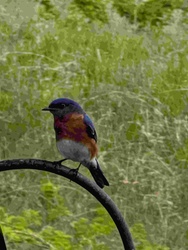
Varied Thrush (distinguished by a black breast band and orange eyebrow stripe) and Eastern Towhee (has red sides, black back, and different habitat preferences).
Ecological significance
Acts as an important seed disperser for various fruit-bearing trees and shrubs, and helps control insect populations.
Conservation status
Least Concern, with a stable and very large population.
Observation tips
Look for them on suburban lawns, in parks, and open woodlands early in the morning when they are actively foraging on the ground.
Interesting facts
American Robins can eat up to 14 feet of earthworms and berries in a single day, and they sometimes become intoxicated after eating fermented berries.
More like this