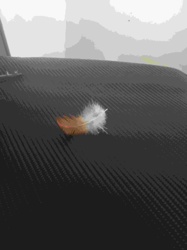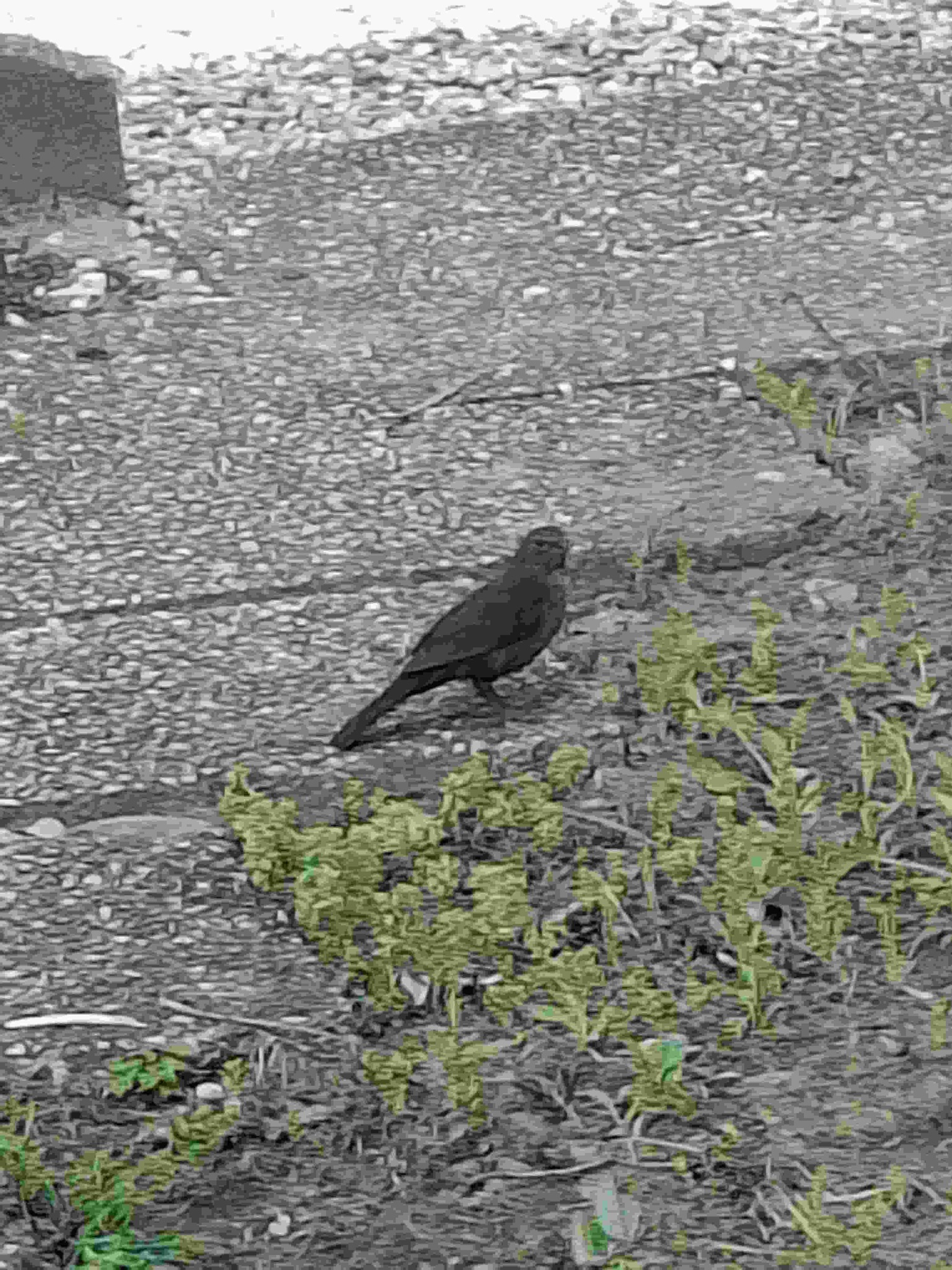
Order: Passeriformes; Family: Turdidae
Common Blackbird
Turdus merula
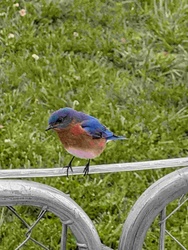
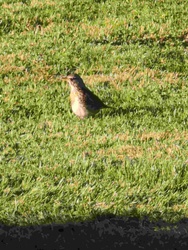
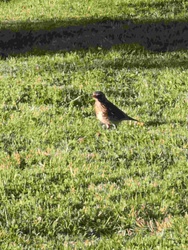
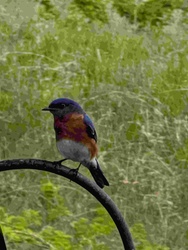
A medium-sized thrush known for its melodic song. It is often seen hopping on lawns, cocking its head to listen for worms.
Explore Common Blackbird in the encyclopedia →Identify your own birds.
Get a report just like this from any photo or call, free.
Plumage & appearance
Adult males are solid black with bright orange-yellow beaks and eye-rings. Females are dark brown with faint streaking on the breast and a duller brown beak. Juveniles are rufous-brown with pale spotting.
Key field marks
All-black plumage (male), yellow eye-ring, yellow bill, long tail.
Size & weight
Length: 23-29 cm (9.2-11.4 in); Wingspan: 34-38 cm (13.5-15 in); Weight: 80-125 g.
Voice — call & song
A rich, flute-like melodic song; alarm call is a loud, rattling 'chink-chink-chink'.
Diet & foraging
Omnivorous; consumes insects, earthworms, berries, and fruits. Forages primarily on the ground.
Habitat
Gardens, woodlands, parks, and farmland with hedges.
Migration & movement
Resident in much of its range; Northern European populations migrate south or west for the winter.
Nesting & breeding
Cupped nest made of twigs and mud, usually in bushes or trees; 3-5 eggs per clutch; multiple broods per season.
Similar species
European Starling (shorter tail, speckled plumage); Ring Ouzel (white crescent on the breast).
Ecological significance
Acts as an important seed disperser for various plants and helps control insect and earthworm populations.
Conservation status
Least Concern (IUCN); population remains widespread and abundant.
Observation tips
Look for them on suburban lawns and garden edges, particularly at dawn and dusk when they are most active foraging.
Interesting facts
The blackbird is often mentioned in literature and music, including the famous Beatles song 'Blackbird', which was inspired by its call.
More like this