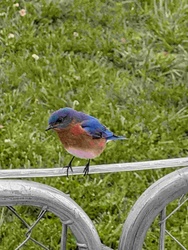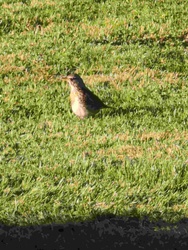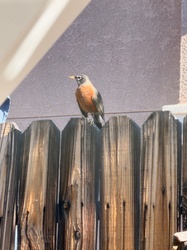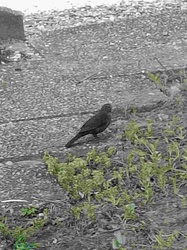
Order: Passeriformes; Family: Turdidae
American Robin
Turdus migratorius
A large, North American thrush known for its cheerful song and orange breast. Often seen hopping on lawns searching for worms.
Explore American Robin in the encyclopedia →Identify your own birds.
Get a report just like this from any photo or call, free.
Plumage & appearance
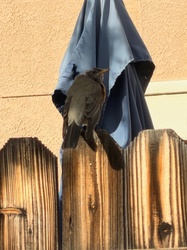
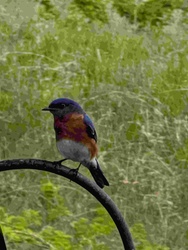
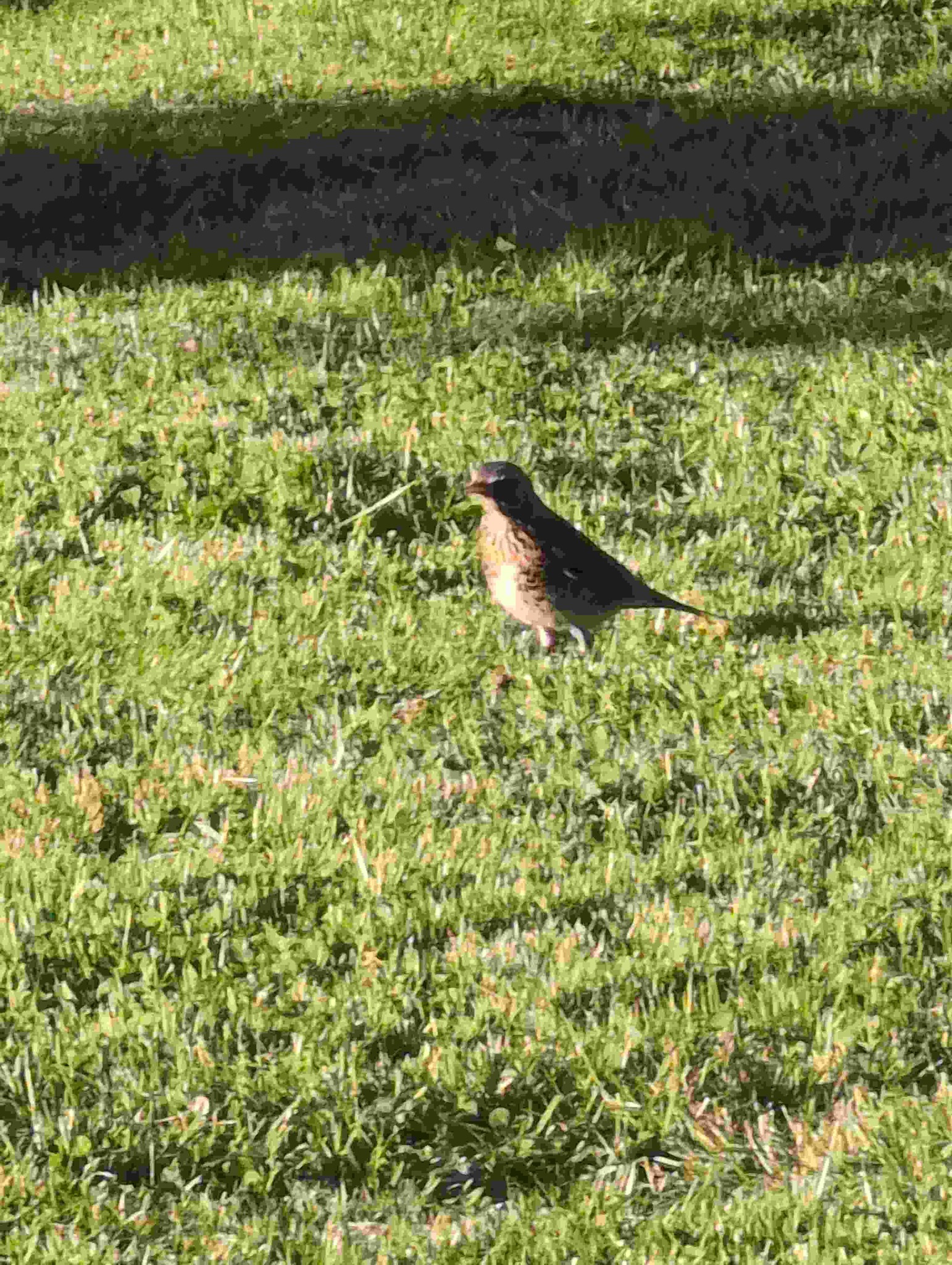
Adults have a gray-brown back, a warm orange or reddish breast, and a dark head. Males are darker-headed than females. Juveniles have spotted breasts and paler plumage.
Key field marks
Orange-red breast, white eye-ring, yellow bill with a dark tip, and dark gray-brown upperparts.
Size & weight
Length: 20-28 cm; Wingspan: 31-40 cm; Weight: 72-94 g
Voice — call & song
A musical, whistling song often described as 'cheery, carol, cheery, carol'. Calls include a sharp 'peek' and a 'tut-tut-tut' alarm call.
Diet & foraging
Omnivorous; primarily earthworms and insects in spring and summer, switching to berries and fruits in fall and winter.
Habitat
Common in lawns, gardens, parks, woodlands, orchards, and forest edges.
Migration & movement
Migratory or resident; many northern populations move south in winter, while southern populations may stay year-round or move nomadically in search of food.
Nesting & breeding
Builds a cup-shaped nest of grass, twigs, and mud usually on a tree branch or building ledge. Lays 3-5 sky-blue eggs.
Similar species
Varied Thrush (has a dark breast band), Spotted Towhee (has white spots on wings and red eyes).
Ecological significance
Significant as a disperser of seeds from the fruit it consumes and as a predator of soil invertebrates; also a key indicator of environmental health concerning pesticides.
Conservation status
Least Concern (Population increasing)
Observation tips
Look for them on suburban lawns in the early morning or evening. They are easily spotted while they are foraging for earthworms or singing from high perches.
Interesting facts
The American Robin's blue eggs are so iconic that 'Robin’s egg blue' is a standard color name. They can eat large amounts of fermented berries, which can occasionally make them appear intoxicated.
More like this