Order: Passeriformes; Family: Turdidae (Thrushes)
Western Bluebird
Sialia mexicana
A small, stocky thrush known for its vibrant blue and rust plumage. It is often seen perched on low branches or fences, scanning the ground for insects.
Explore Western Bluebird in the encyclopedia →Identify your own birds.
Get a report just like this from any photo or call, free.
Plumage & appearance
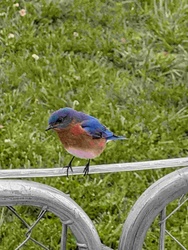
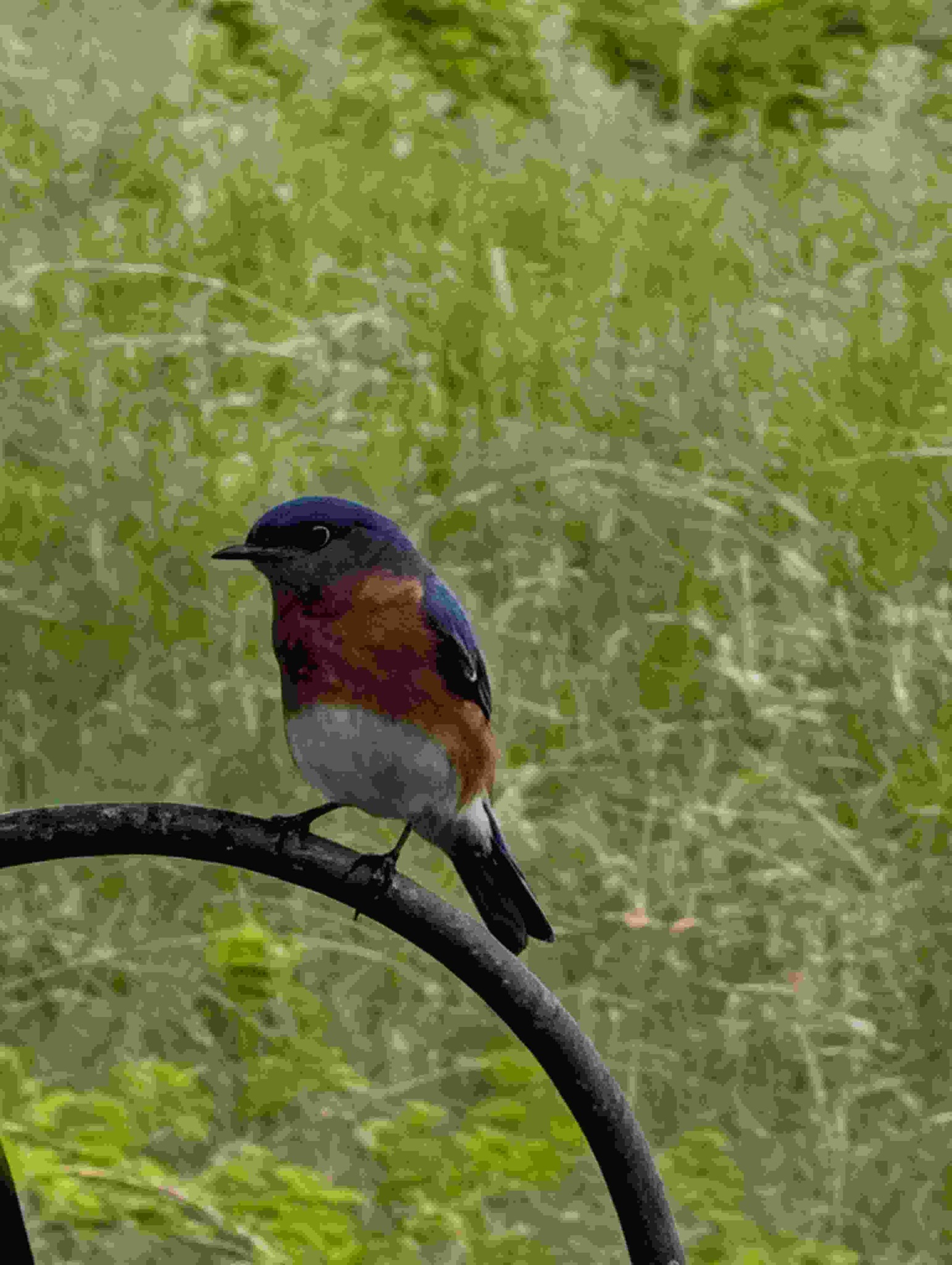
Adult males (shown) have a deep cobalt blue head, wings, and tail with a rusty red breast and upper back. Females are paler and grayer with a subtle blue tint in wings and tail. Immatures are spotted with buffy-white.
Key field marks
Male: Blue throat and head, rusty chest and upper back, white belly. Female: Grayish-brown with blue highlights in wings/tail.
Size & weight
Length: 6-7 inches (15-18 cm); Wingspan: 11-13 inches (29-34 cm); Weight: 0.8-1.1 oz (24-31 g)
Voice — call & song
Call is a short, soft 'phew' or 'chuck'. The song is a series of low, chirping whistles: 'che-check, che-check'.
Diet & foraging
Mainly insects (grasshoppers, caterpillars, beetles) in summer; switches to berries and small fruits (mistletoe, juniper) during winter.
Habitat
Open woodlands, coniferous forests, farm edges, and oak savannas. They prefer edges where trees meet open fields.
Migration & movement
Partial migrant. Northern populations move south or to lower elevations in winter; southern populations are year-round residents.
Nesting & breeding
Secondary cavity nesters (using old woodpecker holes or nest boxes). They lay 2-8 pale blue eggs. Both parents feed the young, and sometimes offspring from previous broods help.
Similar species
Eastern Bluebird (has a reddish throat; Western has a blue throat) and Mountain Bluebird (lacks the rusty red breast).
Ecological significance
Aids in insect population control and serves as a seed disperser for various berry-producing plants. They are also indicators of healthy open woodland ecosystems.
Conservation status
Least Concern (IUCN); population is generally stable, though threatened by habitat loss and competition for nesting cavities.
Observation tips
Look for them in open woodlands, orchards, and parks. They are frequently found near nest boxes or sitting on low perches like fence wires.
Interesting facts
Western Bluebirds are highly social; in winter, they forage in large flocks and sometimes 'huddle' together in cavities to stay warm during cold nights.
More like this