Order: Passeriformes; Family: Turdidae
American Robin
Turdus migratorius
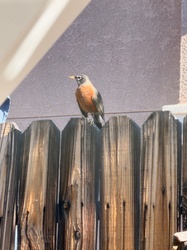
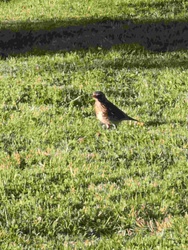
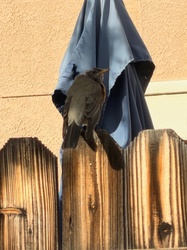
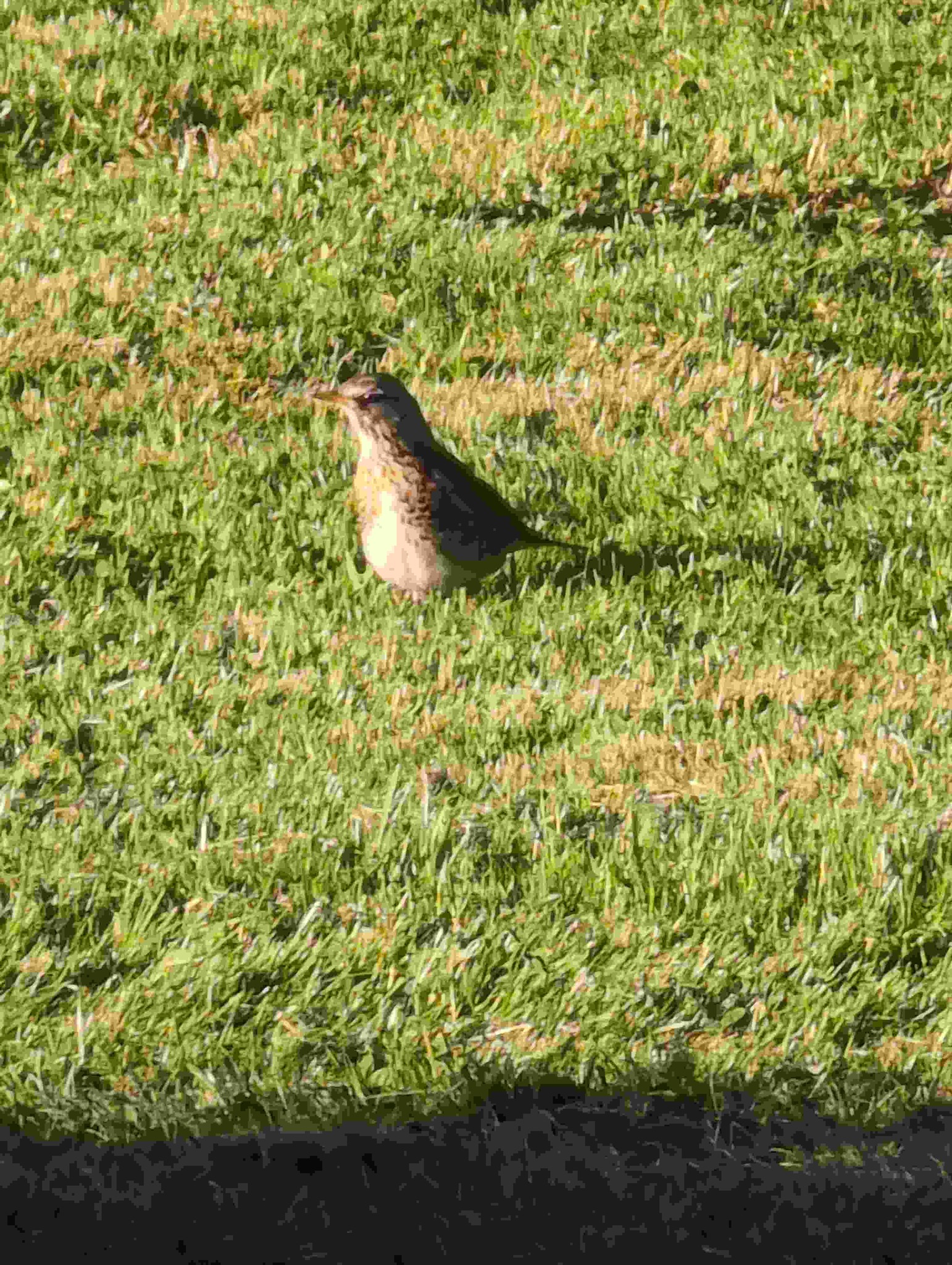
A medium-sized songbird known for its bright orange chest and cheerful song. It is often seen hopping on lawns looking for earthworms.
Explore American Robin in the encyclopedia →Identify your own birds.
Get a report just like this from any photo or call, free.
Plumage & appearance
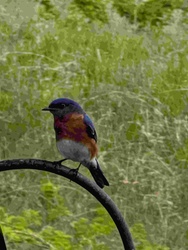
Grayish-brown upperparts, warm orange-red breast, and a white lower belly. The head is dark with a broken white eye-ring. Males have darker heads than females; juveniles have spotted breasts.
Key field marks
Orange-red breast, dark head with white eye-ring, yellow bill with a black tip, and white spots at the corners of the tail in flight.
Size & weight
Length: 20-28 cm; Wingspan: 31-41 cm; Weight: 77-85 g
Voice — call & song
A musical 'cheery-up, cheerio' song; calls include a sharp 'peek' or a tutting sound.
Diet & foraging
Invertebrates (earthworms, beetles, caterpillars) and fruit (berries and wild fruits).
Habitat
Open woodlands, gardens, parks, suburbs, and agricultural fields.
Migration & movement
Short-distance migrant; many individuals remain in the northern US and Canada over winter if food is available.
Nesting & breeding
Builds cup-shaped nests of grass and mud in trees or on ledges; 3-5 sky-blue eggs per clutch; 2-3 broods per year.
Similar species
Varied Thrush (has a dark breast band), European Robin (smaller, different shape), Spotted Towhee (different bill and white spots).
Ecological significance
Crucial role in seed dispersal through fruit consumption and acts as a biological control for garden pests and insects.
Conservation status
Least Concern (Population increasing)
Observation tips
Easily found on short-grass lawns, gardens, and parks. Look for the 'run-and-stop' behavior when they forage for worms.
Interesting facts
American Robins are the state bird of Connecticut, Michigan, and Wisconsin. They are famous for their sky-blue eggs, which have inspired the color 'Robin's Egg Blue'.
More like this