Order Anseriformes, Family Anatidae
Muscovy Duck
Cairina moschata
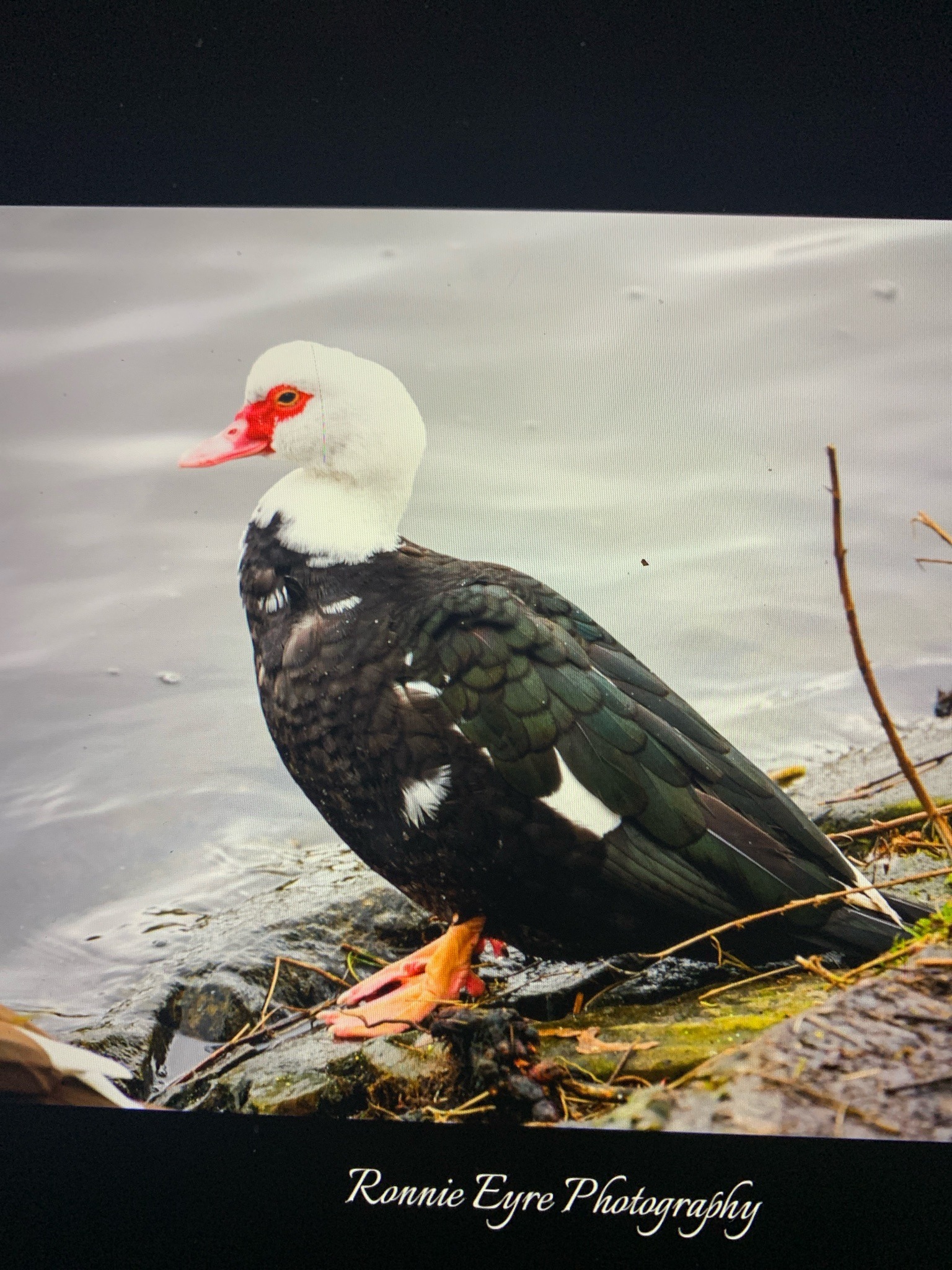
A large, heavy-set duck with a distinctively flat-looking head, long tail, and bare red facial caruncles. Known for perching in trees more readily than most other ducks.
Explore Muscovy Duck in the encyclopedia →Identify your own birds.
Get a report just like this from any photo or call, free.
Plumage & appearance
Wild birds are mostly glossy black with prominent white wing patches that are especially visible in flight. Domesticated and feral birds show wide variation, ranging from solid white to pied or barred black, brown, and white. Both sexes feature distinctive red, fleshy caruncles around the face and bill, which are more pronounced in adult males.
Key field marks
Massive body, red facial caruncles, flat crown, broad tail, and white wing patches (in wild-type birds).
Size & weight
Length: 66-86 cm (26-34 in); Wingspan: 137-152 cm (54-60 in); Weight: 2.1-7 kg (4.6-15.4 lbs) with males significantly larger than females.
Voice — call & song
Generally quiet compared to other ducks. Males emit low, breathy huffs, grunts, or tail-wagging trills, while females give soft, low-pitched quacks or clicks.
Diet & foraging
Omnivorous; feeds on roots, stems, leaves, and seeds of aquatic and terrestrial plants, as well as small fish, amphibians, reptiles, insects, and occasionally small rodents.
Habitat
Forested wetlands, swamps, lakes, streams, and agricultural ponds with nearby trees or perching sites. Widely adapted to urban and suburban parks.
Migration & movement
Non-migratory resident; populations stay in their home ranges year-round.
Nesting & breeding
Nests in tree cavities, hollow logs, or sometimes on the ground near water. Clutch size ranges from 8 to 16 white eggs. Incubation lasts about 35 days and is performed entirely by the female.
Similar species
Mallard and various domestic duck hybrids, but easily distinguished by the red facial caruncles, lack of male mallard head coloration, and larger, heavier build.
Ecological significance
Acts as a seed disperser and helps control populations of aquatic insects, small fish, and vegetation in wetland habitats.
Conservation status
Least Concern (wild populations stable; feral populations widespread and often invasive)
Observation tips
Look near bodies of water in urban parks, farms, and suburban ponds, or scan low-hanging tree branches near wetlands where they frequently perch.
Interesting facts
Unlike most domestic ducks derived from mallards, Muscovy ducks belong to a completely different genus and retain strong perching abilities due to sharp claws on their webbed feet.
More like this