Order: Anseriformes, Family: Anatidae
Identified from audio
Canada Goose
Branta canadensis
A large, familiar waterfowl known for its V-shaped flight formations and loud honking. Highly adaptable to urban and suburban environments.
Explore Canada Goose in the encyclopedia →Identify your own birds.
Get a report just like this from any photo or call, free.
Plumage & appearance
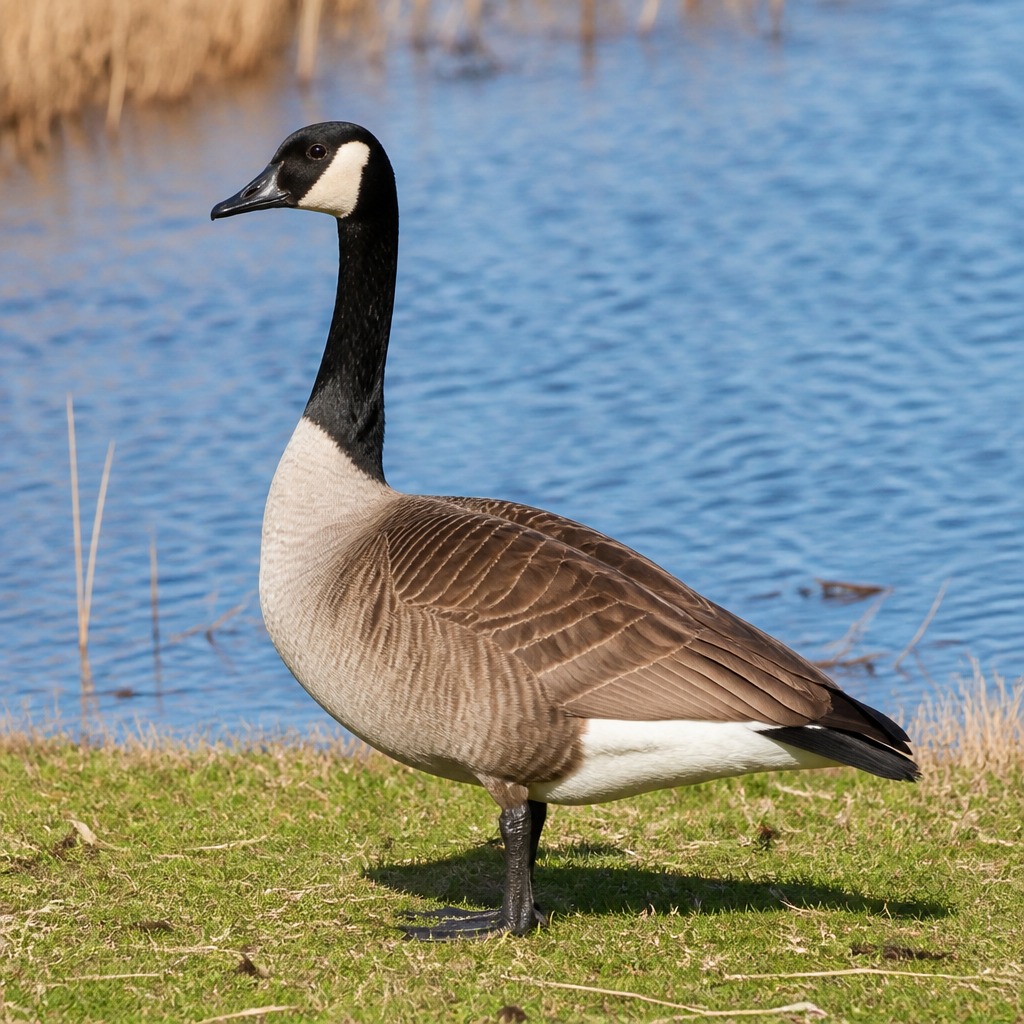
Black head and neck with a signature white cheek patch; brownish-gray body with a pale breast. Sexes look identical.
Key field marks
Black neck, white chinstrap, large brownish body.
Size & weight
Length: 75-110 cm; Wingspan: 127-185 cm; Weight: 3-6.5 kg.
Voice — call & song
The recording features rhythmic, deep, nasal 'honks' and 'hinks' typical of a flock in communication or flight.
Diet & foraging
Primarily herbivorous, eating grasses, sedges, grains, and occasionally small insects or fish.
Habitat
Lakes, ponds, bays, marshes, and man-made grassy areas.
Migration & movement
Migratory, though many urban populations are now permanent residents.
Nesting & breeding
Nests on the ground, often on slightly elevated mounds near water; females incubate while males guard.
Similar species
Cackling Goose (Branta hutchinsii) which is smaller with a shorter neck and bill.
Ecological significance
Disperses seeds through feces and serves as a prey species for large predators; their grazing can significantly alter shoreline vegetation.
Conservation status
Least Concern (Population increasing)
Observation tips
Look for them near parks, golf courses, and farm fields. Approach with caution as they can be defensive during nesting season.
Interesting facts
Canada Geese often mate for life and are famous for their remarkable 'V' flight formation which reduces wind resistance for trailing birds.
More like this