Order: Anseriformes; Family: Anatidae
Bufflehead
Bucephala albeola
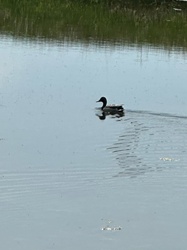
A very small, diving sea duck with a large, bulbous head. They are active swimmers and energetic divers, frequently seen in small groups on open water.
Explore Bufflehead in the encyclopedia →Identify your own birds.
Get a report just like this from any photo or call, free.
Plumage & appearance
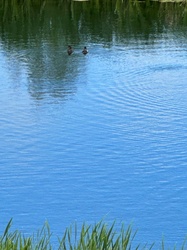
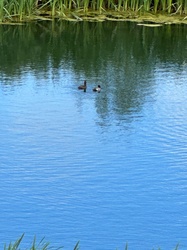
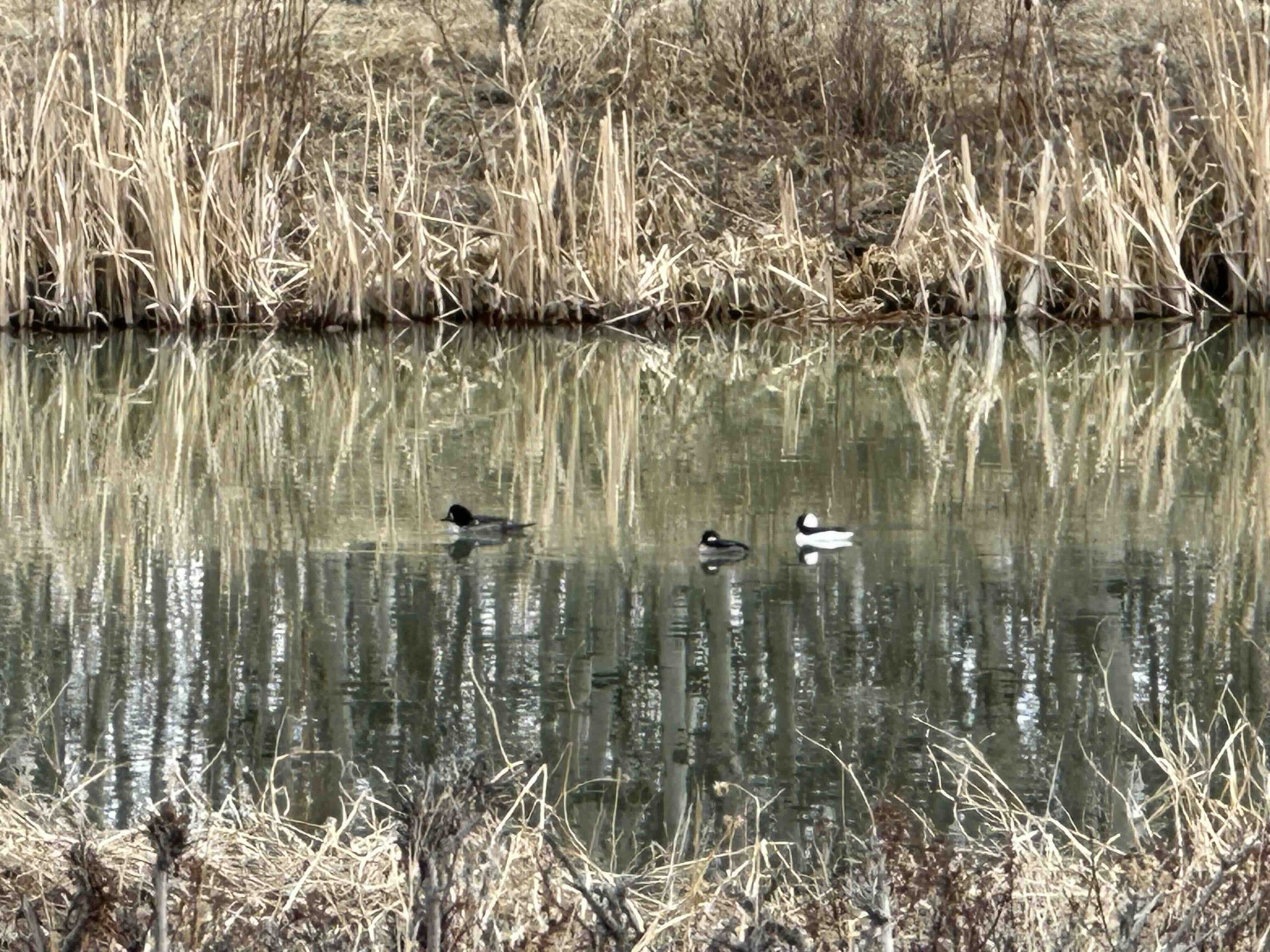
Adult males (right) have a striking white patch on the back of a large, puffy, iridescent dark head, with a white body and black back. Females (middle/left) and juveniles are drab gray-brown with a distinct oval white patch on the cheek.
Key field marks
Small size; large 'buffy' head; male has large white wedge on back of head; female has single white oval cheek patch.
Size & weight
Length: 32-40 cm (13-16 in); Wingspan: 55 cm (22 in); Weight: 270-550 g (9.5-19.4 oz). One of the smallest North American ducks.
Voice — call & song
Generally silent; males give a guttural squeaky 'juk' during courtship, while females have a soft 'quack'.
Diet & foraging
Aquatic invertebrates (insects, crustaceans, mollusks) and occasionally small fish or seeds, caught by diving underwater.
Habitat
Breeding: Small ponds and lakes near boreal forests with cavity-bearing trees. Wintering: Sheltered coastal waters, estuaries, and inland lakes or slow-moving rivers.
Migration & movement
Migratory. They move from northern breeding grounds to southerly coastal and inland waters as ice forms in the north.
Nesting & breeding
Secondary cavity nesters, almost exclusively using old Northern Flicker holes. They lay 6-11 cream-colored eggs. The female alone incubates the eggs and leads the precocial ducklings to water.
Similar species
Hooded Merganser (male has a black border around a white crest; female has a cinnamon crest); Common Goldeneye (larger, male has a round white spot near the bill rather than a large patch behind the eye).
Ecological significance
As insectivores and molluscivores, they help regulate aquatic invertebrate populations. They are also important cavity-nesters, relying on woodpecker holes, which links forest health to aquatic ecosystems.
Conservation status
Least Concern (IUCN); Population trend is currently stable or increasing.
Observation tips
Look for them in sheltered bays, estuaries, or lakes. They are much smaller than other ducks and are almost constantly diving, rarely staying on the surface for more than 15-20 seconds.
Interesting facts
Buffleheads are monochromatic in their cavity choice; they are so small that they can utilize Northern Flicker holes that are too small for other cavity-nesting ducks like Goldeneyes or Wood Ducks.
More like this