Order: Anseriformes, Family: Anatidae
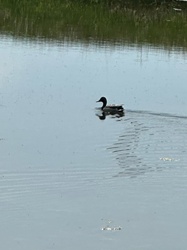
Tufted Duck
Aythya fuligula
A small diving duck with a distinctive ponytail-like crest on the back of its head, often seen in large groups on open water.
Explore Tufted Duck in the encyclopedia →Identify your own birds.
Get a report just like this from any photo or call, free.
Plumage & appearance
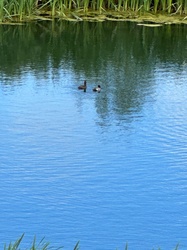
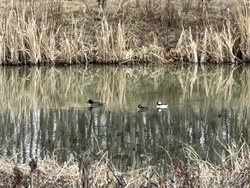
Adult males are black with white flanks and a distinct pendant crest. Females are dark brown with paler flanks and a smaller crest.
Key field marks
The drooping head tuft (crest), bright yellow eyes, and high-contrast white flanks on the male.
Size & weight
Length: 40-47 cm; Wingspan: 67-73 cm; Weight: 500-1000 g
Voice — call & song
Mostly silent, but the male has a soft whistling 'wit-oo' and the female a harsh 'karr'.
Diet & foraging
Omnivorous, mainly eating mollusks, aquatic insects, and some plants, obtained by diving.
Habitat
Lakes, ponds, slow-moving rivers, and sometimes coastal lagoons and marshes.
Migration & movement
Migratory and resident; northern populations move south to temperate regions of Europe and Asia for winter.
Nesting & breeding
Nests on the ground near water, often in dense vegetation or on islands; lays 6-14 greenish eggs.
Similar species
Greater Scaup (lacks crest, has gray back), Ring-necked Duck (peaked head shape, gray sides).
Ecological significance
Helps control populations of aquatic invertebrates and acts as a food source for larger predators and raptors.
Conservation status
Least Concern (IUCN); stable population
Observation tips
Look for them in deep water bodies where they can dive; they are often found in urban park lakes and are relatively comfortable near humans.
Interesting facts
They can dive to depths of up to several meters and are known to occasionally nest in colonies with gulls for protection.
More like this