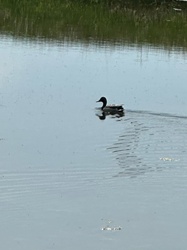
Order: Anseriformes; Family: Anatidae
Egyptian Goose
Alopochen aegyptiaca
A large, colorful waterfowl species that is technically a shelduck despite its common name. They are known for being highly territorial, stubborn, and noisy.
Explore Egyptian Goose in the encyclopedia →Identify your own birds.
Get a report just like this from any photo or call, free.
Plumage & appearance
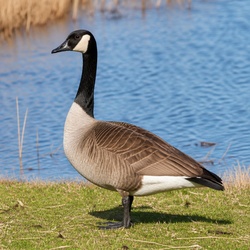
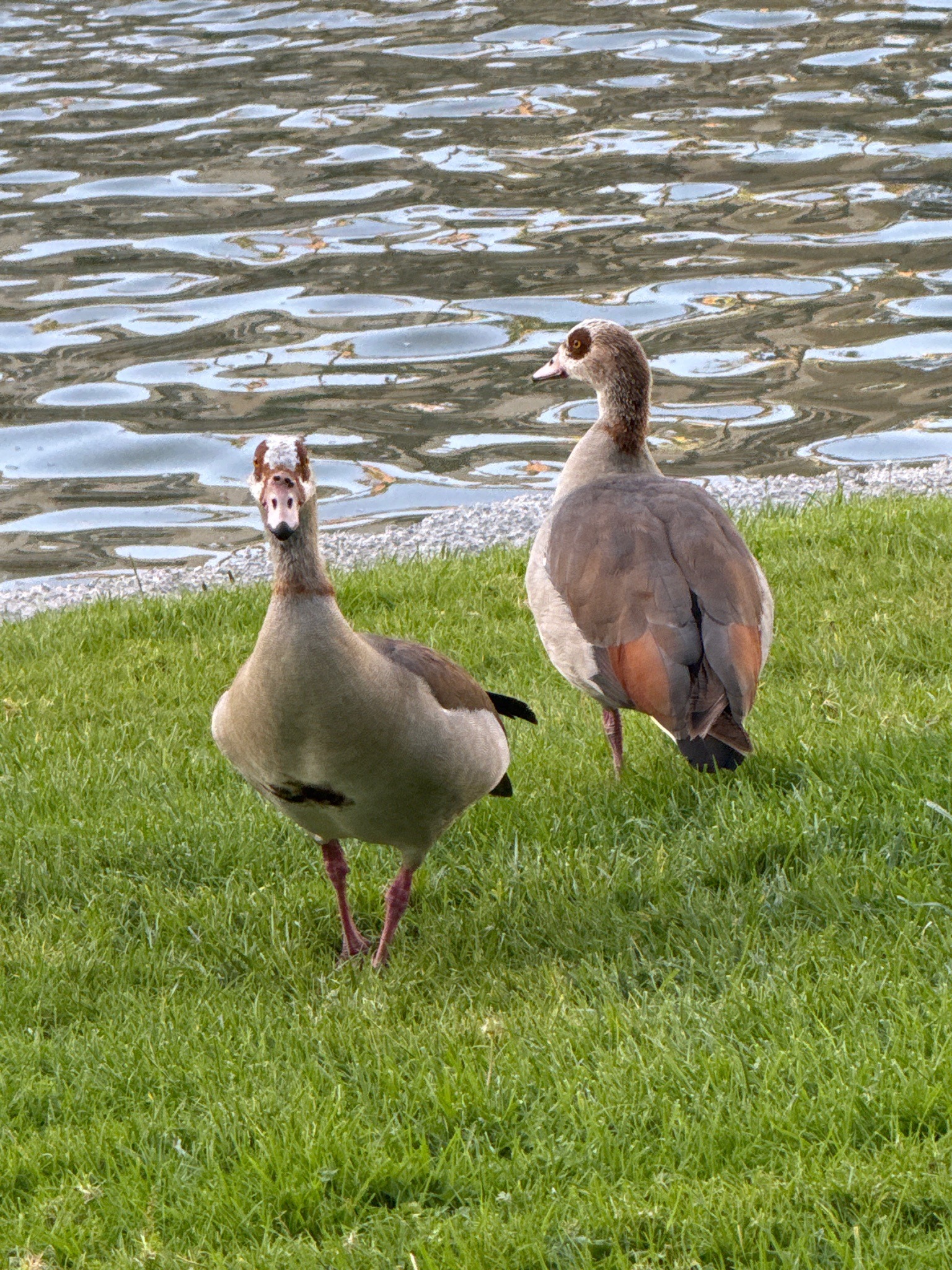
Adults have a pale greyish-brown head and neck with a distinctive large dark brown eye patch. The breast has a dark chocolate-brown patch. Upperparts are darker brown, and wings show white coverts with a green speculum in flight. Sexes are similar, though males are slightly larger; juveniles lack the brown eye and breast patches.
Key field marks
Dark chocolate-colored eye patches, pink legs and feet, a pink bill with a dark tip and base, and a dark brown patch on the center of the breast.
Size & weight
Length: 63-73 cm (25-29 in); Wingspan: 134-154 cm (53-61 in); Weight: 1.5-2.25 kg (3.3-5 lbs).
Voice — call & song
Noisy and vocal. Males produce a hoarse, wheezing hiss; females produce a loud, harsh, repetitive quack or 'honk' especially when alarmed.
Diet & foraging
Mainly herbivorous, feeding on seeds, leaves, grasses, and plant stems. Occasionally eats insects, worms, or frogs.
Habitat
Open country near water, including lakes, rivers, marshes, estuaries, and increasingly urban parks and agricultural fields.
Migration & movement
Mostly sedentary/resident, though it may move locally in response to water availability or drought in its native African range.
Nesting & breeding
Nests in a variety of places: holes in trees, abandoned large nests of other birds, on the ground, or on ledges. Clutch size is typically 5-11 eggs, incubated for about 28-30 days primarily by the female.
Similar species
Orinoco Goose (smaller, different face pattern) and various Shelducks. The unique dark eye patch and breast patch are the best identifiers.
Ecological significance
Acts as both a grazer and prey species. In introduced areas, they can compete with native waterfowl for nesting sites and food resources.
Conservation status
Least Concern (Population increasing)
Observation tips
Often found in parks near water and on golf courses. They are fairly bold and can be approached relatively closely for photography, but use caution during breeding season as they are aggressive.
Interesting facts
Ancient Egyptians considered them sacred and they were frequently depicted in their artwork. Despite their name, they are more closely related to shelducks than to 'true' geese.
More like this