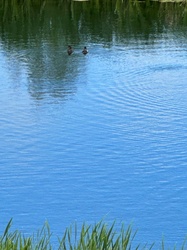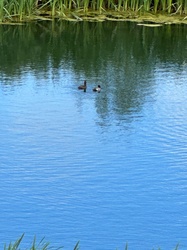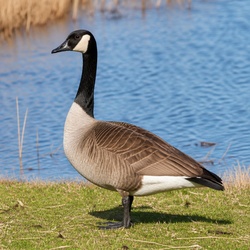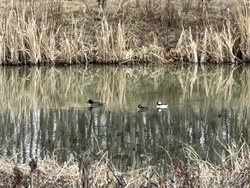
Order: Anseriformes, Family: Anatidae
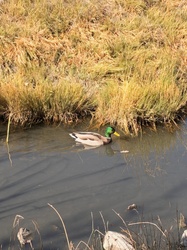
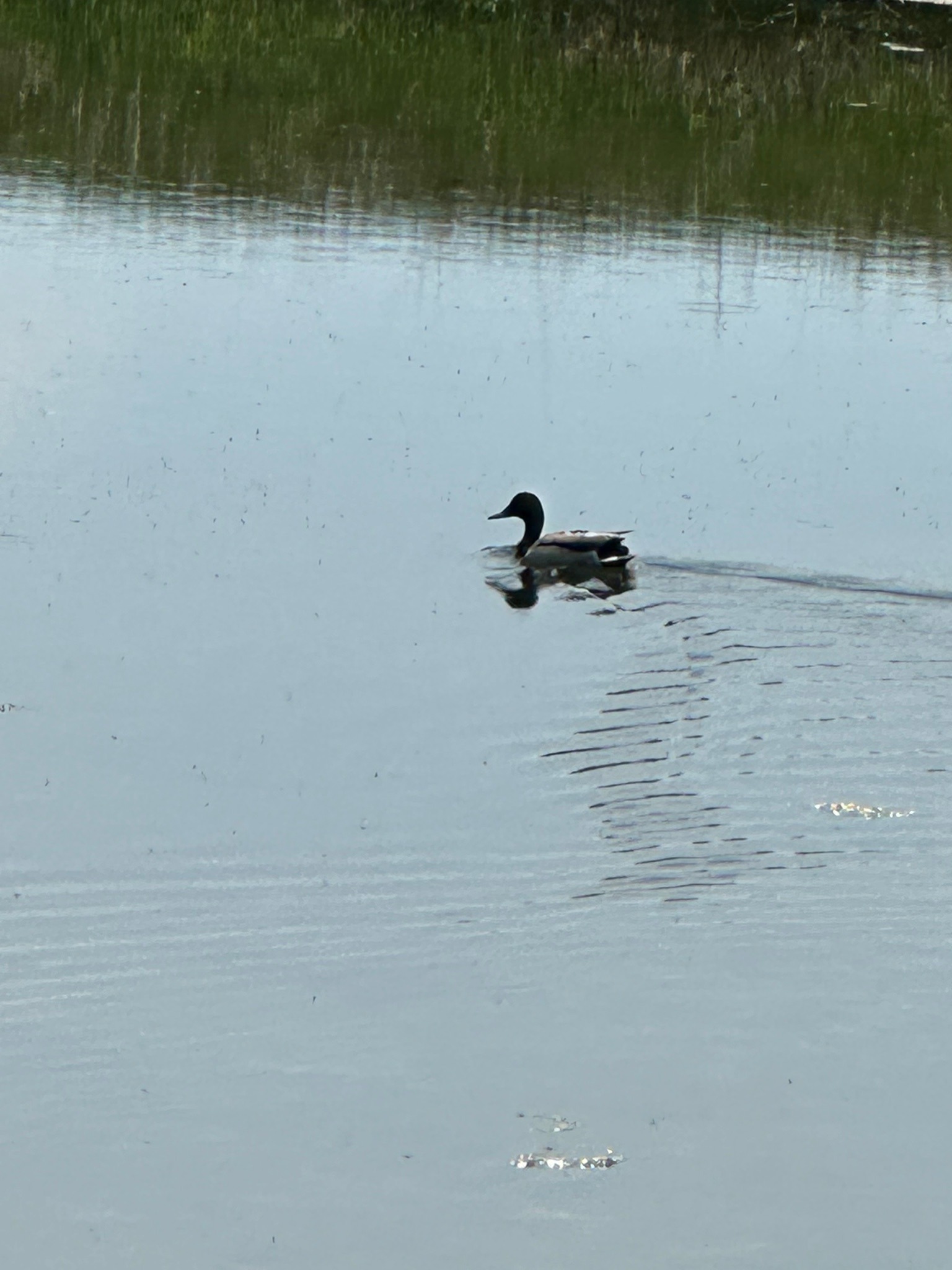
Mallard
Anas platyrhynchos
A medium-sized dabbling duck known for its iconic green head and adaptable nature. It forages by tipping forward in the water.
Explore Mallard in the encyclopedia →Identify your own birds.
Get a report just like this from any photo or call, free.
Plumage & appearance
Males (drakes) have a metallic green head, yellow bill, and white neck ring. Females (hens) are mottled brown with a dark eye stripe and orange-and-black bill. Both have a blue-purple wing patch (speculum) bordered with white.
Key field marks
Metallic green head (male), white neck ring (male), blue-purple speculum with white borders (both sexes).
Size & weight
Length: 50-65 cm; Wingspan: 81-98 cm; Weight: 0.7-1.6 kg.
Voice — call & song
The female produces the classic loud 'quack'; the male has a quieter, rasping 'rab' or 'kwek' sound.
Diet & foraging
Omnivorous; eats aquatic plants, seeds, insects, small crustaceans, and occasionally small fish or grain from fields.
Habitat
Wetlands, lakes, rivers, marshes, and urban ponds. Highly adaptable to human-altered landscapes.
Migration & movement
Partial migrant; many populations remain resident if food and water are available, while northern populations move south for winter.
Nesting & breeding
Nests on the ground near water, often hidden in vegetation. Clutches average 8-13 eggs. Only the female incubates and cares for ducklings.
Similar species
American Black Duck (darker plumage, no white on speculum edge) and Gadwall (smaller, square head, white wing patch).
Ecological significance
Key member of wetland ecosystems; acts as a seed disperser and is a primary prey species for various predators including raptors and mammals.
Conservation status
Least Concern (IUCN); population is stable and very large.
Observation tips
Easily observed in city parks, ponds, and lakes; look for the curled black tail feathers on males to quickly identify them even at a distance.
Interesting facts
Mallards are the ancestor of almost all domestic duck breeds. They are famous for 'dabbling'—tipping tail-up to reach underwater food.
More like this