Order Anseriformes, Family Anatidae
Greater Scaup
Aythya marila
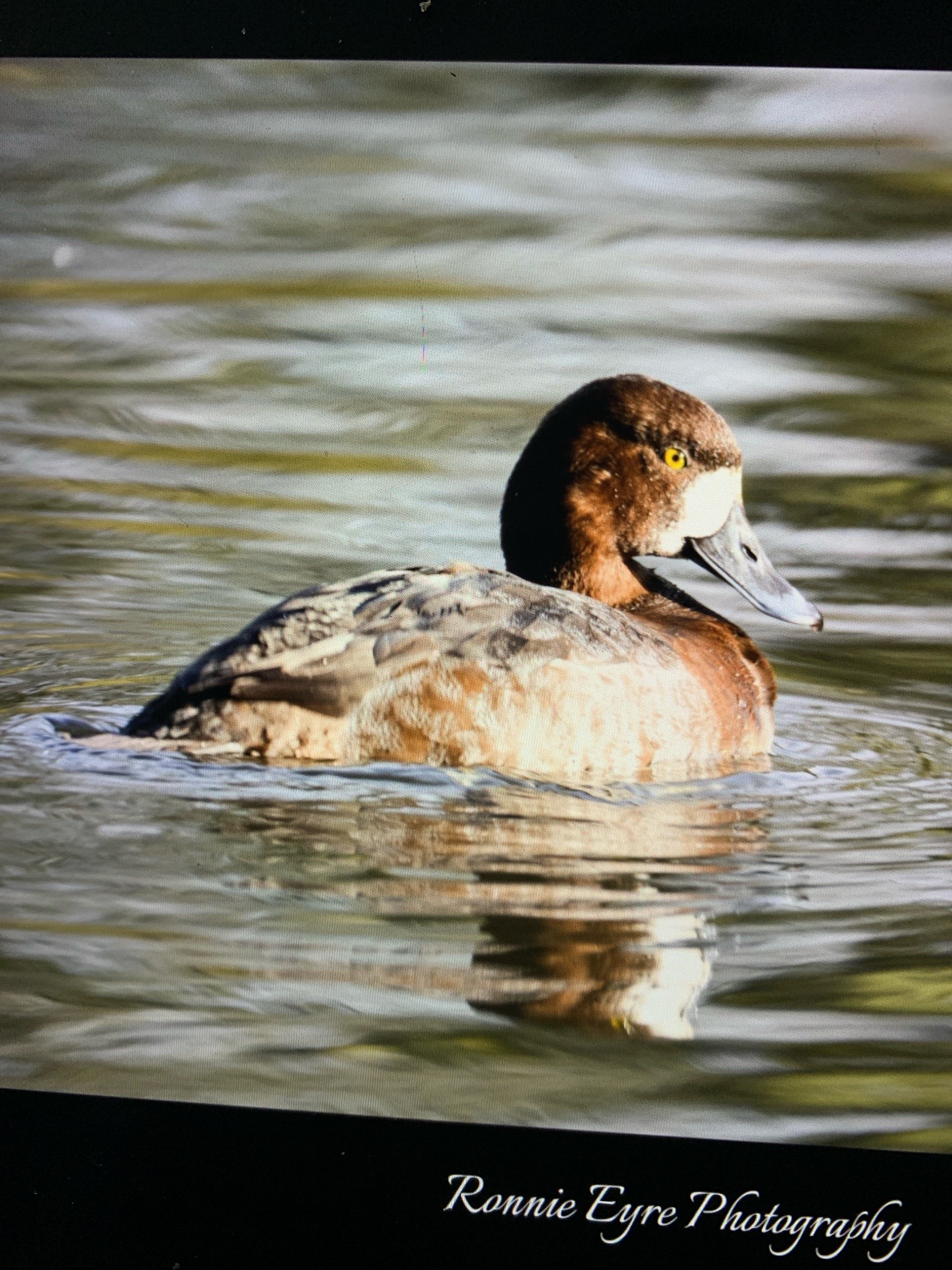
A stocky diving duck with a rounded head shape, bright yellow iris, and a blue-grey bill with a black nail. Females feature a prominent white patch around the bill base.
Explore Greater Scaup in the encyclopedia →Identify your own birds.
Get a report just like this from any photo or call, free.
Plumage & appearance
Adult males have a black head with a green gloss, a black breast, pale grey vermiculated back, and a black tail. Adult females have brown plumage with a distinct white patch at the base of the bill and sometimes a paler ear region.
Key field marks
Rounded head profile, bright yellow eye, blue-grey bill, and lack of a distinct crest; females have a sharp white patch at the base of the bill.
Size & weight
Length: 39-51 cm, Wingspan: 73-85 cm, Weight: 720-1350 g
Voice — call & song
Generally quiet away from breeding grounds; males give a soft purring whistle, while females emit a harsh, low scolding growl or 'arr-arr'.
Diet & foraging
Primarily mollusks, crustaceans, aquatic insects, and some plant matter, obtained by diving underwater.
Habitat
Large lakes, sheltered coastal bays, estuaries, and deep rivers during winter; tundra lakes and ponds during the breeding season.
Migration & movement
Migratory; travels in large flocks from high arctic breeding grounds to temperate coastal and inland waters for the winter.
Nesting & breeding
Nests on the ground near water, often hidden in dense vegetation or on islands; clutch size is typically 7-11 olive-buff eggs laid in spring.
Similar species
Lesser Scaup, which is slightly smaller, has a more peaked rear head shape (often with a purplish gloss in males), and usually prefers freshwater habitats.
Ecological significance
Acts as a key predator of benthic invertebrates, helping to regulate populations of mussels, clams, and snails in aquatic ecosystems.
Conservation status
Least Concern, though populations can experience localized fluctuations depending on breeding ground conditions.
Observation tips
Scan large flocks of diving ducks on deep lakes or marine bays in winter using a spotting scope; look for the rounded head shape and yellow eye.
Interesting facts
Greater Scaup are exceptionally strong divers and can submerge to depths of several meters to forage on the bottom of lakes and coastal waters.
More like this