Order: Anseriformes, Family: Anatidae
Cotton Pygmy Goose
Nettapus coromandelianus
One of the world's smallest waterfowl, characterized by a short, high-pitched bill reminiscent of a goose, a rounded head, and striking iridescent green wing patches.
Explore Cotton Pygmy Goose in the encyclopedia →Identify your own birds.
Get a report just like this from any photo or call, free.
Plumage & appearance
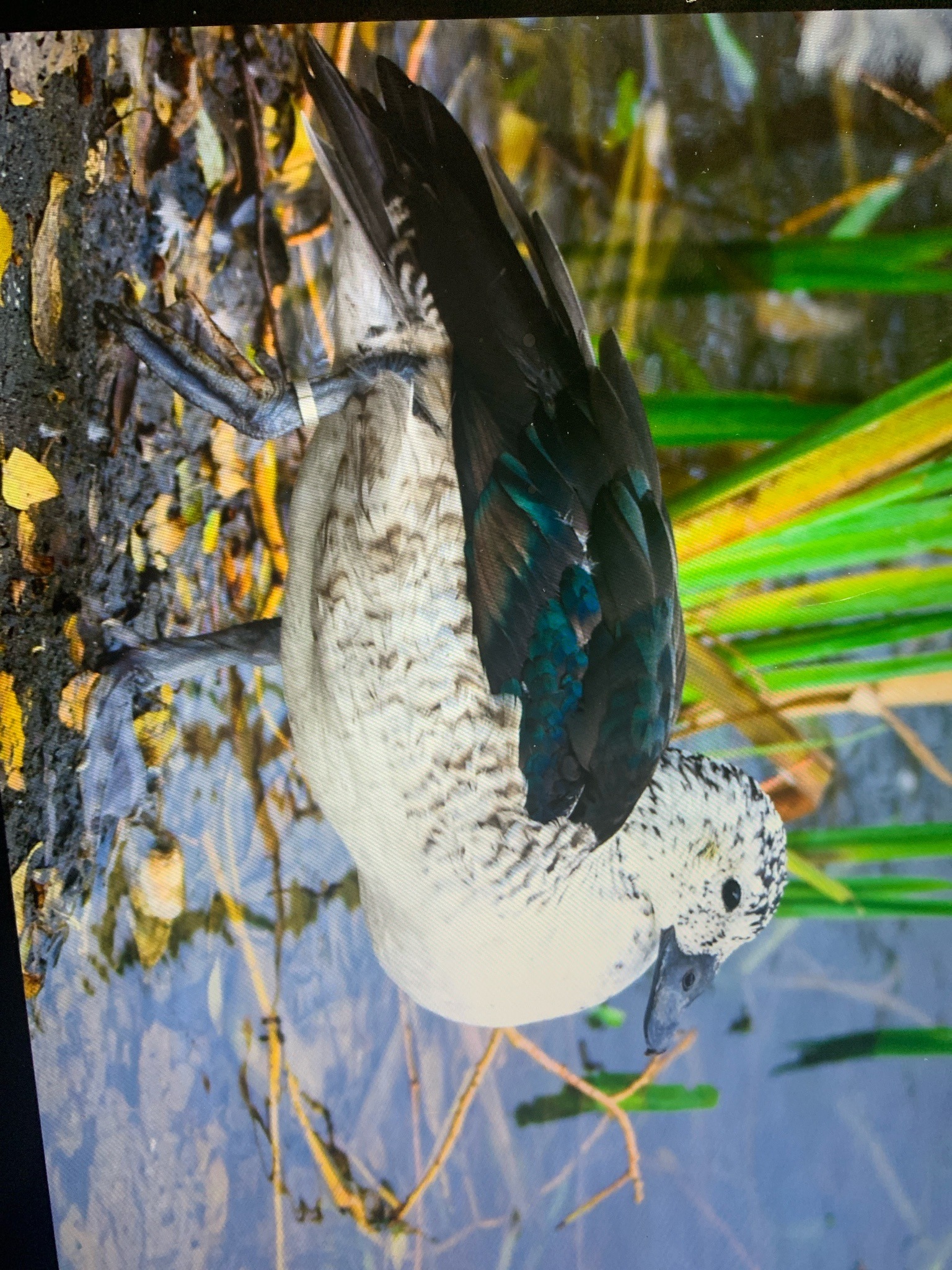
Males in breeding plumage have a white head, neck, and underparts, with a distinct black collar, glossy dark green back and wings, and a white patch on the outer primaries visible in flight. Females and non-breeding males are duller, grayish-brown above, with a mottled face and lack the black collar.
Key field marks
Extremely small size, short goose-like bill, predominantly white head and underparts contrasting with glossy dark green upperparts, and the black neck ring in breeding males.
Size & weight
Length: 30-37 cm, Wingspan: 56-66 cm, Weight: 250-450 g
Voice — call & song
A high-pitched, rapid cackling or whistling sound, often given in flight or when disturbed, described as a repetitive 'pip-pip-pip'.
Diet & foraging
Primarily vegetarian, feeding on seeds, shoots, and aquatic vegetation, especially water lilies (Nymphaea species), supplemented occasionally by small insects and crustaceans.
Habitat
Freshwater wetlands, permanent lakes, swamps, sluggish rivers, and flooded agricultural fields with abundant floating vegetation.
Migration & movement
Generally resident, but undergoes local nomadic movements during dry seasons or floods to find suitable water bodies.
Nesting & breeding
Nests in tree cavities, hollows, or old nest boxes near water, laying a clutch of 6 to 12 eggs. Incubation is done primarily by the female.
Similar species
Green Pygmy Goose (Nettapus pulchellus), which has a more barred pattern on the flanks and lacks the black neck collar; males have a distinctive green patch on the face.
Ecological significance
Acts as a seed disperser and helps maintain aquatic plant populations through grazing, while also serving as a prey species for larger wetland predators.
Conservation status
IUCN Least Concern, with stable populations overall though locally impacted by wetland degradation.
Observation tips
Look for them resting on water lily pads or perched in dead trees near water bodies. They can be elusive and dive when disturbed rather than flying away.
Interesting facts
Despite being called a 'goose', they are actually perching ducks closely related to dabbling ducks and possess the unusual ability to perch high up in trees.
More like this