Order: Anseriformes, Family: Anatidae
Swan Goose (Domestic form, Chinese Goose)
Anser cygnoides domesticus
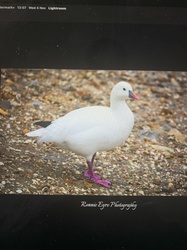
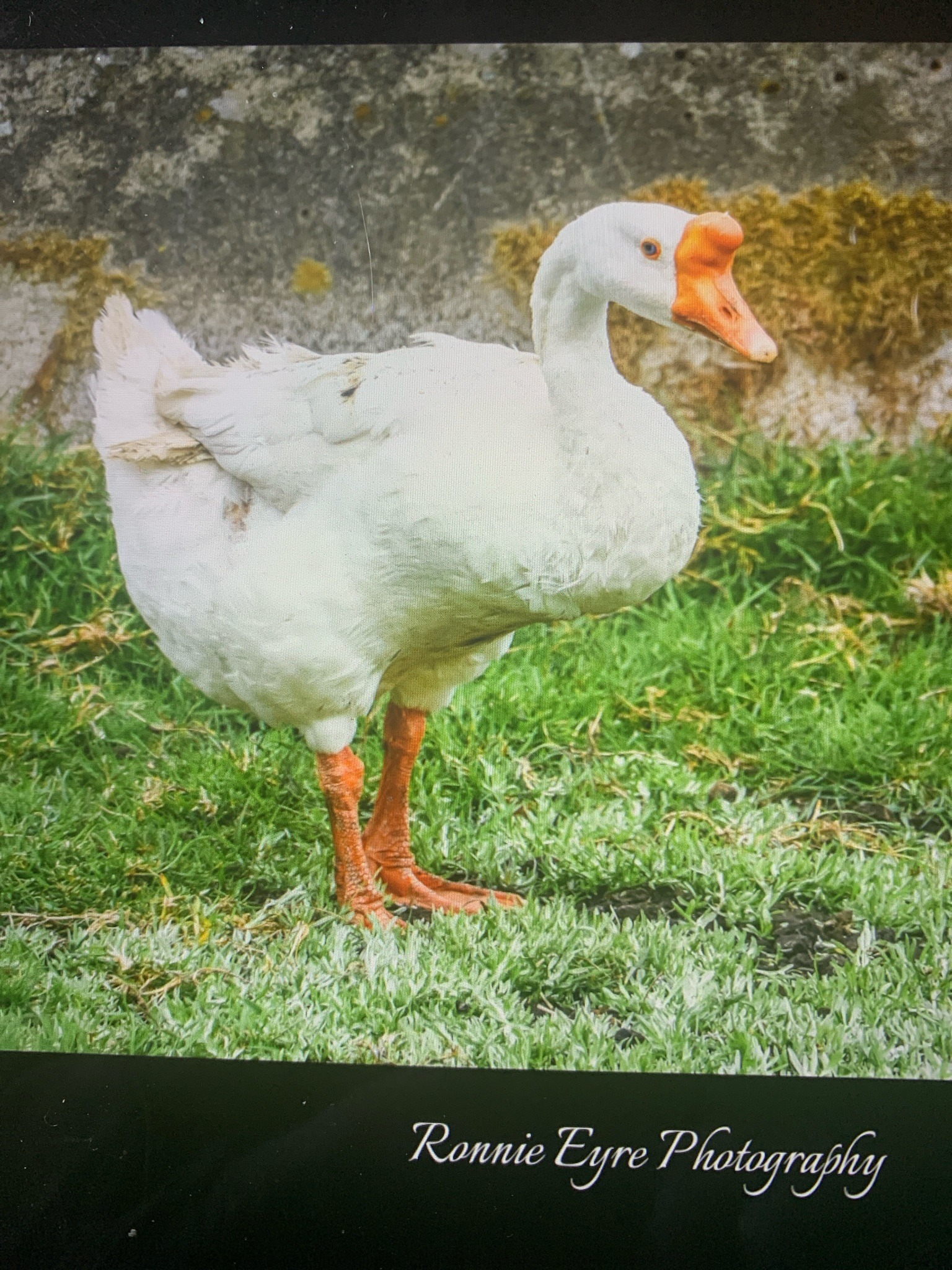
A large, graceful goose distinguished by a prominent bulbous knob at the base of its bill. Domestic forms often feature pure white feathers and bright orange bills and legs.
Explore Swan Goose (Domestic form, Chinese Goose) in the encyclopedia →Identify your own birds.
Get a report just like this from any photo or call, free.
Plumage & appearance
The wild Swan Goose features brown, gray, and white plumage with a dark brown stripe down the back of the neck. The domestic variant shown here (Chinese Goose) typically has solid white plumage, though a brown variety also exists. Both sexes have similar plumage, but males generally have a larger, more prominent basal knob.
Key field marks
Prominent orange knob at the base of the bill, upright posture, long neck, and bright orange-yellow legs and feet.
Size & weight
Length: 81-94 cm (32-37 inches); Wingspan: approx. 140-160 cm; Weight: 3 to 5.5 kg (heavier in domestic breeds).
Voice — call & song
Loud, high-pitched honking or squeaky trumpet-like calls, often used as an alarm or to communicate within the flock.
Diet & foraging
Herbivorous. Grazes on grasses, sedges, aquatic plants, roots, seeds, and occasional agricultural grains.
Habitat
Found primarily in agricultural lands, rural homesteads, public parks, and farm ponds.
Migration & movement
Resident. Domestic and feral populations do not migrate, remaining in their established territories year-round.
Nesting & breeding
Builds a shallow depression lined with down and plant matter on the ground near water. Clutch size ranges from 5 to 10 eggs, incubated primarily by the female while the gander guards the nest.
Similar species
African Goose (another domestic breed derived from the Swan Goose, which has a larger dewlap under the chin and an even more pronounced knob). Can also be distinguished from Canada Geese by the distinctive bill knob and coloration.
Ecological significance
Domestic geese play roles in agricultural weed and pest control, grazing pastures, and occasionally acting as guard animals against predators due to their loud vocalizations.
Conservation status
Wild Anser cygnoides is classified as Endangered by the IUCN due to habitat loss and overhunting, but domestic populations (Chinese Geese) are secure and widespread in captivity.
Observation tips
Easily observed in domestic settings, farmyards, parks, and agricultural displays. Approach calmly, as territorial ganders can be defensive.
Interesting facts
Chinese Geese are known for their exceptional vigilance and loud calls, earning them the nickname 'watchdog geese' because they will loudly alert owners to intruders or predators.
More like this