Order: Anseriformes, Family: Anatidae
Common Goldeneye
Bucephala clangula
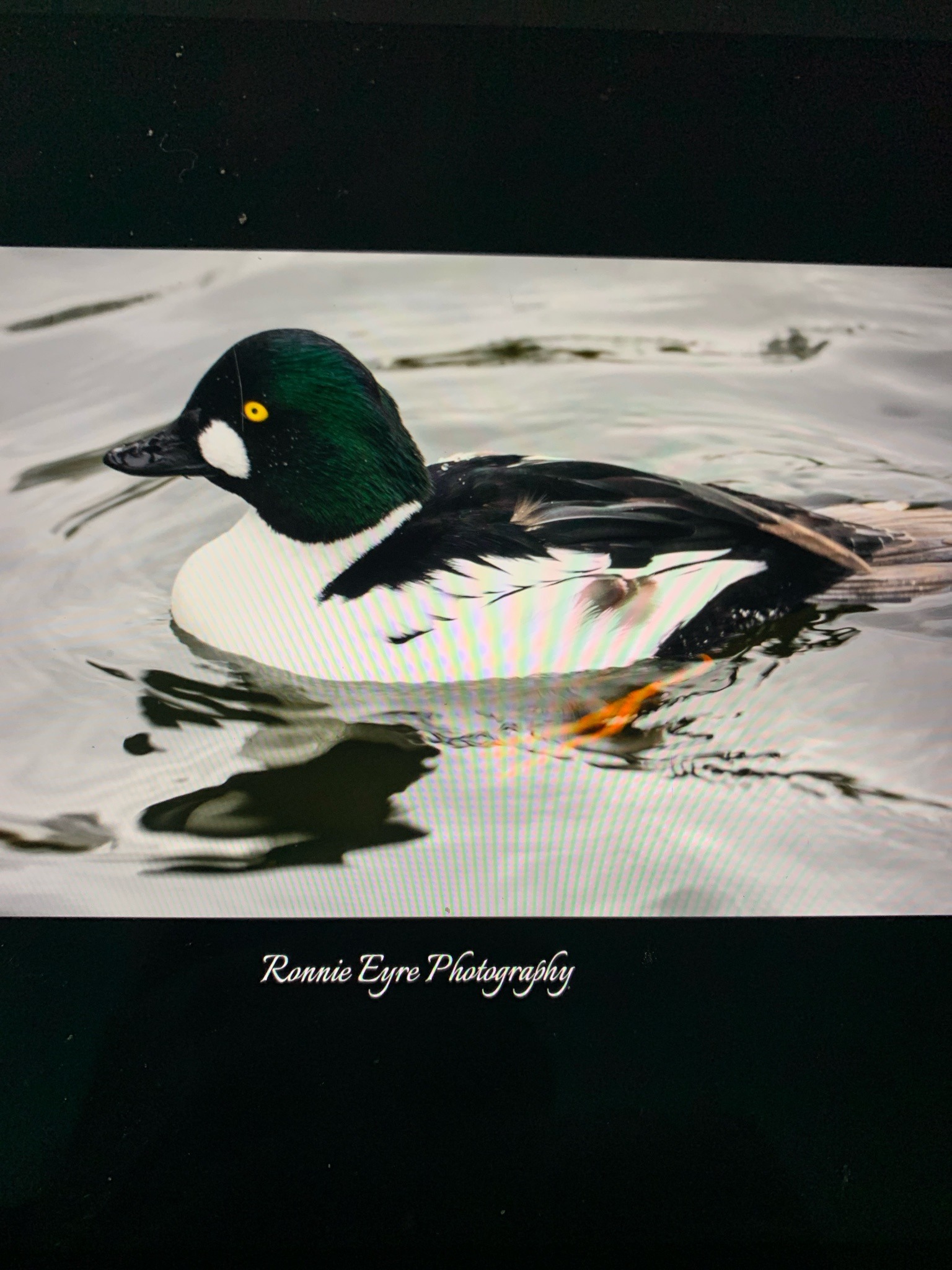
A medium-sized diving duck known for its striking golden-yellow eyes and the bold circular white cheek patch on the male's puffy dark head.
Explore Common Goldeneye in the encyclopedia →Identify your own birds.
Get a report just like this from any photo or call, free.
Plumage & appearance
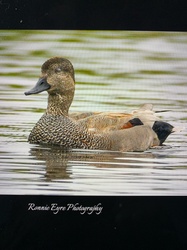
Adult males have a dark head with a glossy green sheen and a distinct round white patch below the eye, bright yellow eyes, black-and-white patterned back and sides, and a mostly white breast. Females have a brown head, a grey body, and a yellow-tipped bill. Juveniles resemble females.
Key field marks
Puffy dark head with green gloss, bright golden-yellow eye, prominent round white cheek patch, and striking black-and-white body pattern in males.
Size & weight
Length: 40-50 cm (15.7-19.7 in), Wingspan: 65-84 cm (25.6-33.1 in), Weight: 500-1300 g (1.1-2.9 lbs).
Voice — call & song
Generally quiet outside of breeding season; males give a high-pitched, rasping squeak or zzt-ik call during courtship displays.
Diet & foraging
Primarily carnivorous, feeding on aquatic insects, crustaceans, small fish, and mollusks by diving and foraging along the bottom.
Habitat
Taiga lakes and rivers during the breeding season; sheltered coastal bays, estuaries, and large unfrozen lakes and rivers in winter.
Migration & movement
Short to medium-distance migrant; leaves northern breeding grounds as waters freeze and moves to ice-free coastal and inland waters.
Nesting & breeding
Nests in natural tree cavities or large nest boxes, often near water. Lays 6-11 olive-green eggs. Females incubate alone.
Similar species
Barrow's Goldeneye, which has a crescent-shaped white facial patch instead of a round one and a steeper forehead.
Ecological significance
Acts as an important predator of aquatic invertebrates, helping regulate populations of insects, crustaceans, and small mollusks in freshwater and marine habitats.
Conservation status
Least Concern (IUCN), with stable global population trends.
Observation tips
Look for them diving repeatedly in open water bodies during winter. They are easily spooked, so approach slowly and use binoculars from a distance.
Interesting facts
Common Goldeneyes get their name from their brilliant yellow eyes. Their rapid, shallow wingbeats produce a distinctive whistling sound in flight, earning them the nickname 'whistler'.
More like this