Order: Anseriformes, Family: Anatidae
Gadwall
Mareca strepera
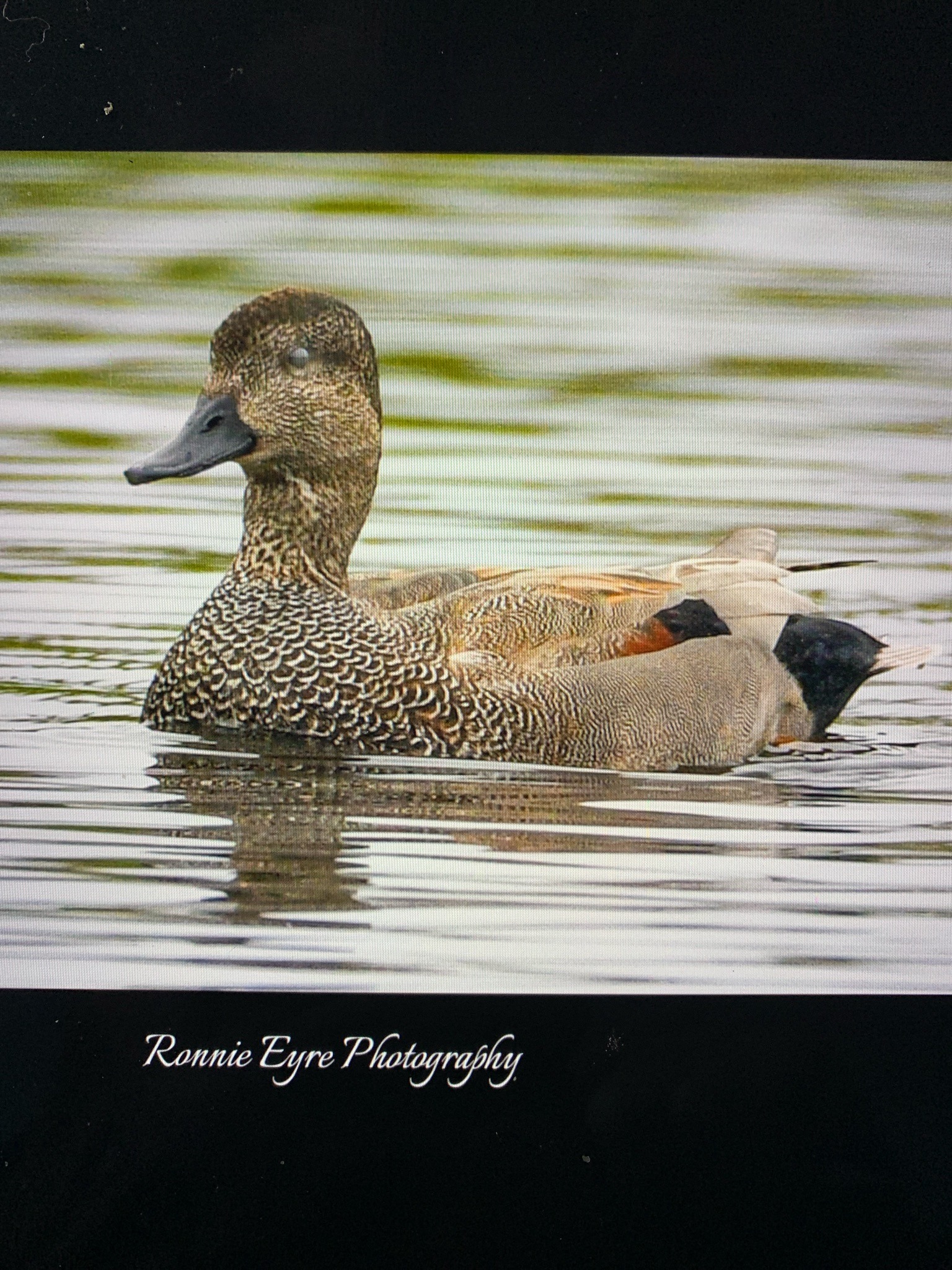
A medium-sized dabbling duck that often appears rather plain or grayish from a distance, but closer inspection reveals intricate scale-like feather patterns.
Explore Gadwall in the encyclopedia →Identify your own birds.
Get a report just like this from any photo or call, free.
Plumage & appearance
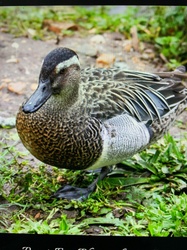
Adult males in breeding plumage are subtly patterned with fine gray and black vermiculations, a brownish head, a distinctive black rear end (undertail coverts), and a white speculum visible in flight. Females are mottled brown, closely resembling a female mallard but distinguished by their orange-edged bill and white speculum. Non-breeding males (eclipse) resemble females.
Key field marks
Male: Gray body, black rear end, white speculum on the wing. Female: Mottled brown body, white speculum, and a dark bill with distinct orange edges.
Size & weight
Length: 46-56 cm (18-22 in), Wingspan: 78-90 cm (31-35 in), Weight: 500-1000 g (1.1-2.2 lbs)
Voice — call & song
Females give a loud, Mallard-like quack, though typically higher-pitched and sharper. Males produce low-pitched, burping notes and whistles.
Diet & foraging
Primarily herbivorous, feeding on stems, leaves, seeds, and roots of aquatic vegetation. Will also consume insects, mollusks, and small fish, especially during breeding season.
Habitat
Prefers shallow freshwater wetlands, marshes, prairie potholes, lakes, and occasionally coastal estuaries or sheltered bays with abundant emergent vegetation.
Migration & movement
Migratory; northern populations move south for the winter, though some populations are resident in mild coastal or inland areas.
Nesting & breeding
Nests on the ground hidden in dense vegetation, often some distance from water. Lays 7 to 12 creamy white eggs. Incubation lasts about 26-32 days, performed solely by the female.
Similar species
Female Mallard and Northern Pintail females. The Gadwall is distinguished by its white wing patch (speculum) visible in all plumages and the male's distinct black rear.
Ecological significance
Acts as a seed disperser for aquatic plants and helps control populations of aquatic insects and invertebrates. They also serve as prey for various raptors and carnivorous mammals.
Conservation status
Least Concern, with stable or increasing global populations.
Observation tips
Look for them in shallow wetlands and lakes alongside other dabbling ducks. They can be shier than Mallards, so using binoculars or a spotting scope from a distance yields the best views.
Interesting facts
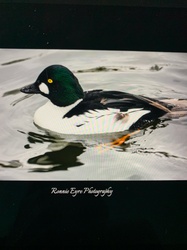
Gadwalls are notorious nutritional thieves, frequently stealing food that diving ducks have brought up from the bottom of the lake.
More like this