Order: Accipitriformes, Family: Accipitridae
Bald Eagle
Haliaeetus leucocephalus
A large bird of prey with a massive hooked bill, broad wings, and a short, rounded tail. Juveniles appear mottled brown and white before developing the iconic white head and tail as adults.
Explore Bald Eagle in the encyclopedia →Identify your own birds.
Get a report just like this from any photo or call, free.
Plumage & appearance
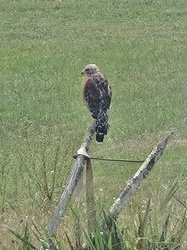
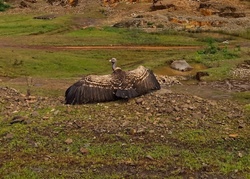
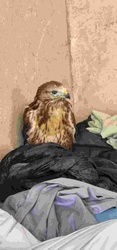
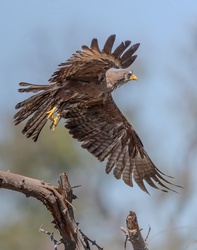
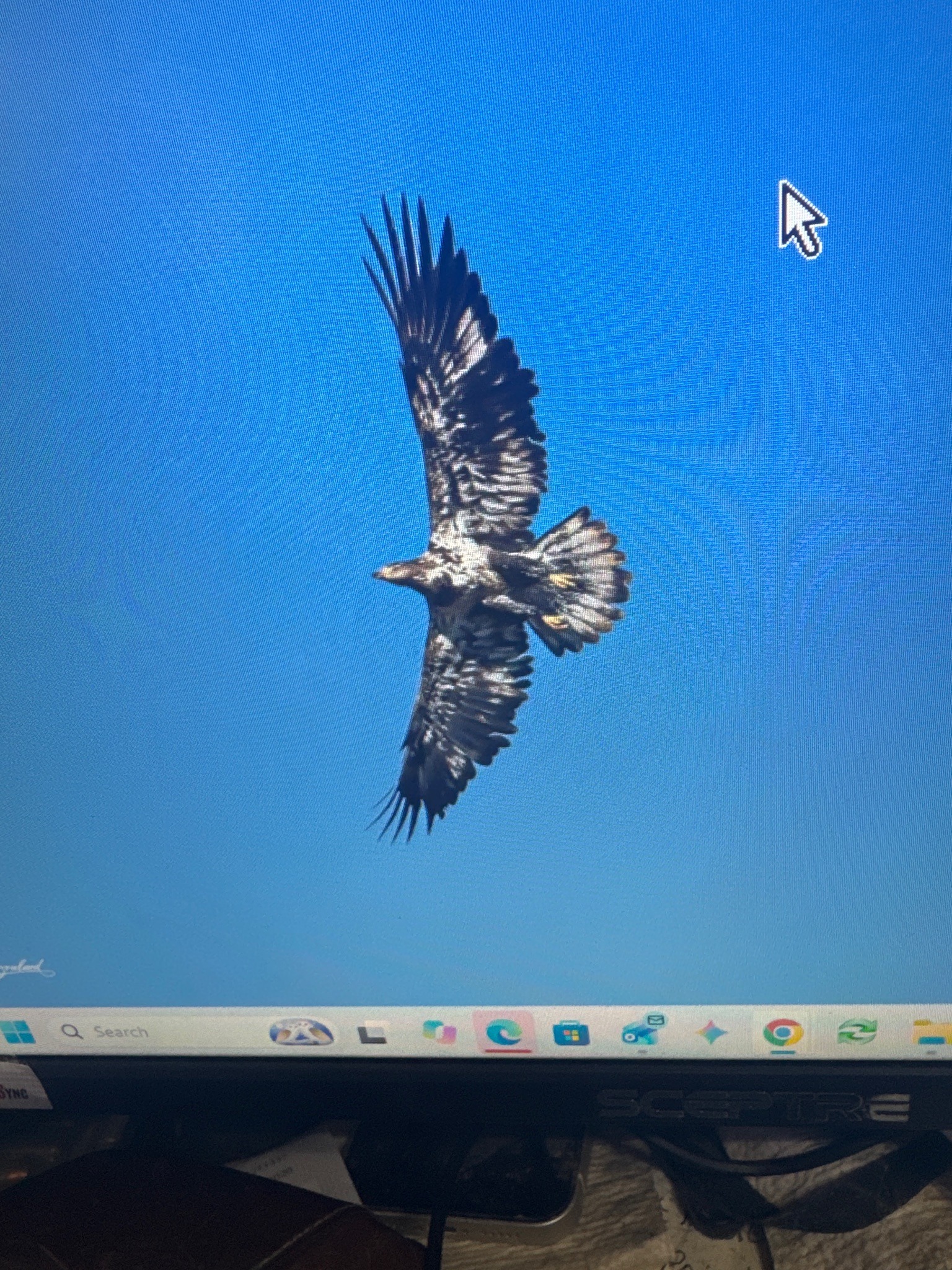
Adults have a distinctive white head and tail with a dark brown body and wings. Juveniles and immatures (like the one in the image) are mostly dark brown with varying amounts of white mottling on the body, wings, and tail, taking about four to five years to attain adult plumage.
Key field marks
Juveniles show a heavy body, massive yellow bill, mottled brown and white underparts and wings, and a relatively short tail.
Size & weight
Length: 70–102 cm (28–40 in); Wingspan: 1.8–2.3 m (5.9–7.5 ft); Weight: 3–6.3 kg (6.6–13.9 lb), with females being noticeably larger than males.
Voice — call & song
A series of weak, high-pitched chipping or whistling notes, often described as a cacking sound.
Diet & foraging
Primarily carnivorous, with a strong preference for fish, though they also scavenge carrion and occasionally hunt waterfowl and small mammals.
Habitat
Found near large bodies of standing or flowing water with old-growth trees or tall cliffs for perching, roosting, and nesting.
Migration & movement
Partial migrant. Birds in the far north move south when waters freeze, while coastal and southern populations are permanent residents.
Nesting & breeding
Builds massive stick nests (the largest of any North American bird) high in large trees. Lays 1 to 3 eggs per clutch, with both parents sharing incubation and feeding duties.
Similar species
Golden Eagle, which can be distinguished in juvenile plumage by fully feathered legs, narrower wings, and a different tail pattern lacking the extensive white mottling typical of immature Bald Eagles.
Ecological significance
Acts as an apex predator in aquatic ecosystems, helping to maintain the health and balance of fish and small mammal populations.
Conservation status
IUCN Least Concern, with populations recovering strongly following past declines due to DDT and habitat loss.
Observation tips
Look near large bodies of open water such as lakes, reservoirs, rivers, and coastal areas where fish are abundant. Scan tall trees or soaring high in the sky.
Interesting facts
The Bald Eagle has been the national bird of the United States since 1782 and can dive at speeds of up to 100-160 km/h (60-100 mph) when pursuing prey.
More like this