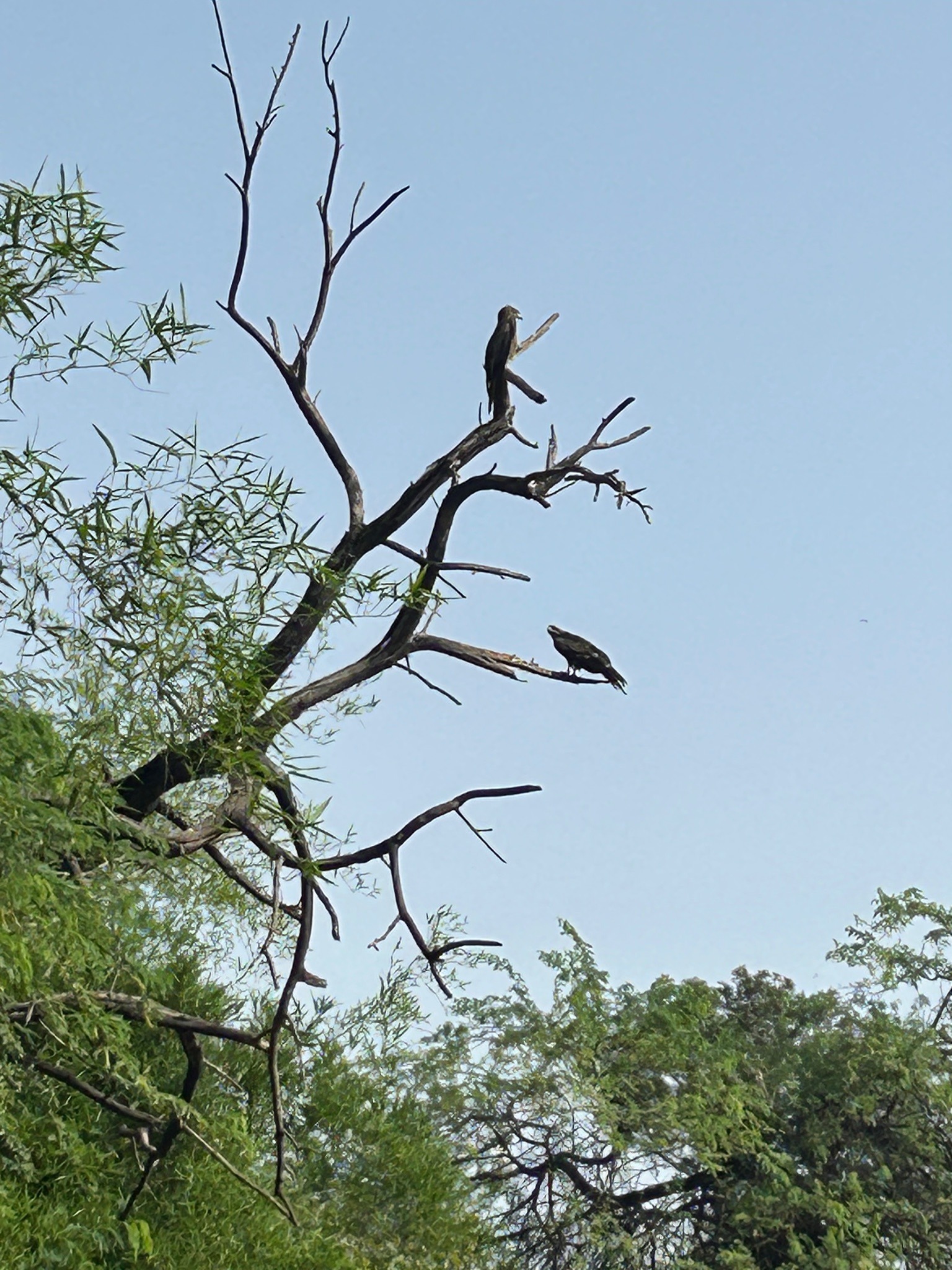
Order: Accipitriformes; Family: Accipitridae
Black Kite
Milvus migrans
A medium-sized raptor known for its opportunistic scavenging behavior and agile flight. It is frequently seen soaring over urban areas, dumps, and water bodies.
Explore Black Kite in the encyclopedia →Identify your own birds.
Get a report just like this from any photo or call, free.
Plumage & appearance
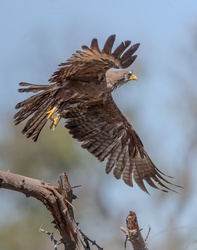
Overall dark brown plumage with some paler streaks on the head and breast. Subspecies vary slightly, but generally possess characteristic light-colored patches under the wing at the base of the primaries. Juveniles are paler and more heavily streaked than adults.
Key field marks
Shallowly forked tail (distinctive in flight), dark brown plumage, and 'fingered' wing tips.
Size & weight
Length: 47-60 cm; Wingspan: 130-155 cm; Weight: 630-940 g.
Voice — call & song
A high-pitched, tremulous whistling 'whee-err-rr-rr' or a shrill 'klee-errr'.
Diet & foraging
Opportunistic carnivore and scavenger. Eats small mammals, birds, fish, insects, lizards, and carrion. Often steals food from other birds.
Habitat
Highly adaptable; found in woodlands, wetlands, edge habitats, and increasingly in urban and suburban environments.
Migration & movement
Highly migratory in northern populations (moving to Africa or South Asia for winter); southern populations are generally resident or nomadic.
Nesting & breeding
Builds a platform nest of sticks, often lined with rags or plastic. Nests are typically high in trees or on cliffs. Clutch size is usually 2-3 eggs.
Similar species
Brahminy Kite (has white head/chest), Red Kite (is larger with a Much deeper forked tail and brighter rufous colors).
Ecological significance
Acts as an important scavenger, cleaning up carrion and human waste, which helps prevent the spread of diseases.
Conservation status
Least Concern (IUCN), though some regional populations may face threats from habitat loss and poisoning.
Observation tips
Look for them near garbage dumps, fish markets, or rivers. They are very vocal and easy to spot when soaring in circles using thermals.
Interesting facts
They are famous for their ability to snatch food from human hands in some regions and have been observed 'fire-foraging,' staying near the edges of wildfires to catch fleeing prey.
More like this