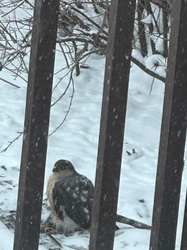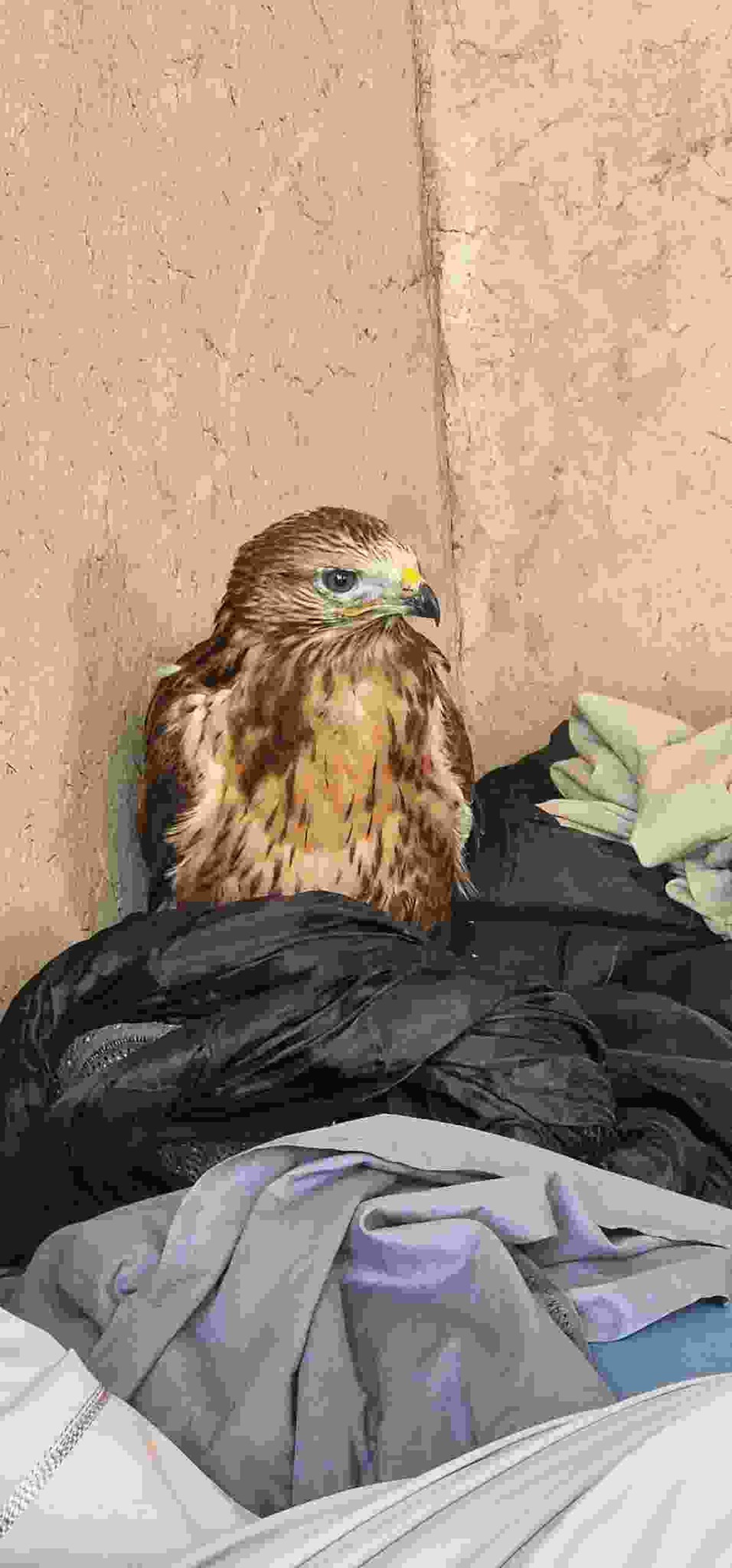
Order: Accipitriformes, Family: Accipitridae
Long-legged Buzzard
Buteo rufinus
A large, robust Buteo hawk with broad wings and a relatively long tail. It is known for its elegant soaring and frequent hovering while hunting in open landscapes.
Explore Long-legged Buzzard in the encyclopedia →Identify your own birds.
Get a report just like this from any photo or call, free.
Plumage & appearance
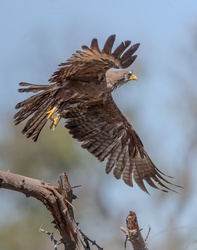
Highly variable. Typically features a pale head and neck, cinnamon-buff breast, and dark belly patches. The tail is often pale orange or reddish-brown without distinct barring. Juveniles are streakier and lack the dark belly.
Key field marks
Pale head and chest contrasting with dark belly patches; unbarred reddish-orange tail; large size with long primary feathers.
Size & weight
Length: 50-65 cm; Wingspan: 115-160 cm; Weight: 600-1,700 g.
Voice — call & song
A typical Buteo 'mewing' call, high-pitched and similar to the Common Buzzard but often deeper: 'peee-yooo'.
Diet & foraging
Primarily small mammals (voles, ground squirrels, hamsters), but also takes lizards, snakes, large insects, and occasionally small birds.
Habitat
Open, dry areas including steppes, semi-deserts, stony plains, and mountain foothills.
Migration & movement
Partial migrant; northern populations move south to Africa and South Asia in winter, while southern populations are year-round residents.
Nesting & breeding
Builds large stick nests on cliffs, in trees, or occasionally on the ground. Lays 2-4 eggs; both parents participate in nesting duties.
Similar species
Common Buzzard (Buteo buteo) - Long-legged is larger, has a paler head and a reddish, unbarred tail. Rough-legged Buzzard - has feathered legs and different tail markings.
Ecological significance
Apex predator that controls populations of small mammals, reptiles, and large insects; helps maintain balance in arid and semi-arid ecosystems.
Conservation status
Least Concern (IUCN); population is generally stable.
Observation tips
Look for them perched on utility poles, rocks, or trees in open country. They are often seen soaring on thermals with wings held in a slight 'V' (dihedral).
Interesting facts
The 'long-legged' name refers to its relatively long tarsi compared to other buzzards, an adaptation for catching prey in open, sparsely vegetated habitats.
More like this