Order: Accipitriformes; Family: Accipitridae
Cooper's Hawk
Accipiter cooperii
A medium-sized hawk with a long, rounded tail and relatively short, rounded wings. They are agile fliers known for hunting birds in wooded or suburban areas.
Explore Cooper's Hawk in the encyclopedia →Identify your own birds.
Get a report just like this from any photo or call, free.
Plumage & appearance
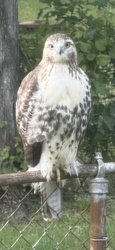
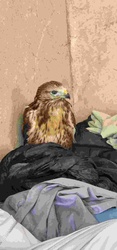
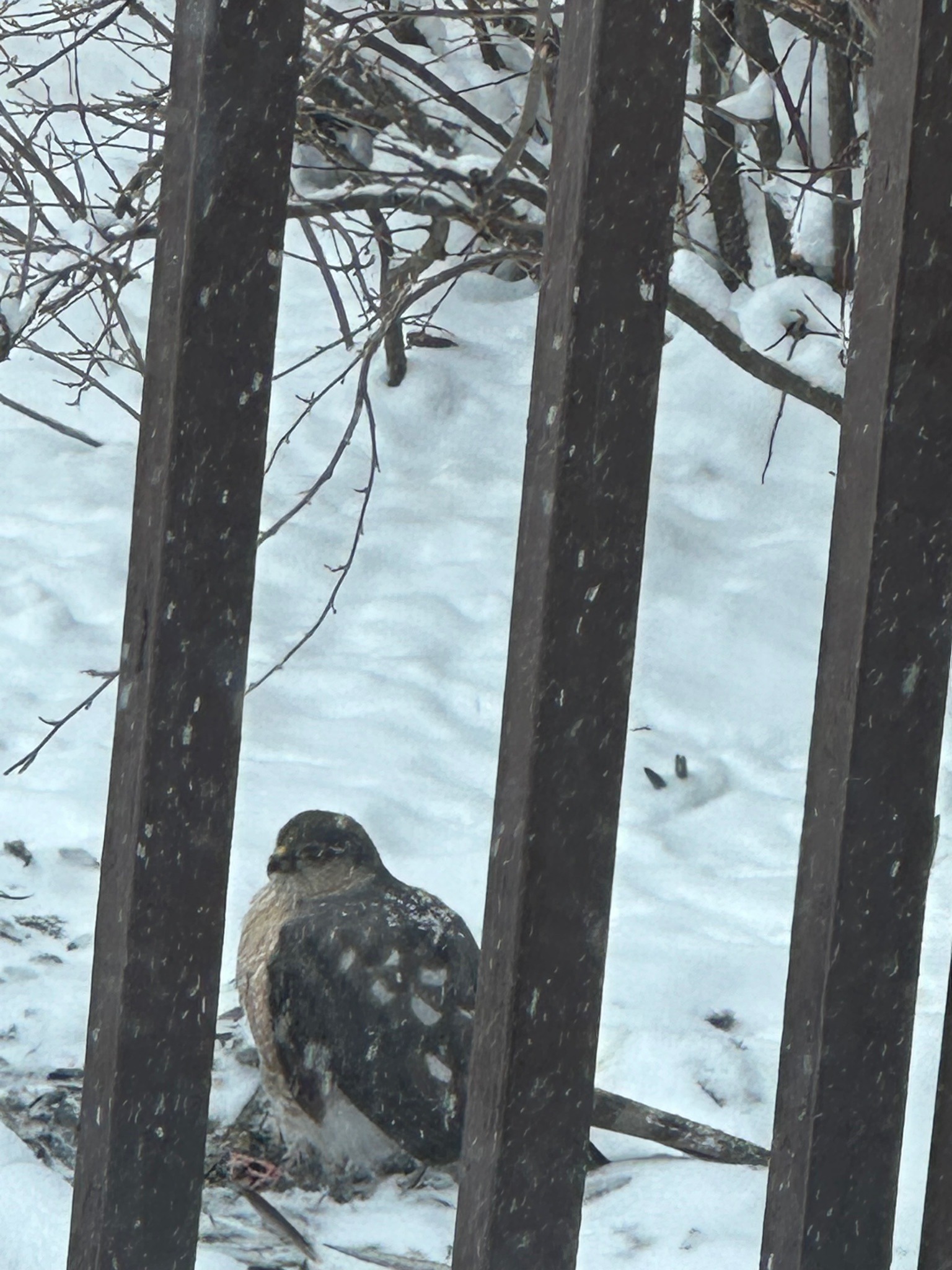
Adults possess relative blue-gray upperparts and a dark cap, with fine reddish-orange horizontal barring on the underparts. Juveniles, like the one pictured, have brown upperparts with white mottling and vertical brown streaks on a white breast.
Key field marks
Long, rounded tail with wide white tip; 'capped' appearance; relatively large head; thick legs; juvenile has fine vertical streaking.
Size & weight
Length: 14-20 in (35-50 cm); Wingspan: 24-35 in (62-90 cm); Weight: 8-24 oz (220-680 g). Females are significantly larger than males.
Voice — call & song
A series of sharp, nasal 'cak-cak-cak' notes, primarily used during the breeding season.
Diet & foraging
Primarily medium-sized birds (such as doves and starlings) and occasionally small mammals or lizards.
Habitat
Mixed deciduous forests, open woodlands, and increasingly common in suburban parks and backyards.
Migration & movement
Partial migrant; birds in the northernmost parts of the range move south for winter, while others are permanent residents.
Nesting & breeding
Builds stick nests high in trees, often towards the trunk. Lays 3-5 bluish-white eggs. Both parents defend the nest aggressively.
Similar species
Sharp-shinned Hawk (smaller, squared tail, no dark cap contrast) and Northern Goshawk (much larger, distinctive white eyebrow).
Ecological significance
Apex avian predator that helps regulate populations of small to medium-sized birds and rodents.
Conservation status
Least Concern (IUCN); populations are stable or increasing in many urban areas.
Observation tips
Often found near backyard bird feeders where they hunt songbirds. Look for them perched still in dense cover or flying at high speeds through vegetation.
Interesting facts
Cooper's Hawks are sometimes called 'chicken hawks.' They are incredibly agile, using their long tails like rudders to navigate through thick branches at high speeds.
More like this