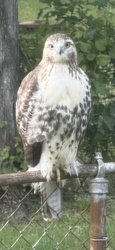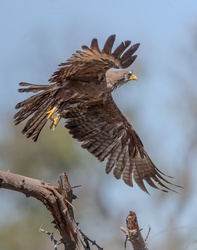
Order: Accipitriformes; Family: Accipitridae
Identified from audio
Bald Eagle
Haliaeetus leucocephalus
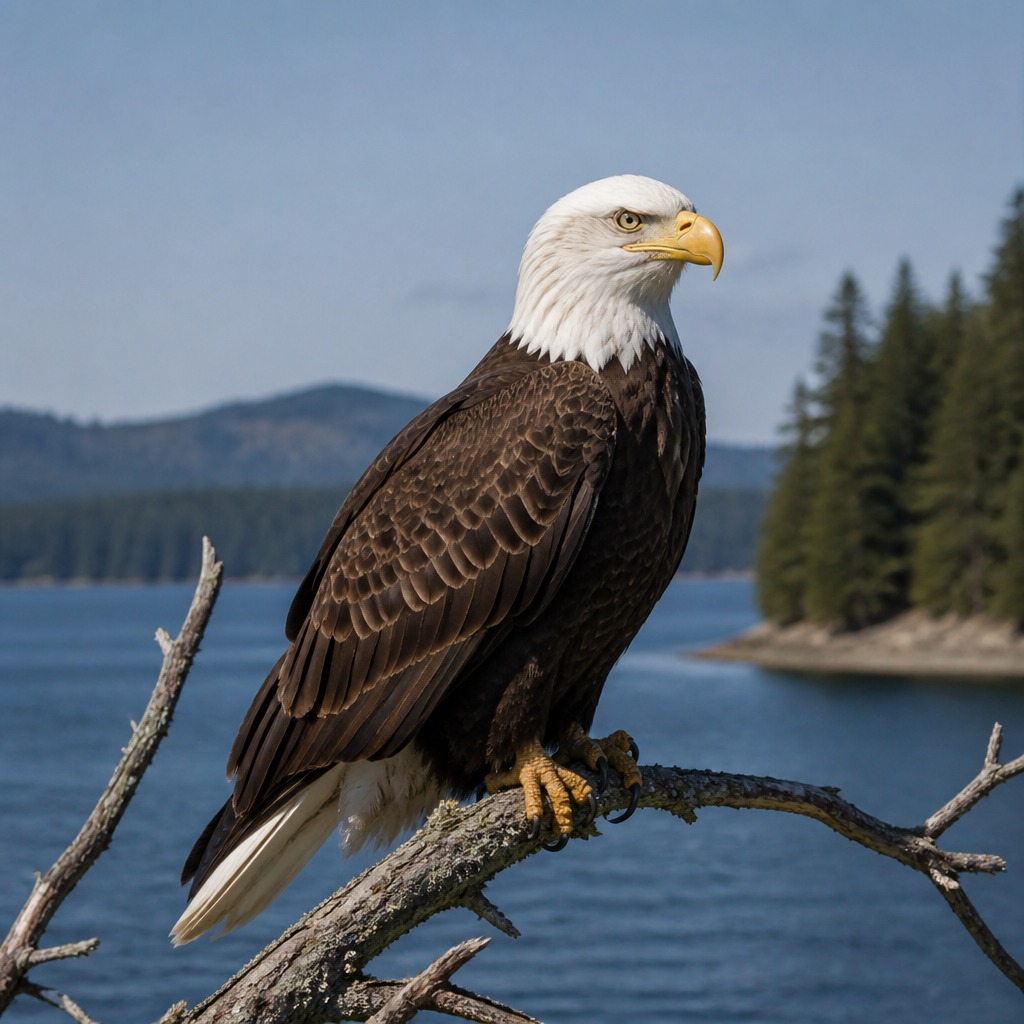
A massive bird of prey known for its powerful build, large hooked bill, and soaring flight. They are opportunistic scavengers and skilled hunters, often seen near water.
Explore Bald Eagle in the encyclopedia →Identify your own birds.
Get a report just like this from any photo or call, free.
Plumage & appearance
Adults have a distinct white head and tail with a dark brown body and yellow bill. Juveniles are mostly brown with white mottling, gaining adult plumage after 4-5 years.
Key field marks
Adults: Bright white head and tail, dark brown body, massive yellow bill. Juveniles: Large size, dark brown with variable white streaking under wings.
Size & weight
Length: 70-102 cm; Wingspan: 1.8-2.3 m; Weight: 3-6.3 kg.
Voice — call & song
The recording features a series of high-pitched, weak, whistling or piping notes; a chirping sound that is surprisingly thin for such a large bird.
Diet & foraging
Mainly fish, but also eats waterfowl, small mammals, and carrion.
Habitat
Near large bodies of open water with an abundance of fish and tall trees for nesting.
Migration & movement
Partial migrant. Some stay in their breeding range if water remains open, while others move south or to coasts in winter.
Nesting & breeding
Builds massive stick nests (eyries) in tall trees; they often return to the same nest year after year, adding new material annually.
Similar species
Golden Eagle (lacks white head/tail, smaller bill) and Osprey (smaller, white underside).
Ecological significance
As apex predators and scavengers, they help regulate prey populations and clean up carrion, serving as an indicator species for environmental health.
Conservation status
Least Concern (IUCN); successfully recovered from near extinction in the mid-20th century.
Observation tips
Look high in large trees near lakes, rivers, or coasts. They are easily spotted while soaring or perched on prominent snags.
Interesting facts
The Bald Eagle's nest is the largest of any North American bird, sometimes reaching weights of over a ton.
More like this