Order: Accipitriformes, Family: Accipitridae
Eurasian Sparrowhawk
Accipiter nisus
A small bird of prey with short, broad wings and a long tail, adapted for maneuvering through dense woodland and coastal scrub. Females are noticeably larger than males (reverse sexual dimorphism).
Explore Eurasian Sparrowhawk in the encyclopedia →Identify your own birds.
Get a report just like this from any photo or call, free.
Plumage & appearance
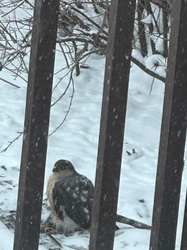
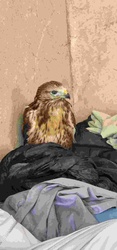
Adult males have bluish-grey upperparts and distinctive orange-brown barred underparts. Adult females are significantly larger, with grey-brown upperparts and fine grey-brown barring underneath. Juveniles are browner overall with heavily barred or spotted underparts and warm buff fringes to the feathers.
Key field marks
Short rounded wings, long squared-off tail, rapid flap-and-glide flight action, and stark size difference between sexes.
Size & weight
Length: 28-38 cm, Wingspan: 59-80 cm, Weight: 110-342 g (females are much heavier and larger than males)
Voice — call & song
Usually silent outside the breeding season. Gives a shrill, repeated 'kee-kee-kee' or 'kak-kak-kak' alarm call near the nest site.
Diet & foraging
Primarily small birds up to the size of thrushes and pigeons, caught by surprise after a rapid, low-level flight or ambush from cover.
Habitat
Woodlands, forests, parklands, agricultural land with mature trees, and increasingly in suburban gardens and coastal scrub.
Migration & movement
Mostly sedentary (resident), though northern populations are migratory, and UK populations may undergo short-distance movements or coastal dispersal in autumn.
Nesting & breeding
Builds a bulky stick nest high in the fork of a tree, usually in conifers or dense woodland. Lays 4-6 eggs in late spring, incubated primarily by the female while the male provides food.
Similar species
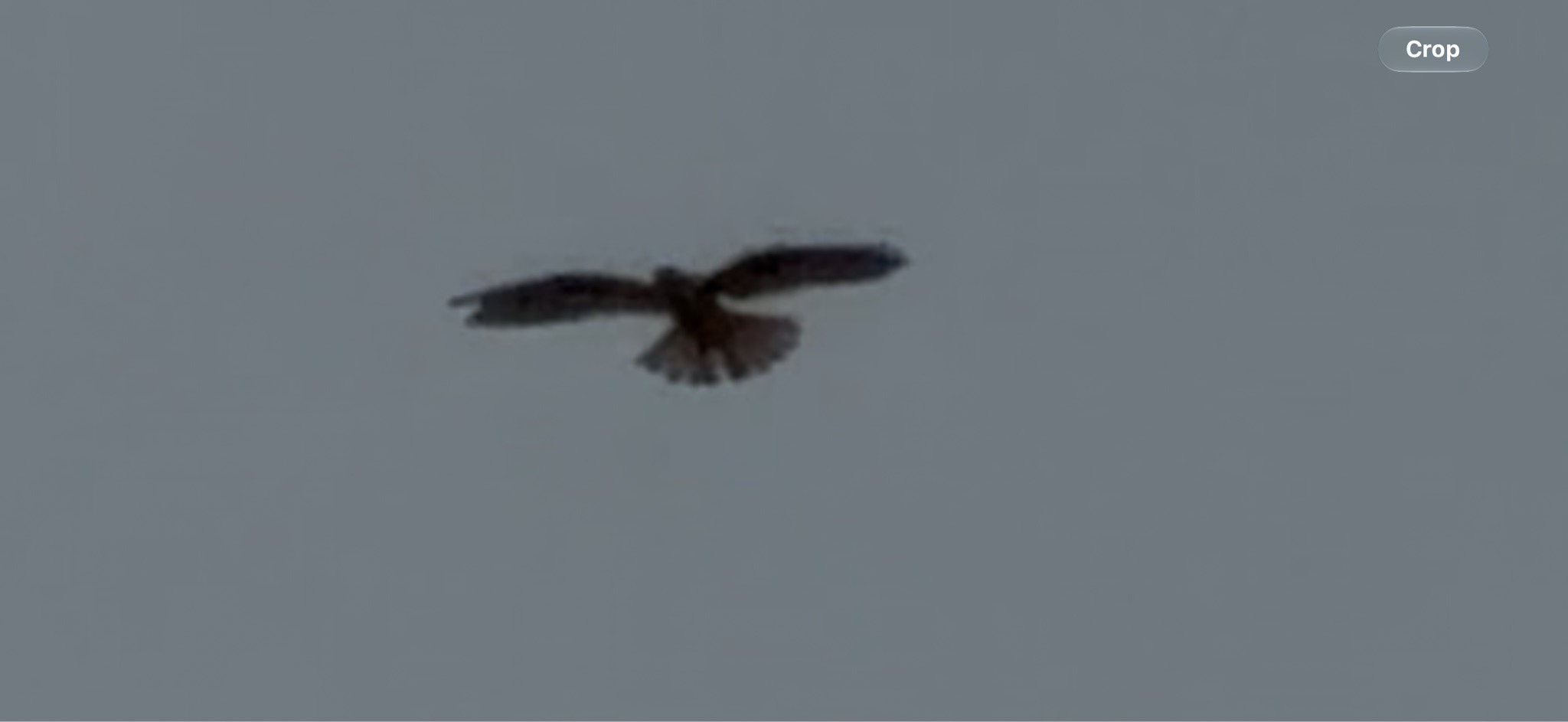
Northern Goshawk, which is substantially larger and bulkier with a broader chest and heavier flight. Kestrels can also be confused in flight, but kestrels hover, whereas sparrowhawks flap and glide.
Ecological significance
Acts as an apex avian predator in its woodland and fringe habitats, helping to regulate small bird populations and maintaining prey health by targeting the weak or sick.
Conservation status
Least Concern (IUCN), with stable or recovering populations across its range following historical declines due to organochlorine pesticides.
Observation tips
Look along woodland edges, hedgerows, and coastal paths where small birds congregate. They often fly low and fast, using surprise tactics, or can be spotted soaring high during display flights in spring.
Interesting facts
Female Eurasian Sparrowhawks can successfully hunt prey as large as themselves, such as woodpigeons and jays, whereas males typically target smaller passerines like tits and sparrows.
User notes
Coastline hunting in uk
More like this