Order: Anseriformes, Family: Anatidae
Eurasian Wigeon
Mareca penelope
A medium-sized dabbling duck recognized by its rounded head profile, short bill, and striking male breeding plumage with a golden-buff crown.
Explore Eurasian Wigeon in the encyclopedia →Identify your own birds.
Get a report just like this from any photo or call, free.
Plumage & appearance
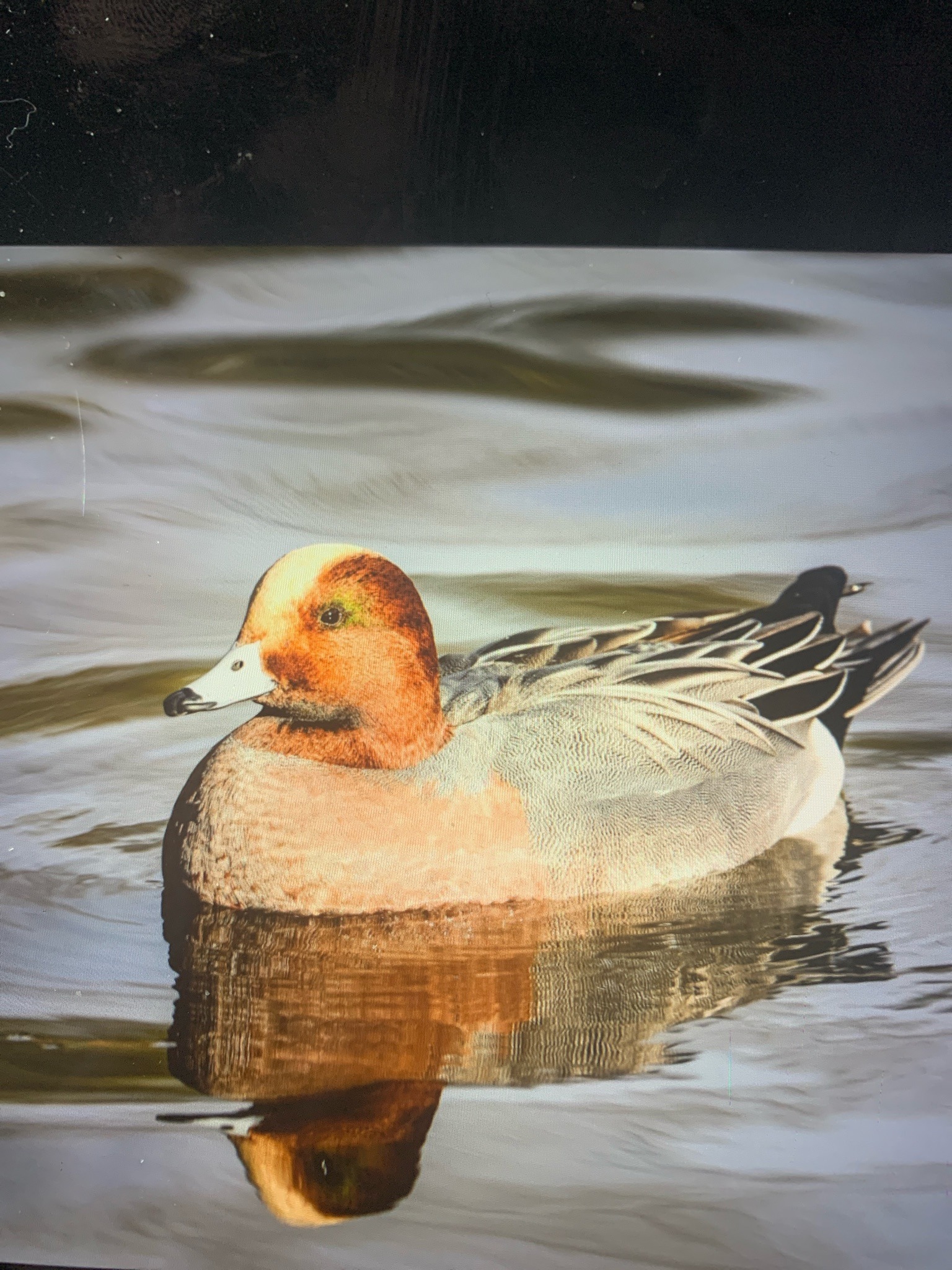
Adult male in breeding plumage has a chestnut-brown head with a creamy-yellow crown stripe, finely barred grey body, pinkish-brown breast, and a black rear end. Females are mottled brown with a warmer reddish-brown head.
Key field marks
Male has a rufous head, creamy forehead/crown stripe, pinkish breast, and grey flanks; flies with a distinct white wing patch on the forewing.
Size & weight
Length: 42–50 cm, Wingspan: 75–85 cm, Weight: 500–900 g
Voice — call & song
Males make a distinctive, clear, whistling two-note call ('whee-oo'); females emit low growls or quacks.
Diet & foraging
Primarily vegetarian, feeding on leaves, stems, roots, and seeds of grasses and aquatic plants. Often grazes on land in pastures.
Habitat
Wetlands, shallow lakes, flooded grasslands, marshes, and coastal bays.
Migration & movement
Migratory, traveling south from northern breeding grounds to wintering areas in temperate zones.
Nesting & breeding
Nests on the ground hidden in vegetation near water. Lays 7 to 10 creamy-white eggs, incubated solely by the female.
Similar species
American Wigeon. Distinguished by the American wigeon's grey head with a green eye patch, whereas the Eurasian wigeon has a reddish-brown head with a pale crown.
Ecological significance
Acts as a seed disperser and plays a role in wetland food webs by grazing on aquatic vegetation.
Conservation status
Least Concern (IUCN)
Observation tips
Look for them in mixed flocks of dabbling ducks on shallow lakes, flooded fields, and coastal estuaries during winter.
Interesting facts
Eurasian wigeons frequently steal food from diving ducks or coots that surface with aquatic plants.
More like this