Order: Anseriformes, Family: Anatidae
Cotton Pygmy Goose
Nettapus coromandelianus
One of the world's smallest waterfowl, resembling a tiny goose with a disproportionately short, goose-like bill. They are often seen floating high on the water or perched in trees near water.
Explore Cotton Pygmy Goose in the encyclopedia →Identify your own birds.
Get a report just like this from any photo or call, free.
Plumage & appearance
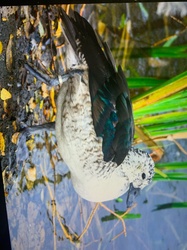
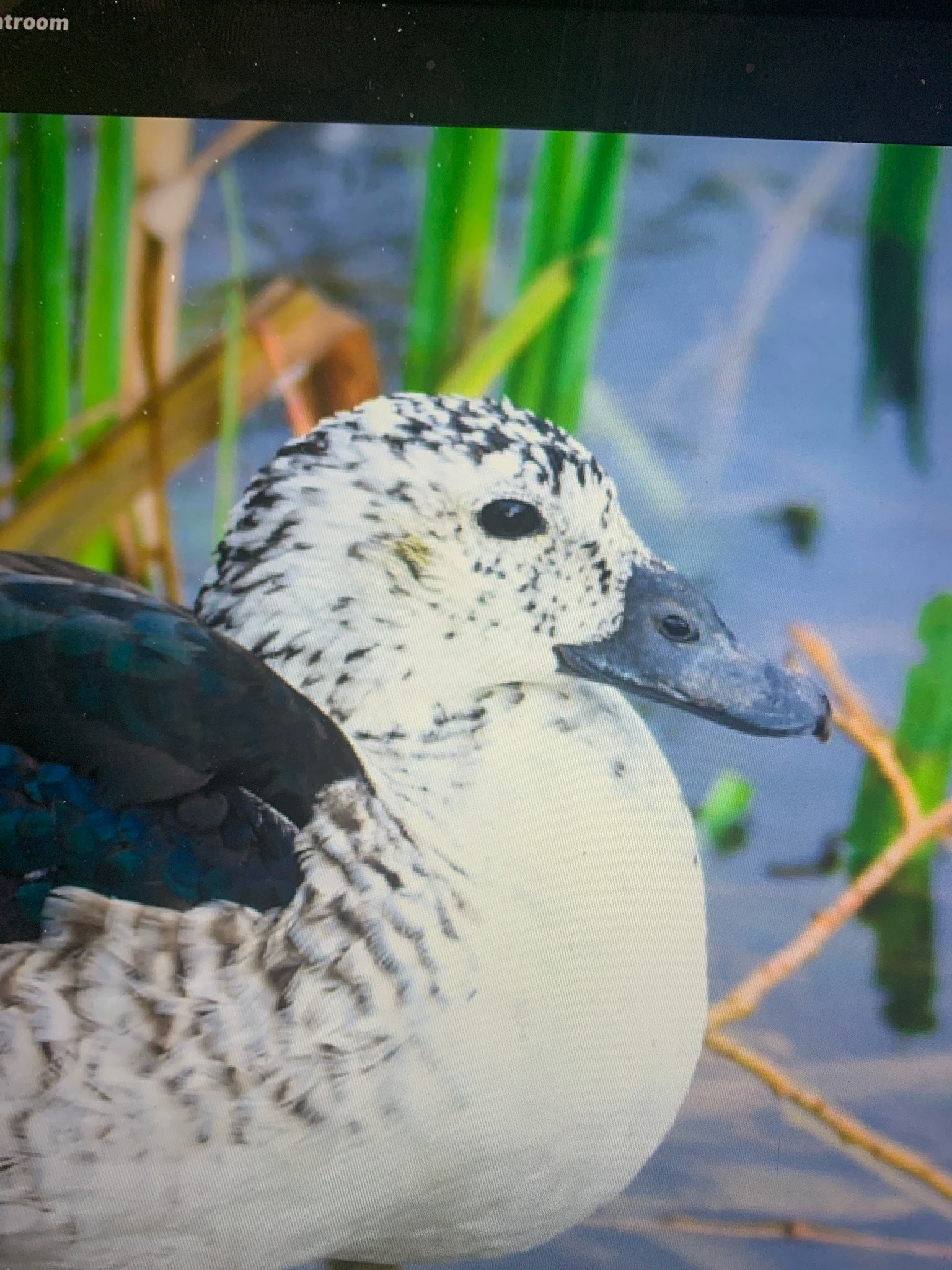
Breeding male has a white head, neck, and underparts, with a distinct black collar, dark greenish-black back, and wings with a prominent white patch visible in flight. The bill is short and stubby with a black tip. Non-breeding male and female are duller, lacking the stark black collar, with grayish-brown mottling on the head and neck.
Key field marks
Extremely small size, short stubby bill, white head with dark speckling (in females/eclipse males) or stark white with a black collar (breeding males), and dark greenish upperparts.
Size & weight
Length: 30-37 cm, Wingspan: 56-66 cm, Weight: 150-430 g
Voice — call & song
Includes high-pitched cackling, whistling notes, and sharp quacks given in flight or when disturbed.
Diet & foraging
Primarily vegetarian, feeding on seeds, aquatic plant matter, water lilies, and occasionally small insects and crustaceans.
Habitat
Freshwater wetlands, lakes, ponds, sluggish rivers, and flooded paddy fields with abundant aquatic vegetation.
Migration & movement
Mostly sedentary (resident), but undergoes local nomadic movements driven by monsoon rains and drying wetlands.
Nesting & breeding
Nests in tree cavities, hollow branches, or sometimes old nests of other birds near water. Clutch size typically ranges from 6 to 12 eggs, incubated solely by the female.
Similar species
Green Pygmy Goose (Nettapus pulchellus), which is distinguished by a green face and neck patch in males and different facial patterns in females.
Ecological significance
Acts as a seed disperser and helps control aquatic insect and plant populations within wetland ecosystems.
Conservation status
Least Concern, with a widespread distribution and stable overall population trend.
Observation tips
Look for them in well-vegetated tropical wetlands, lakes, and flooded agricultural fields. Scan floating vegetation and nearby tree branches where they frequently roost.
Interesting facts
Despite being called a 'goose', they are actually perching ducks closely related to dabbling ducks and possess the unusual habit of nesting in tree hollows high above the ground.
More like this