Order: Strigiformes, Family: Tytonidae
Identified from audio
Barn Owl
Tyto alba
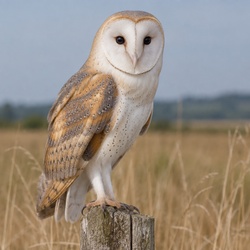
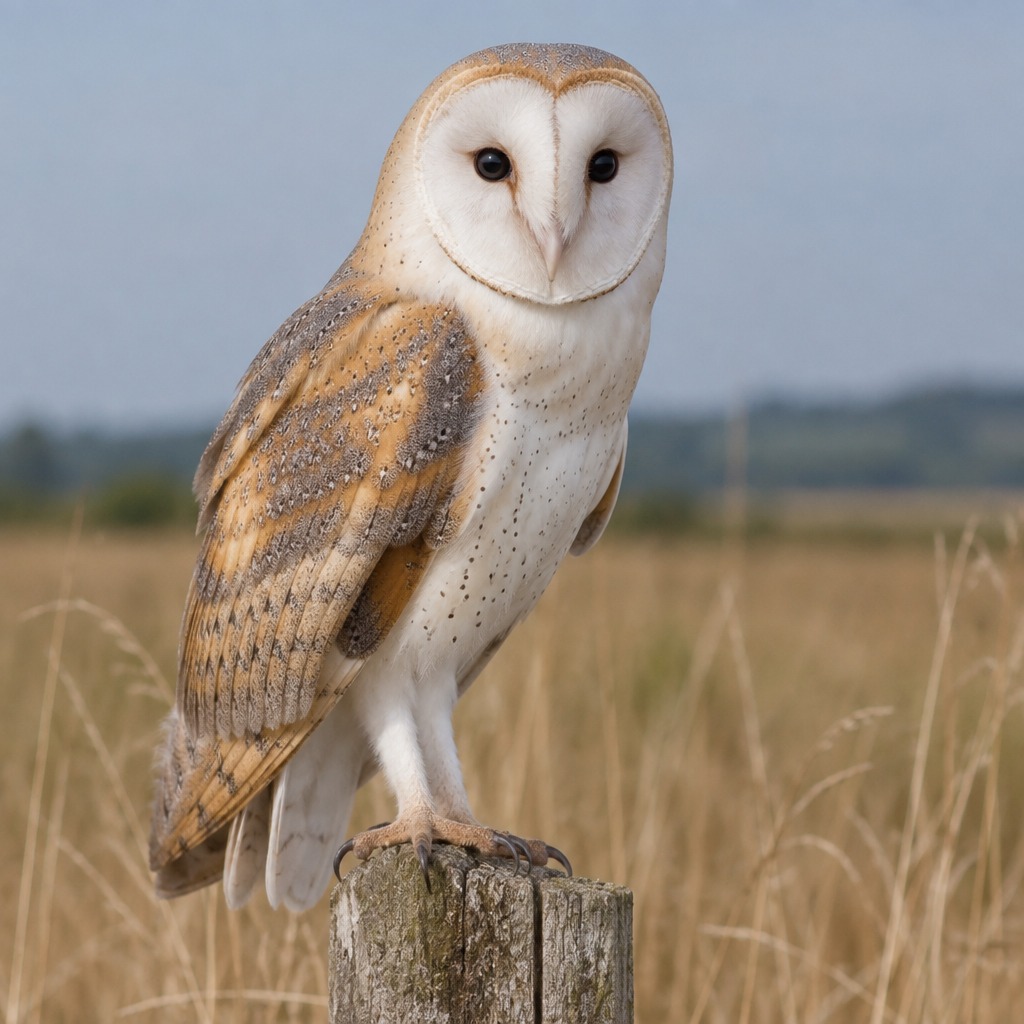
The Barn Owl is a nocturnal raptor easily recognized by its distinctive heart-shaped facial disk and long legs. They are silent fliers that hunt primarily by sound.
Explore Barn Owl in the encyclopedia →Identify your own birds.
Get a report just like this from any photo or call, free.
Plumage & appearance
Pale face, chest, and belly, often with varying amounts of dark spotting; upperparts are a mix of buff and grey.
Key field marks
Heart-shaped white face, dark eyes, pale underparts, and long legs dangling in flight.
Size & weight
Length: 33-39 cm, Wingspan: 80-95 cm, Weight: 400-600 g
Voice — call & song
The recording features the typical harsh, drawn-out, hissing screech characteristic of the Barn Owl, often given when alarmed or defending a territory.
Diet & foraging
Small mammals, especially rodents such as voles, mice, and shrews.
Habitat
Open country, grasslands, agricultural areas, marshes, and semi-deserts.
Migration & movement
Mostly sedentary, though some northern populations may move south in winter if food is scarce.
Nesting & breeding
Does not build a stick nest; instead, uses cavities in trees, cliffs, or man-made structures like barns and church steeples.
Similar species
Other owl species, but the heart-shaped face and lack of ear tufts distinguish the Barn Owl immediately.
Ecological significance
Barn Owls play a crucial role in controlling rodent populations, making them beneficial to agriculture and natural ecosystems.
Conservation status
Least Concern
Observation tips
Look for them hunting over open fields at dusk or dawn, or listen for their harsh, piercing screeches near old barns, silos, and tree cavities.
Interesting facts
Barn Owls have asymmetrical ears, which allows them to pinpoint the exact location of prey in complete darkness using sound alone.
More like this