Order Strigiformes, Family Strigidae
Sunda Scops-Owl
Otus lempiji
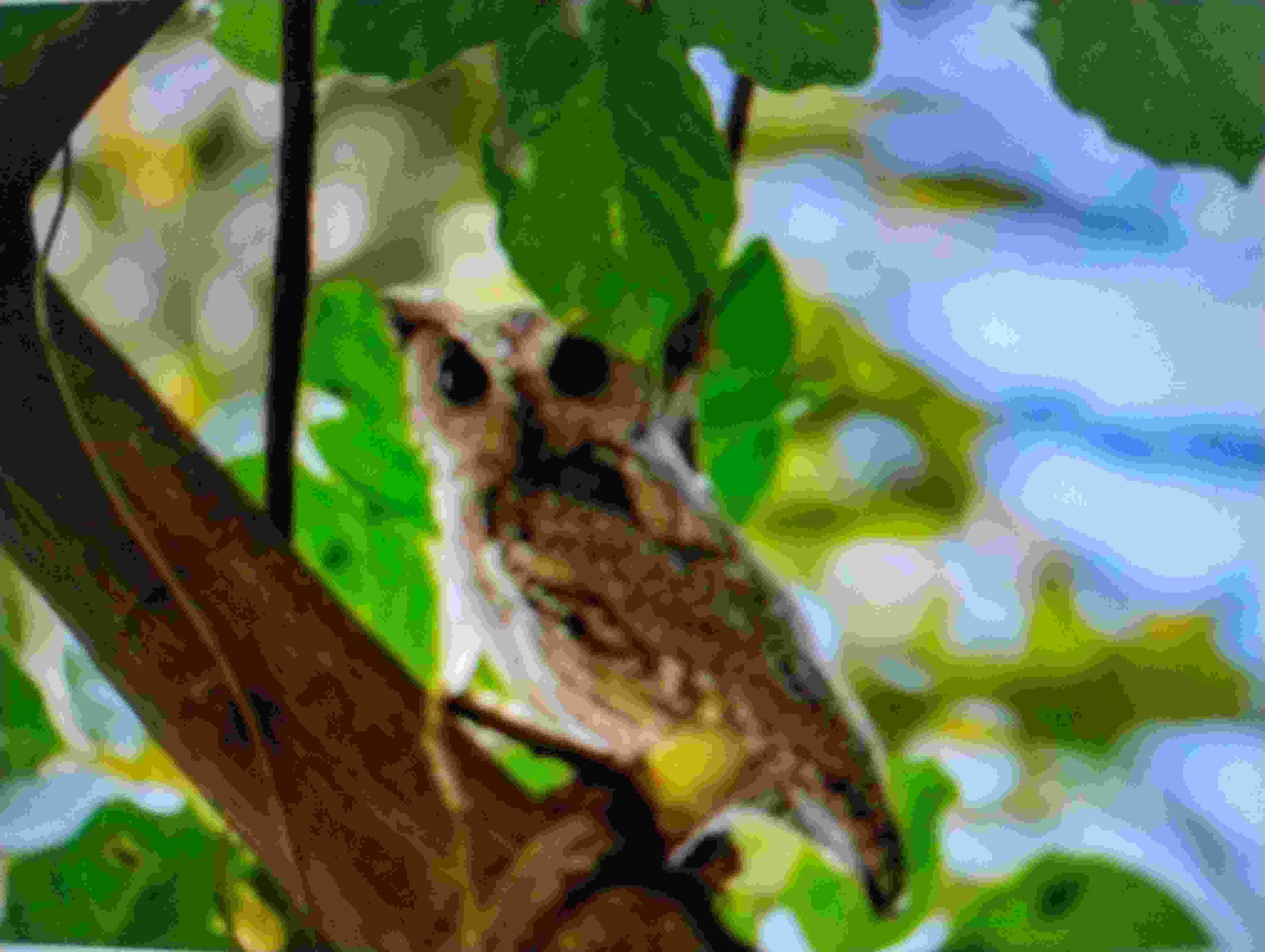
A small, common nocturnal owl with prominent ear tufts and dark eyes. It is well-camouflaged against tree bark and is often more easily heard than seen.
Explore Sunda Scops-Owl in the encyclopedia →Identify your own birds.
Get a report just like this from any photo or call, free.
Plumage & appearance
Brownish or greyish with dark streaks and buffy spotting. Large, prominent ear tufts. Buffy-white facial disc with a dark border. Sexes are similar, though females may be slightly larger.
Key field marks
Dark eyes (not yellow), large collar of buffy feathers on the back of the neck, and prominent ear tufts.
Size & weight
Length: 20-25 cm; Weight: 100-170 g; Wingspan: approximately 45-55 cm.
Voice — call & song
A soft, rhythmic single-note hoot "whooo", repeated every few seconds, rising slightly in pitch.
Diet & foraging
Primarily insects (grasshoppers, beetles, moths), but also takes small lizards, frogs, and rodents. Foregoes perch-and-pounce hunting methods.
Habitat
Secondary forests, gardens, parks, and plantations; often found near human habitation in suburban areas.
Migration & movement
Resident species; does not migrate.
Nesting & breeding
Nests in tree hollows, often using abandoned woodpecker holes. Breeding usually occurs between January and July, laying 2-3 eggs.
Similar species
Oriental Scops-Owl (Otus sunia) - distinguished by yellow eyes and different call. Javan Scops-Owl - geographically separated and has different vocalizations.
Ecological significance
Acts as a natural pest controller by preying on large insects and rodents. Part of the nocturnal food web.
Conservation status
Least Concern (IUCN), population stable.
Observation tips
Listen for its soft, single-note resonant hoot at night. Often found in gardens or parks with large trees. Best spotted during the day by checking for a cryptic silhouette close to tree trunks.
Interesting facts
Unlike many other owls, the Sunda Scops-Owl is quite tolerant of human presence and can frequently be found nesting in suburban backyards in Singapore, Indonesia, and Malaysia.
More like this