Order: Strigiformes, Family: Strigidae
Spotted Eagle-Owl
Bubo africanus
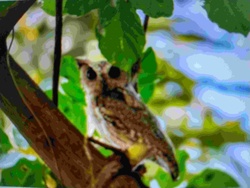
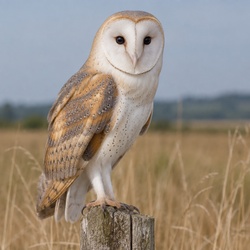
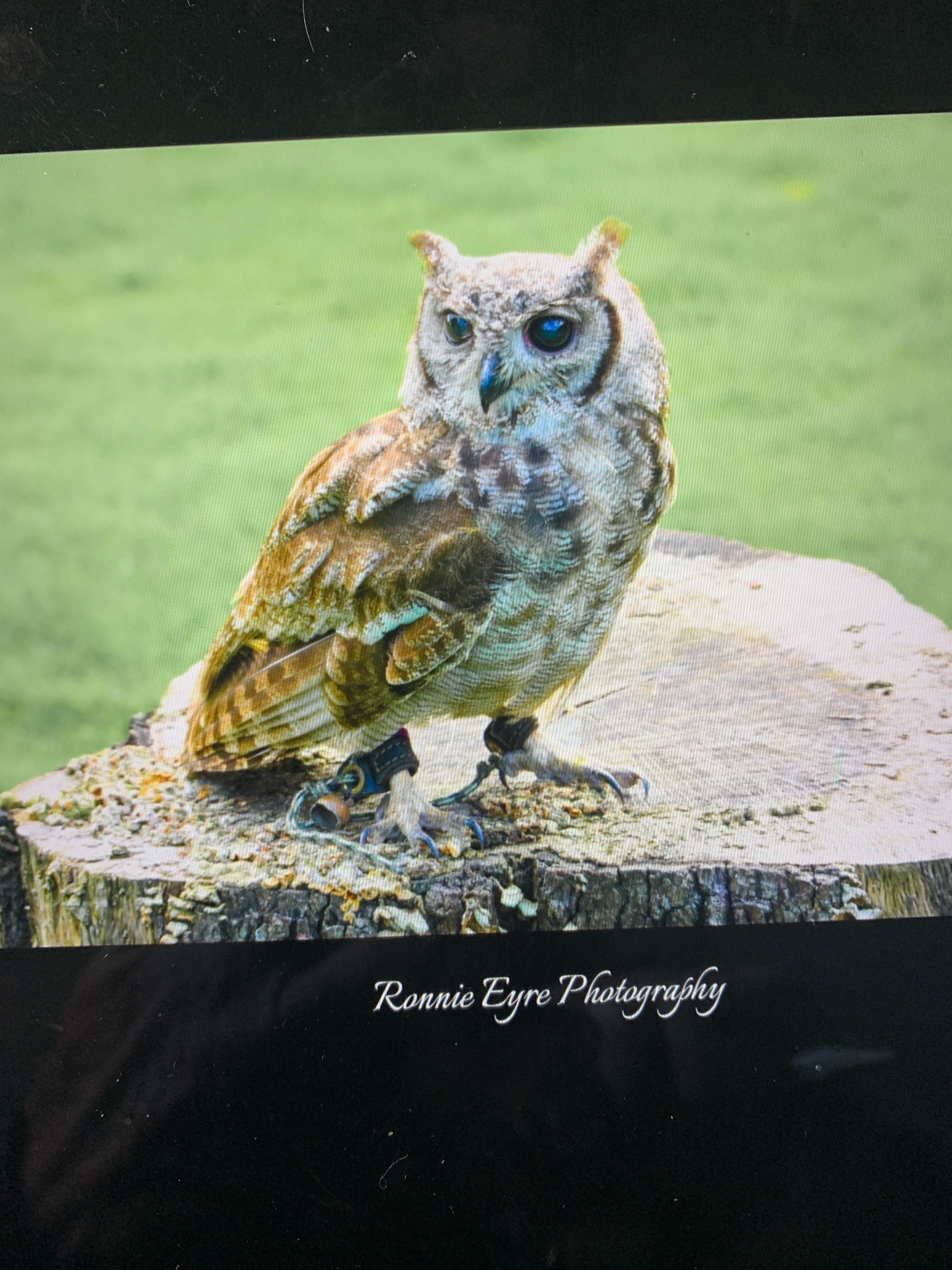
A medium-sized owl with distinct ear tufts, bright yellow eyes, and heavily barred underparts. Known for perching on open ground, rocks, or tree stumps.
Explore Spotted Eagle-Owl in the encyclopedia →Identify your own birds.
Get a report just like this from any photo or call, free.
Plumage & appearance
Mottled grey-brown and buff upperparts with darker streaks and spots. Underparts are whitish with fine brown barring. Prominent ear tufts and distinct yellow eyes. Sexes are similar in plumage, though females are slightly larger and heavier than males.
Key field marks
Prominent ear tufts, bright yellow eyes, mottled grey-brown plumage, and finely barred underparts.
Size & weight
Length: 45-50 cm, Wingspan: 100-140 cm, Weight: 450-850 g
Voice — call & song
A soft, resonant double hoot, typically rendered as 'hoo-huru', often given as a duet between a male and female.
Diet & foraging
Primarily carnivorous, feeding on insects, small mammals (such as rodents), birds, reptiles, and amphibians, hunting mainly from a perch and dropping onto prey.
Habitat
Savannas, open woodlands, rocky outcrops, semi-deserts, and agricultural areas, often roosting in rocky crevices or dense trees.
Migration & movement
Non-migratory resident, though juveniles may disperse locally after fledging.
Nesting & breeding
Usually nests on the ground in a scraped hollow, under a bush or rock ledge, or occasionally on old raptor nests or building ledges. Clutch size is typically 2 to 4 white eggs, incubated by the female.
Similar species
Cape Eagle-Owl, which is larger with a more powerful build and finely vermiculated underparts; and Spotted Scops-Owl, which is much smaller and lacks prominent ear tufts relative to its size.
Ecological significance
Acts as an apex nocturnal predator, helping to regulate populations of small rodents, insects, and other small vertebrates, thereby maintaining ecosystem balance.
Conservation status
Least Concern, with a stable and widespread population.
Observation tips
Often spotted at night along roadsides, open savannas, or near human habitations where they hunt insects attracted to lights. Look for silhouette profiles on fence posts or low branches at dusk.
Interesting facts
Spotted Eagle-Owls are frequently habituated to suburban gardens and rural farmlands, where they readily utilize artificial perches and nest boxes, making them popular subjects in falconry and wildlife photography.
More like this