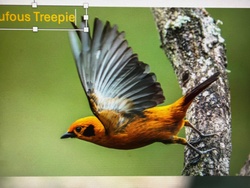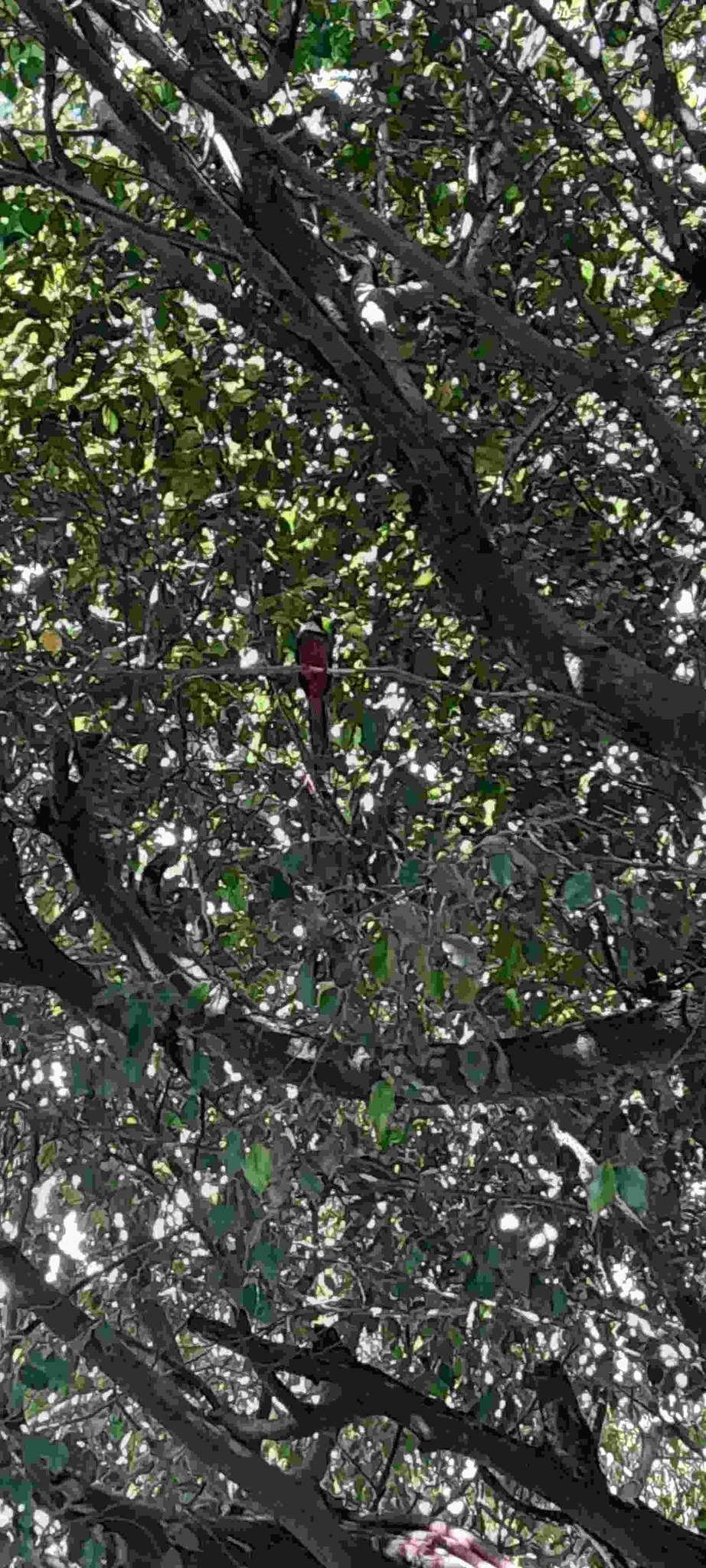
Order: Trogoniformes, Family: Trogonidae
Resplendent Quetzal
Pharomachrus mocinno
A strikingly colorful bird known for its brilliant green and red feathers and the male's long, flowing tail. It is shy and tends to sit motionless in the canopy.
Explore Resplendent Quetzal in the encyclopedia →Identify your own birds.
Get a report just like this from any photo or call, free.
Plumage & appearance
Males have metallic green plumage with a red breast and elongated tail coverts that can grow up to 3 feet long. Females are duller, lacking the long tail and having a greyish-brown breast and green-and-yellow beak.
Key field marks
Metallic green upperparts, bright crimson belly, white undertail, and for the male, twin tail streamers that extend well beyond the body.
Size & weight
Length: 36-40 cm (14-16 in) excluding tail; weight: 210 g (7.4 oz); males have tail streamers up to 65 cm (26 in) long.
Voice — call & song
A deep, melodic 'kyow-kyow' or 'cow-ee', often repeated. Also makes sharp, crackling alarm calls.
Diet & foraging
Mainly fruit (especially wild laurels), but also eats insects, frogs, and lizards.
Habitat
Montane cloud forests and high-altitude evergreen forests with dense canopy.
Migration & movement
Altitudinal migrant; moves to lower elevations during the non-breeding season in search of food.
Nesting & breeding
Cavity nesters; they use woodpecker holes or rot-softened trees. Both parents incubate 2 eggs and care for the young.
Similar species
Other Quetzal species (like the Pavonine or Golden-headed) lack the excessively long tail coverts and specific range of the Resplendent Quetzal.
Ecological significance
Key seed disperser for many tree species, particularly wild avocados (Lauraceae family), helping maintain cloud forest diversity.
Conservation status
Near Threatened (IUCN); population is declining due to habitat loss and fragmentation.
Observation tips
Look for them in cloud forests at heights between 4,000 and 10,000 feet. Listen for their distinctive 'cow-ee' call and watch for the flash of red underparts.
Interesting facts
The Resplendent Quetzal was considered sacred by the Aztecs and Mayans, representing the god Quetzalcoatl. It is the national bird of Guatemala and the name of their currency.
More like this