Order: Psittaciformes, Family: Psittacidae
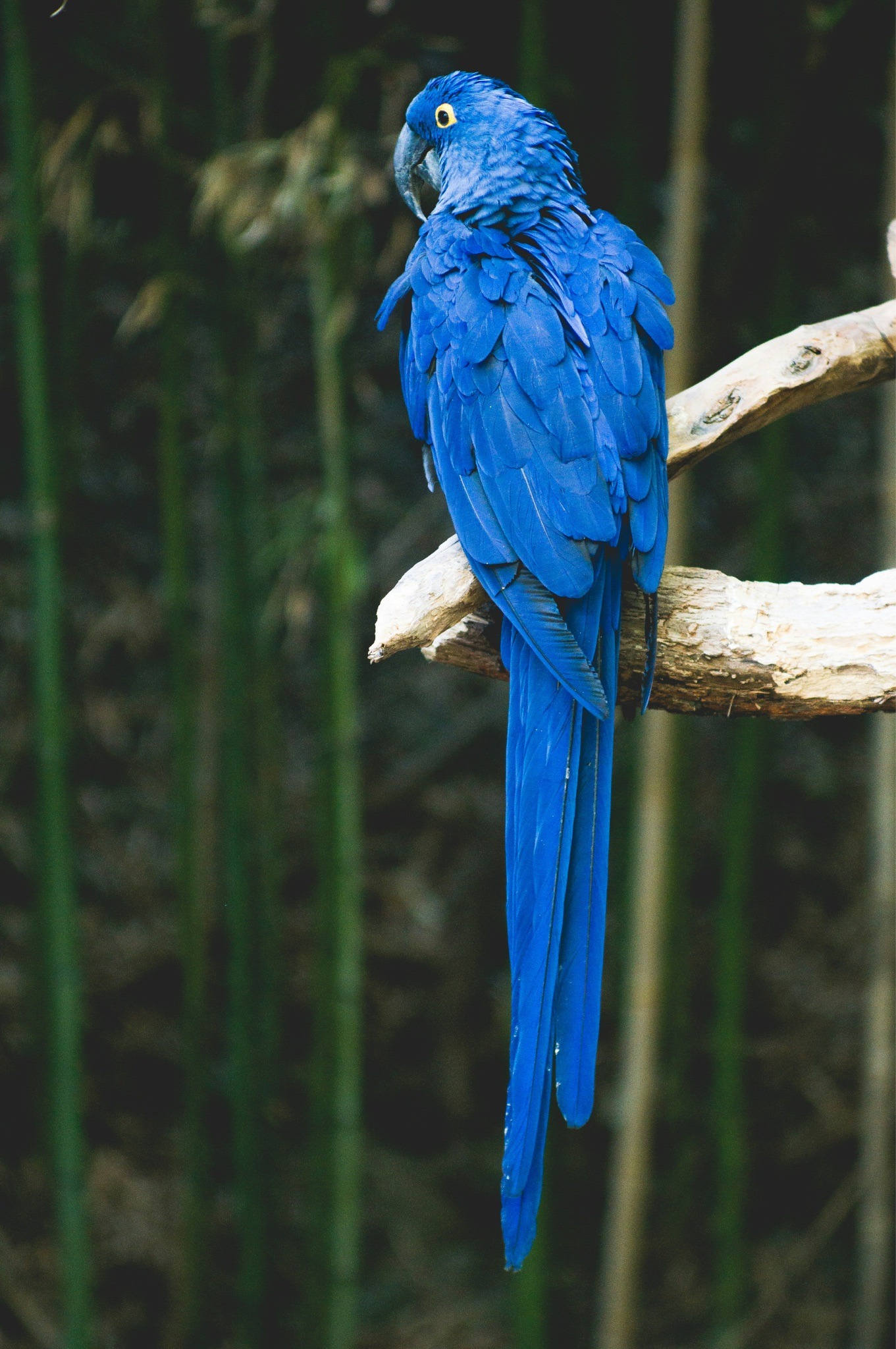
Hyacinth Macaw
Anodorhynchus hyacinthinus
The largest flying parrot species, known for its stunning blue color and gentle disposition often referred to as 'gentle giants'. They are highly intelligent, social birds that pair for life.
Explore Hyacinth Macaw in the encyclopedia →Identify your own birds.
Get a report just like this from any photo or call, free.
Plumage & appearance
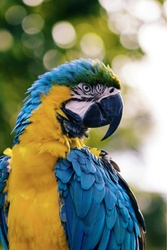
Entirely deep cobalt-blue feathers. They have distinct bright yellow rings around their eyes and a yellow lappet at the base of the lower mandible. No significant plumage difference between sexes or ages, though juveniles may have shorter tails.
Key field marks
Massive size, uniform deep blue plumage, large black beak, and prominent bright yellow eye-rings and chin patches.
Size & weight
Length: 100 cm (3.3 ft); Wingspan: 120-140 cm (3.9-4.6 ft); Weight: 1.2-1.7 kg (2.6-3.7 lbs)
Voice — call & song
Loud, harsh, guttural 'kraaa-aaa' screeches and deep croaks that can carry for long distances.
Diet & foraging
Primarily specialist feeders on nuts from specific palm trees (like Acrocomia aculeata and Attalea phalerata). Their powerful beaks can exert over 1200 psi.
Habitat
Semi-open habitats including palm swamps (veredas), wooded savannas (Cerrado), and seasonally flooded grasslands (Pantanal).
Migration & movement
Non-migratory resident; but they may move locally based on the seasonal availability of food and water.
Nesting & breeding
Nests in natural tree cavities (principally the Manduvi tree) or on cliff faces. They lay 2 eggs, but usually only one chick survives. The breeding season typically runs from July to December.
Similar species
Lear's Macaw (smaller, greenish tint to blue, different shaped yellow patch) and the likely extinct Glaucous Macaw (paler, more turquoise/greyish).
Ecological significance
Acts as a primary seed disperser and a 'keystone' species in its environment, specifically for various palm species whose hard nuts they are one of the few animals capable of cracking.
Conservation status
Vulnerable (IUCN); population is decreasing due to habitat loss and the illegal pet trade.
Observation tips
Look for them in the Pantanal region of Brazil at dawn or dusk when they are most active. They are often seen in pairs or small family groups near stands of palm trees.
Interesting facts
They are the longest species of parrot in the world. Interestingly, they sometimes eat palm nuts that have passed through the digestive tract of cattle, which softens the outer coating of the nut.
More like this