Order: Strigiformes, Family: Tytonidae
Identified from audio
Barn Owl
Tyto alba
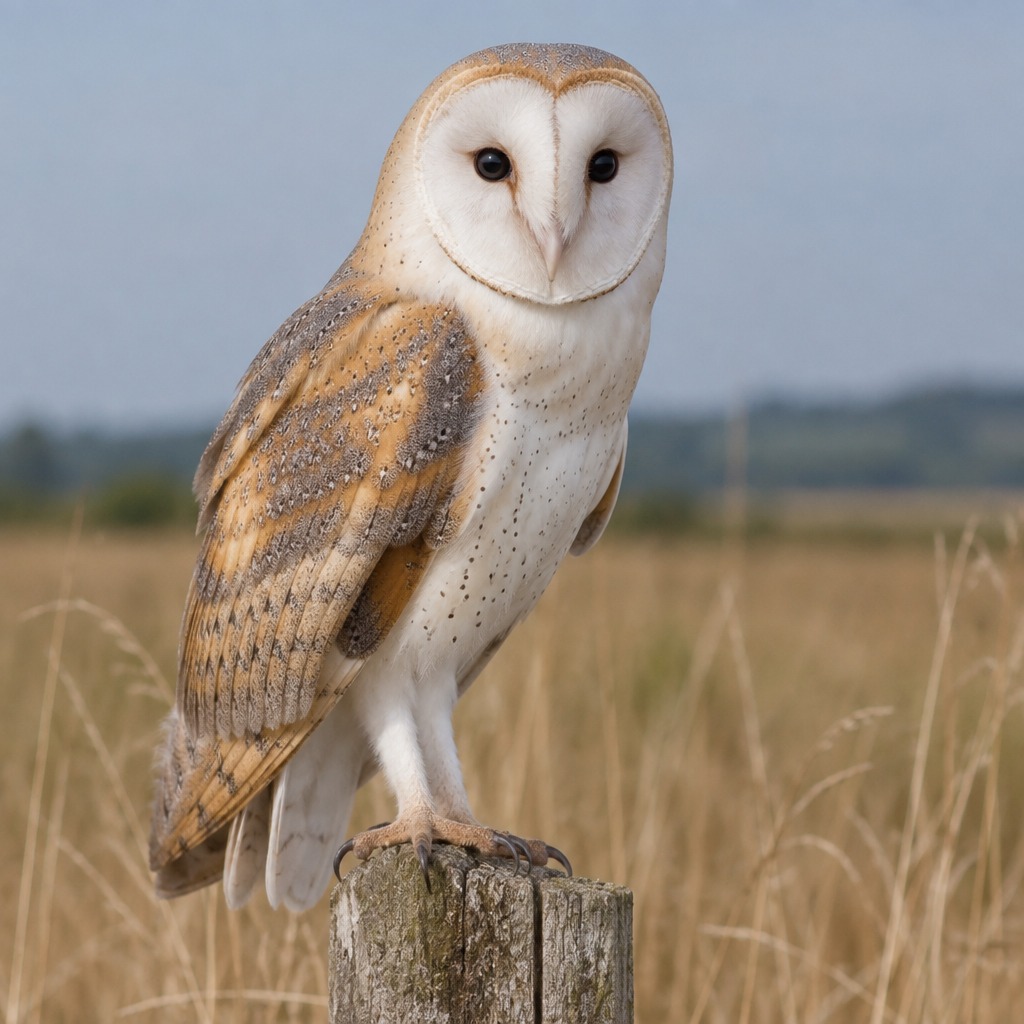
A pale, medium-sized owl with a distinct heart-shaped facial disc, long legs, and silent flight, known for its ghostly appearance.
Explore Barn Owl in the encyclopedia →Identify your own birds.
Get a report just like this from any photo or call, free.
Plumage & appearance
Heart-shaped white face, golden-buff upperparts with gray and brown speckling, and pure white to buff underparts with variable dark spotting.
Key field marks
Heart-shaped facial disc, dark eyes, lack of ear tufts, long pale legs, and golden-buff and white mottled plumage.
Size & weight
Length: 33-39 cm, Wingspan: 80-95 cm, Weight: 400-600 g
Voice — call & song
Characterized by a harsh, prolonged, eerie hissing or screeching sound, which is heard clearly in this recording.
Diet & foraging
Primarily small mammals such as voles, mice, and shrews, occasionally taking small birds, reptiles, and large insects.
Habitat
Open country, agricultural areas, grasslands, marshes, and semi-deserts with access to suitable nesting cavities.
Migration & movement
Mostly sedentary and resident, though juveniles may disperse over considerable distances.
Nesting & breeding
Does not build a stick nest; lays eggs directly on debris in tree cavities, cliff ledges, or dark corners of man-made structures like barns.
Similar species
Short-eared Owl and Long-eared Owl, but easily distinguished by the pale heart-shaped face and harsh screeching call.
Ecological significance
Acts as a crucial apex nocturnal predator that controls rodent populations, benefiting both agriculture and local ecosystems.
Conservation status
Least Concern (IUCN)
Observation tips
Look and listen near barn structures, old silos, and open grasslands at dusk or night; search for white droppings and pellets on the ground.
Interesting facts
Barn owls have asymmetrical ears that allow them to pinpoint the exact location of prey in total darkness entirely by sound.
More like this