Order: Passeriformes, Family: Turdidae
Eastern Bluebird
Sialia sialis
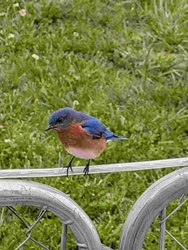
A small, stocky thrush with vibrant blue plumage on the back and a warm rusty-red chest. Known for perching upright on low branches or fence posts while scanning the ground for prey.
Explore Eastern Bluebird in the encyclopedia →Identify your own birds.
Get a report just like this from any photo or call, free.
Plumage & appearance
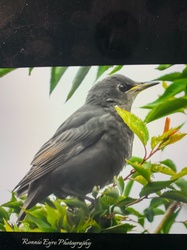
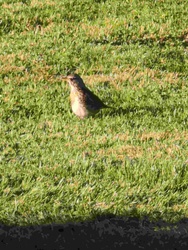
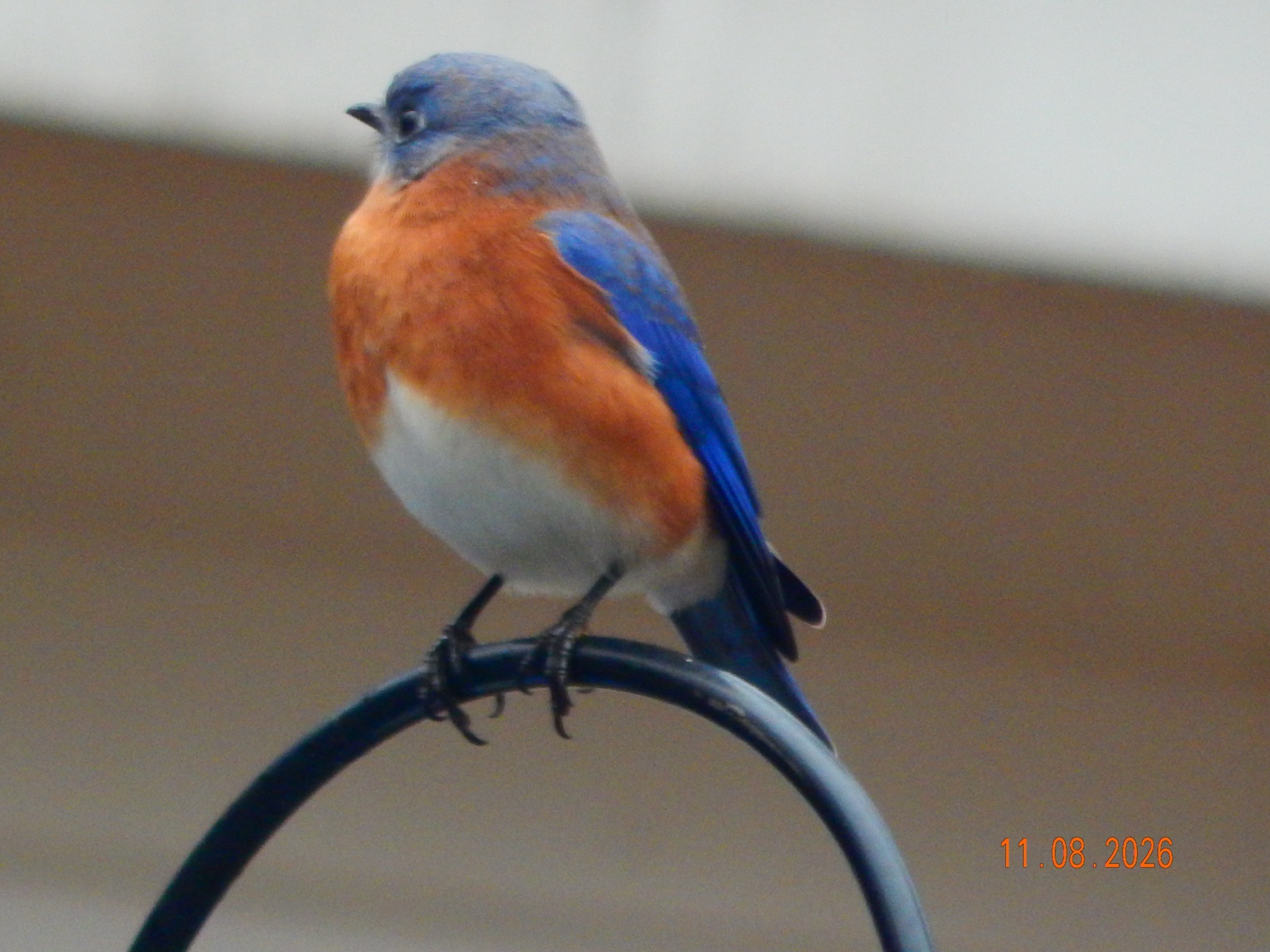
Adult males have striking bright blue upperparts and a rich rufous/chestnut breast and flanks with a white belly. Females are duller, with grayish-blue upperparts, a paler grayish-orange breast, and a whitish belly. Juveniles are grayish-brown with speckled breasts and faint blue in the wings and tail.
Key field marks
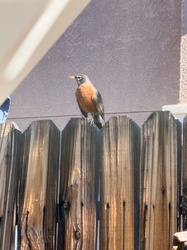
Bright blue upperparts contrasting with a rich rufous-chestnut breast and white belly, combined with a relatively short, thin bill and upright perching posture.
Size & weight
Length: 16-21 cm (6.3-8.3 in); Wingspan: 25-32 cm (9.8-12.6 in); Weight: 27-34 g (0.95-1.2 oz)
Voice — call & song
A soft, musical warble often described as 'chur-lee' or 'tru-ly'. The call is a clear, descending, liquid note.
Diet & foraging
Primarily feeds on insects, spiders, and other invertebrates during the warmer months, switching to wild berries, fruits, and seeds during the fall and winter.
Habitat
Open country, farmlands, forest edges, pastures, and suburban parks with scattered trees and sparse ground vegetation.
Migration & movement
Partial migrant. Northern populations migrate south for winter, while southern birds are permanent year-round residents.
Nesting & breeding
Secondary cavity nesters, utilizing natural tree hollows, old woodpecker holes, or artificial nest boxes. Lays 3 to 6 light blue (occasionally white) eggs. Females incubate for about 12-14 days.
Similar species
Western Bluebird (which has a blue throat and gray back patch) and Mountain Bluebird (which is largely turquoise-blue overall without a rusty breast).
Ecological significance
Acts as an important natural pest control by consuming large quantities of insects. They also help disperse seeds through the fruits and berries they eat.
Conservation status
Least Concern, with stable or increasing populations largely aided by widespread nest-box programs.
Observation tips
Attract them to your yard by setting up specialized bluebird nest boxes and offering mealworms in open platform feeders. Look for them perched on fence lines, utility wires, and open fields.
Interesting facts
Eastern Bluebirds are often seen as symbols of happiness and hope in North American folklore. They have benefited immensely from conservation efforts, particularly the North American Bluebird Society's trail nest-box initiatives.
More like this