Order Passeriformes, Family Turdidae
American Robin (Juvenile)
Turdus migratorius
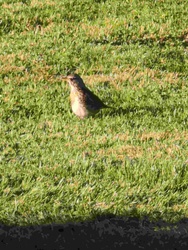
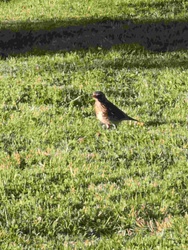
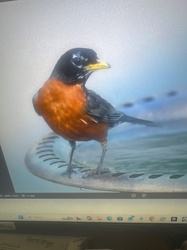
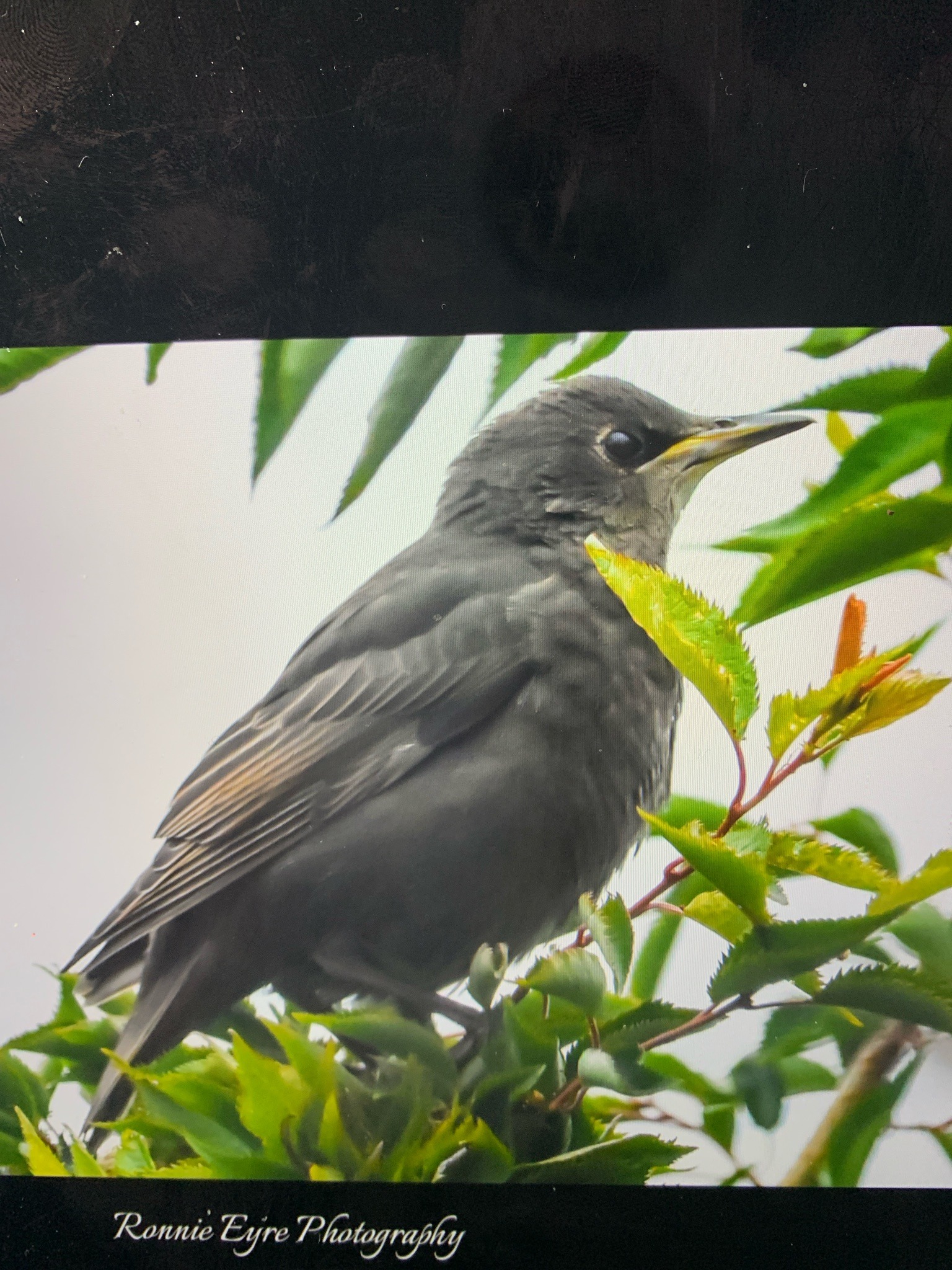
A medium-sized thrush in juvenile plumage, perched among green foliage with a dark grayish-brown back, spotted underparts, and a prominent yellowish bill base.
Explore American Robin (Juvenile) in the encyclopedia →Identify your own birds.
Get a report just like this from any photo or call, free.
Plumage & appearance
Juveniles differ significantly from adults, featuring a heavily spotted breast and pale flecking on the back, with brownish-gray overall coloration and yellowish gape flanges around the bill indicating youth.
Key field marks
Juvenile features include heavily spotted breast, brownish upperparts with pale streaks, and a yellowish bill with a pale gape.
Size & weight
Length: 23-28 cm (9-11 inches), Wingspan: 31-41 cm (12-16 inches), Weight: 77-85 g (2.7-3.0 oz).
Voice — call & song
Rich, carping, continuous song consisting of repeating phrases ('cheerup, cheer up, cheerily, cheer up'); sharp 'peek' or 'tut' calls.
Diet & foraging
Insects, earthworms, spiders, and various berries and fruits. Forages primarily on the ground by running, stopping, and listening for prey.
Habitat
Woodlands, forests, suburban lawns, parks, gardens, and agricultural fields.
Migration & movement
Partial migrant. Many northern birds migrate south for the winter, while others remain resident or shift locally depending on food availability.
Nesting & breeding
Constructs a sturdy cup nest made of mud, grass, and twigs, placed in the fork of a tree or on building ledges. Clutch size is typically 3-4 blue eggs.
Similar species
Other juvenile thrushes such as Wood Thrush or Hermit Thrush, which can be distinguished by different spotting patterns, rufous tones, and geographic ranges.
Ecological significance
Acts as an important seed disperser for various fruit-bearing plants and serves as a natural pest controller by consuming large numbers of insects and earthworms.
Conservation status
Least Concern, with a widespread and stable population trend.
Observation tips
Look for them hopping on lawns or perched in shrubs and low branches; juvenile birds are often relatively tame and easier to approach briefly than adults.
Interesting facts
Despite being called a robin, it is actually a true thrush and is more closely related to European blackbirds than to European robins.
More like this