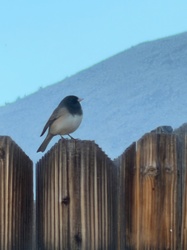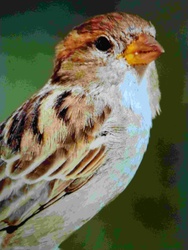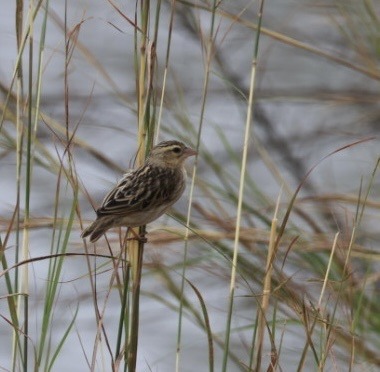
Order: Passeriformes, Family: Passerellidae
Grasshopper Sparrow
Ammodramus savannarum
A small, secretive sparrow with a flat head and short tail, often difficult to flush from tall grassland habitats.
Explore Grasshopper Sparrow in the encyclopedia →Identify your own birds.
Get a report just like this from any photo or call, free.
Plumage & appearance
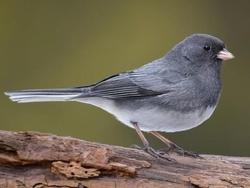
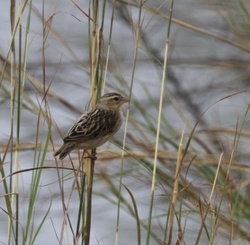
Buffy-orange face with a pale crown stripe, yellowish patch in front of the eye (lores), fine streaks on the breast, and a relatively short, sharp tail. Sexes look similar; juveniles lack the breast streaking and have more heavily streaked underparts.
Key field marks
Buffy breast lacking heavy streaks, plain face with a yellow lore spot, short tail, and flat-headed appearance.
Size & weight
Length: 11-13 cm, Wingspan: 15-20 cm, Weight: 14-20 g
Voice — call & song
Song is a very high-pitched, insect-like trill or buzz resembling a grasshopper ('tit-tit-tit-z-z-z-z-z'). Call is a sharp 'tsick'.
Diet & foraging
Primarily insects (grasshoppers, beetles, caterpillars) during the breeding season, switching to grass seeds and weed seeds in winter.
Habitat
Dry, open grasslands, prairies, hayfields, and pastures with a mix of tall grasses and bare ground.
Migration & movement
Short to medium-distance migrant, departing northern breeding areas in autumn and returning in spring.
Nesting & breeding
Builds a cup nest on the ground hidden beneath dense grass clumps. Clutch size is 3-6 eggs. Breeding season spans from May to August.
Similar species
Savannah Sparrow, which has a more heavily streaked breast, white eyebrow, and a forked tail. Baird's Sparrow, which has a more ochre head and distinct necklace of dark streaks.
Ecological significance
Acts as an indicator species for the health of native grassland and prairie ecosystems.
Conservation status
Near Threatened globally, with declining populations due to habitat loss and agricultural intensification.
Observation tips
Listen for its distinctive, insect-like buzz in grasslands, and look for singing males perched prominently on tall grass stems or fence lines.
Interesting facts
The Grasshopper Sparrow gets its common name from its insect-like song, which sounds remarkably like the buzz of a grasshopper.
More like this