Order: Passeriformes, Family: Passerellidae
Field Sparrow
Spizella pusilla
A small, slender sparrow known for its sweet, accelerating whistle and distinct pink bill. It is frequently seen in brushy old fields and pastures.
Explore Field Sparrow in the encyclopedia →Identify your own birds.
Get a report just like this from any photo or call, free.
Plumage & appearance
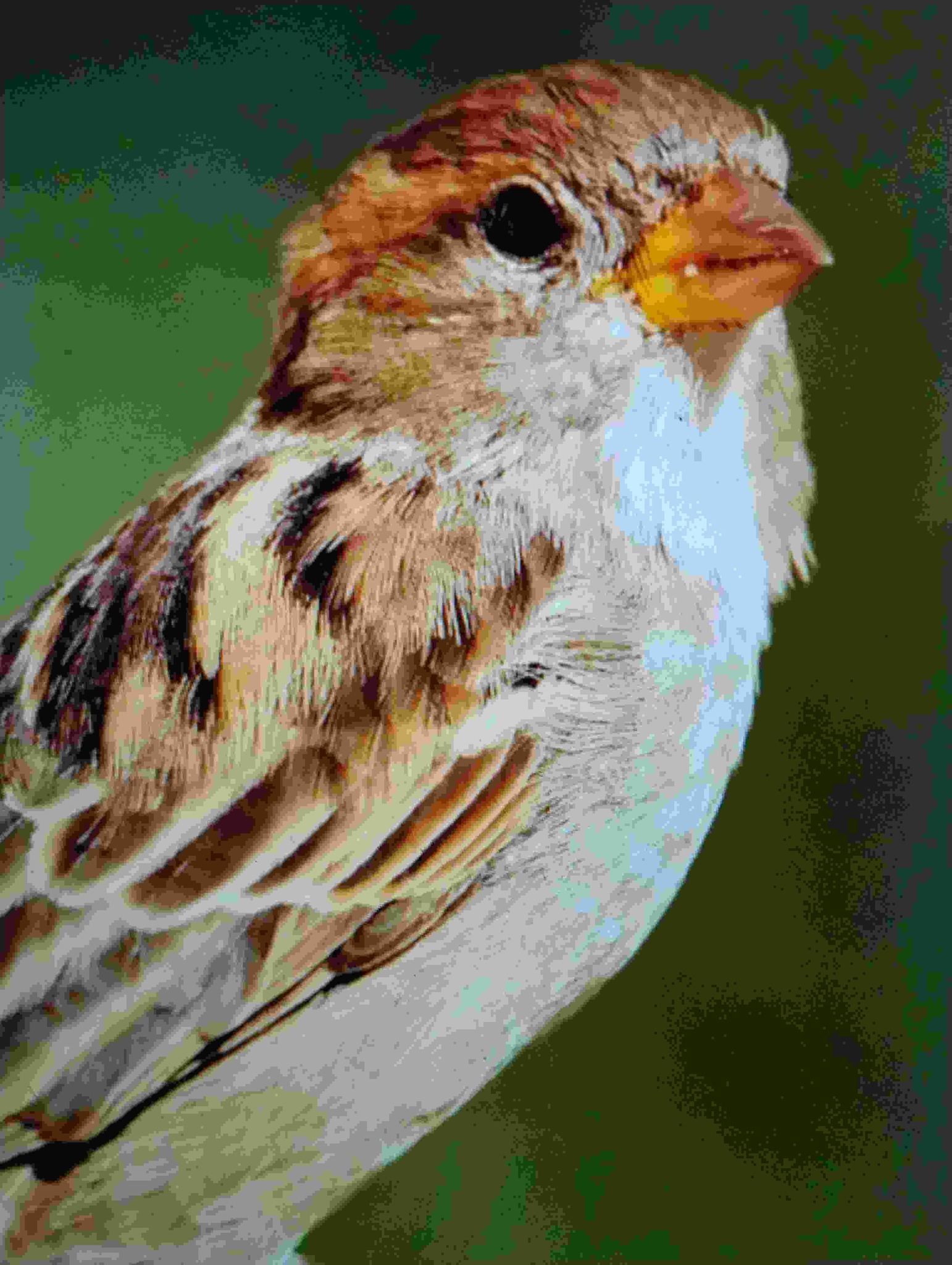
Adults have a bright rufous crown, a white eye-ring, and a pale pink bill. The face and breast are greyish, lacking a central spot. Two white wing bars are visible. Juveniles are streakier and lack the solid reddish crown.
Key field marks
Small size, distinct pink bill, white eye-ring, rufous crown, and unstreaked greyish-buff breast.
Size & weight
Length: 12-15 cm (4.7-5.9 in), Wingspan: 20 cm (7.9 in), Weight: 11-15 g
Voice — call & song
A series of clear, sweet whistles that accelerate in tempo, resembling a bouncing ball coming to rest.
Diet & foraging
Primarily seeds from grasses and weeds. During the breeding season, they supplement their diet with insects such as grasshoppers and caterpillars.
Habitat
Old fields, overgrown pastures, scrubby edges, and power-line rights-of-way with scattered shrubs.
Migration & movement
Partial migrant; northern populations move to the southern United States and northeastern Mexico for winter.
Nesting & breeding
Builds an open-cup nest of grass on or near the ground in spring, moving higher into shrubs as the season progresses and foliage thickens.
Similar species
American Tree Sparrow (larger, dark bicolored bill, breast spot) and Chipping Sparrow (bold black eyeline, black bill).
Ecological significance
Contributes to seed dispersal and controls insect populations during the breeding season. It serves as prey for various small hawks and snakes.
Conservation status
Least Concern (IUCN), though populations have experienced a slow decline due to loss of brushy habitat.
Observation tips
Look for them in overgrown fields or at the edges of woodlands. They are more easily identified by their unique 'bouncing ball' song during the spring.
Interesting facts
Unlike many other sparrows, the Field Sparrow is rarely found in urban gardens, strictly preferring rural, brushy 'old field' habitats.
More like this