Order: Passeriformes, Family: Passerellidae
White-crowned Sparrow
Zonotrichia leucophrys
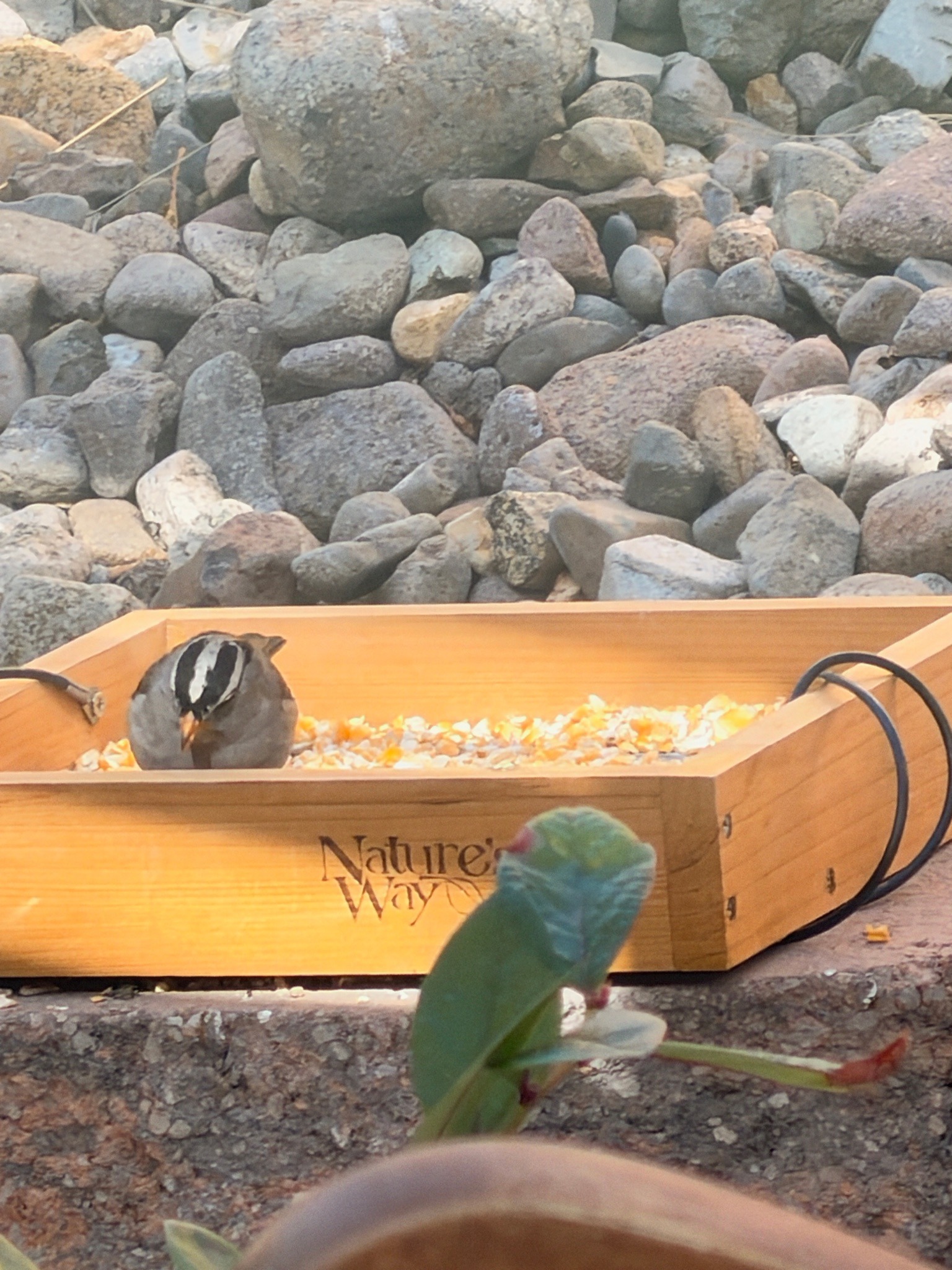
A large, long-tailed sparrow with a very distinct black-and-white striped head pattern. Often seen scratching on the ground or visiting backyard feeders.
Explore White-crowned Sparrow in the encyclopedia →Identify your own birds.
Get a report just like this from any photo or call, free.
Plumage & appearance
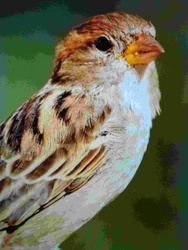
Adults have striking black-and-white stripes on the crown, a grey face, breast, and collar, and brown-streaked upperparts. Juveniles have similar patterns on the head, but the white stripes are replaced by reddish-brown and tan. Sexes are visually similar.
Key field marks
Distinctive bold black-and-white stripes on the head, clean grey breast, and pink or yellowish bill.
Size & weight
Length: 15–18 cm (5.9–7.1 in), Wingspan: 20–25 cm (7.9–9.8 in), Weight: 25–35 g (0.9–1.2 oz)
Voice — call & song
Song is a sweet, mournful series of clear whistles and trills starting with a high whistle. Calls include a sharp, metallic 'pink' or 'tsip'.
Diet & foraging
Primarily seeds, weed grains, and buds; during the breeding season and for feeding young, they consume many insects and spiders.
Habitat
Brushy thickets, forest edges, chaparral, suburban gardens, and agricultural hedgerows.
Migration & movement
Short to medium-distance migrant; northern populations move south for the winter, while western populations are often permanent residents.
Nesting & breeding
Builds an open cup nest of grass, twigs, and moss usually on the ground or low in a shrub. Lays 3 to 5 pale greenish or bluish eggs heavily marked with brown.
Similar species
White-throated Sparrow, which has a white throat patch and yellow spots near the lores; Golden-crowned Sparrow, which features a golden-yellow patch on the crown.
Ecological significance
Acts as an important seed disperser and helps control insect populations during the breeding season.
Conservation status
Least Concern, with a stable population trend.
Observation tips
Look for them in brushy areas, edges of forests, and suburban gardens, especially near cover. They readily visit ground-level or platform bird feeders offering seeds.
Interesting facts
White-crowned Sparrows are famous subjects for neurobiological research due to the complex learning involved in acquiring their regional dialects.
More like this