Order: Charadriiformes, Family: Laridae
Black-headed Gull (Juvenile)
Chroicocephalus ridibundus
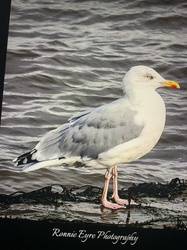
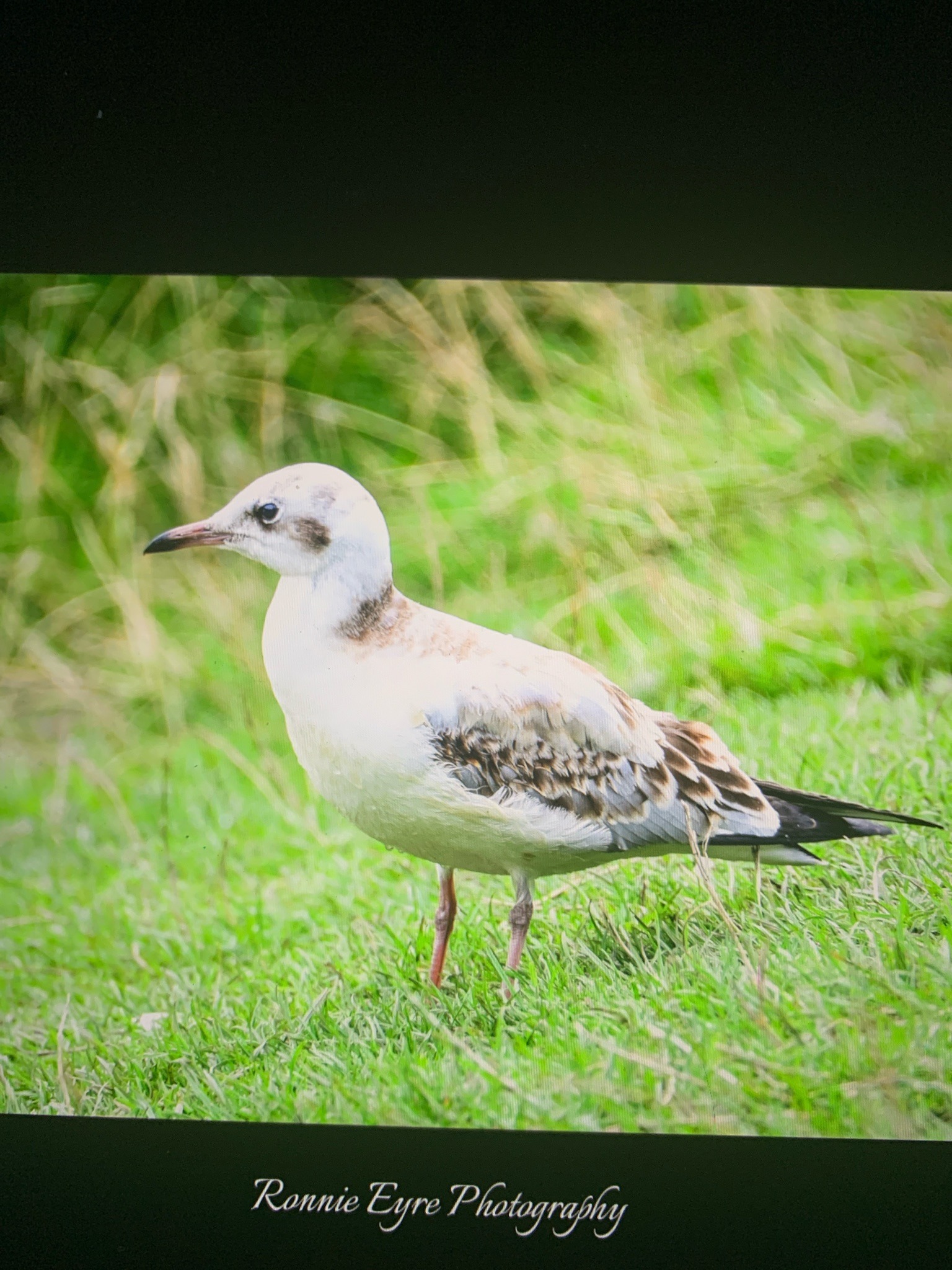
A small, agile gull with a white body, grey upperwings, and distinctive markings depending on age. Juveniles display warm brown mottling on the back and wings with a dark ear patch and incomplete dark collar.
Explore Black-headed Gull (Juvenile) in the encyclopedia →Identify your own birds.
Get a report just like this from any photo or call, free.
Plumage & appearance
Adults in breeding plumage have a dark chocolate-brown head, white body, pale grey wings with black wingtips, and red bill and legs. Non-breeding adults lose the dark head, showing only dark ear-spots. Juveniles, as shown in the image, have brownish mottling on the mantle and wing coverts, a dusky band across the hindneck, and a paler bill with a dark tip.
Key field marks
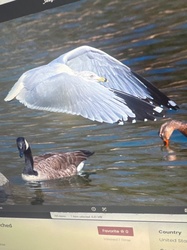
Small size, pale grey mantle, dark ear-spot on the side of the white head, reddish-pink legs, and dark-tipped bill in juveniles; distinctive triangular white wedge on the outer primary feathers visible in flight.
Size & weight
Length: 35-43 cm, Wingspan: 94-105 cm, Weight: 225-350 g.
Voice — call & song
A harsh, distinctive laughing or scolding call, often rendered as 'kree-ar' or 'kak-kak-kak'.
Diet & foraging
Omnivorous; feeds on insects, fish, seeds, worms, scraps, and small marine invertebrates. Forages by picking items from the surface of water, ground, or ploughed fields, and occasionally aerial hawking.
Habitat
Inland wetlands, lakes, rivers, marshes, coastal estuaries, agricultural lands, and urban areas such as parks and garbage dumps.
Migration & movement
Partial migrant. Northern populations migrate south for the winter, while western and southern European populations are largely resident.
Nesting & breeding
Breeds in colonies near water, typically on the ground among dense vegetation or on floating mats of reeds. Builds a cup nest out of plant material. Clutch size is usually 2 to 3 eggs, incubated by both parents for about 22-26 days.
Similar species
Bonaparte's Gull (smaller with a thinner bill and different underwing pattern) and Mediterranean Gull (larger with a heavier red bill and completely white wingtips in adults). Juvenile Black-headed Gulls are distinguished by their specific wing pattern and dark nape band.
Ecological significance
Acts as an opportunistic predator and scavenger, helping regulate insect populations and clearing organic waste in both aquatic and terrestrial ecosystems.
Conservation status
Least Concern, with a large and stable or increasing global population trend.
Observation tips
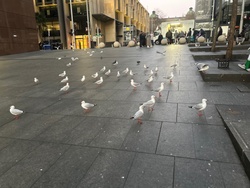
Easily observed near lakes, rivers, agricultural fields, and urban parks. They are quite habituated to humans and will readily approach for food.
Interesting facts
Despite their name, adult Black-headed Gulls actually have dark brown heads, not black, and they only sport this coloration during the summer breeding season. They are also known for noisy, aggressive mobbing behavior to drive off predators from their nesting colonies.
More like this