Order: Charadriiformes, Family: Laridae
Ring-billed Gull
Larus delawarensis
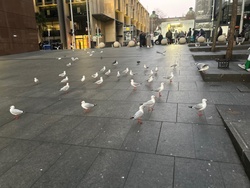
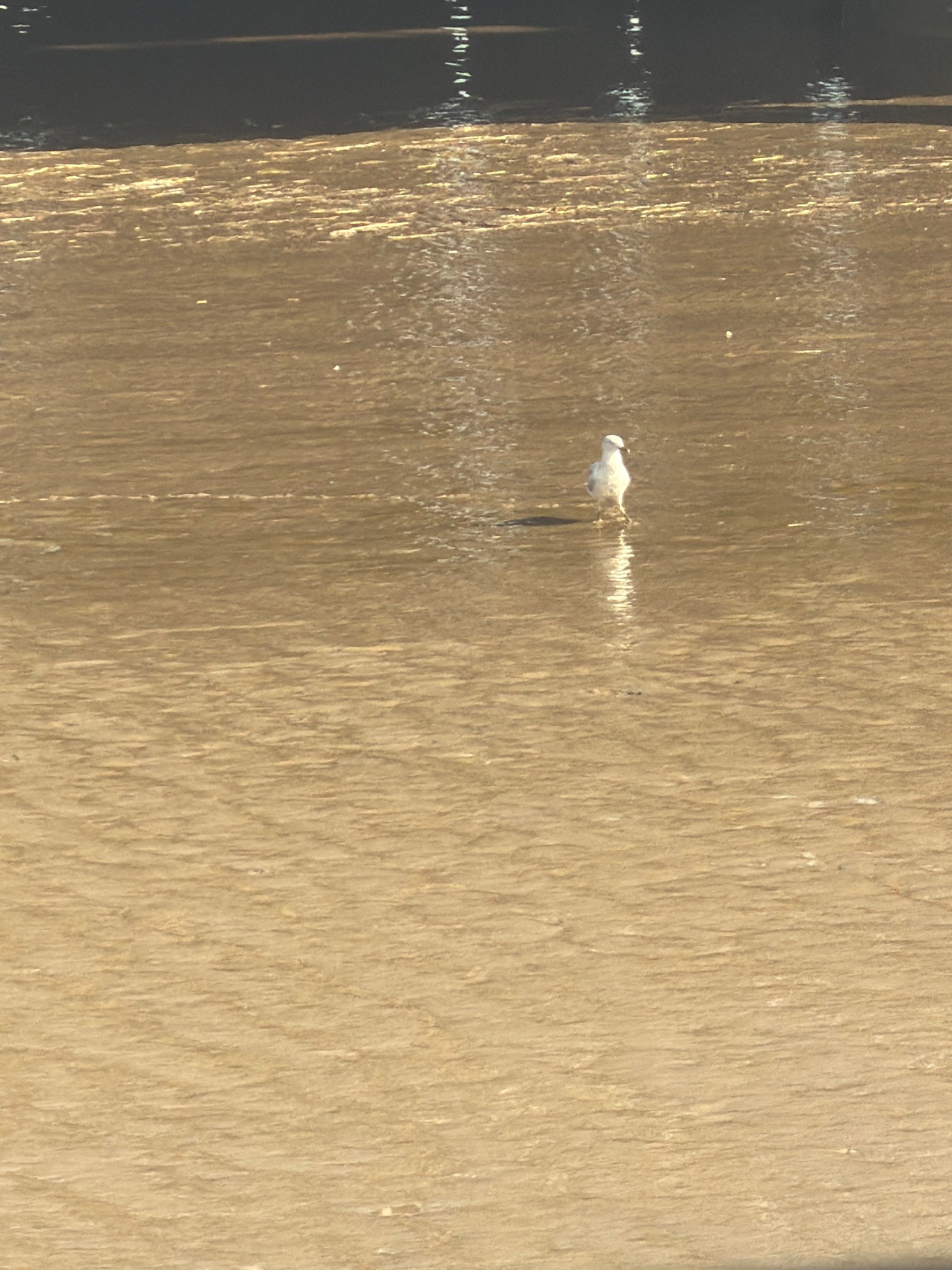
A medium-sized gull with a clean white body, soft gray upperparts, yellow legs, and the characteristic black ring encircling its yellow bill. Highly adaptable and frequently seen near water as well as inland parking lots and farmlands.
Explore Ring-billed Gull in the encyclopedia →Identify your own birds.
Get a report just like this from any photo or call, free.
Plumage & appearance
Adults have a white head, neck, and underparts, gray back and wings, black wingtips with white spots, and a distinctive dark ring around the yellow bill. Juveniles are mottled brown and gray with a pinkish-based bill and dark tail band. Non-breeding adults may show minor streaking on the head.
Key field marks
Medium size, gray back, yellow legs, and most importantly, a prominent black vertical ring around the yellow bill.
Size & weight
Length: 43-54 cm (17-21 in), Wingspan: 122-124 cm (48-49 in), Weight: 300-700 g (10.6-24.7 oz)
Voice — call & song
A high-pitched, strident mewing or laughing call, often written as 'kik-kik-kik' or a loud, wailing cry.
Diet & foraging
Omnivorous and opportunistic. Eats fish, insects, earthworms, rodents, grain, seeds, and human garbage or handouts.
Habitat
Coasts, lakes, rivers, marshes, agricultural fields, open country, and urban areas such as parking lots and landfills.
Migration & movement
Migratory; most northern populations move south for the winter, though some birds remain year-round where open water and food sources are available.
Nesting & breeding
Nests in colonies on the ground on islands, beaches, or grassy areas. Constructs a shallow scrape lined with vegetation. Clutch size is typically 2-3 eggs, incubated by both parents.
Similar species
Herring Gull (larger, pink legs, lacks the distinct black ring on the bill) and Mew Gull (smaller, rounder head, shorter bill without the bold ring).
Ecological significance
Acts as an opportunistic scavenger helping control insect pests and clean up organic debris, though large populations can sometimes impact local ecosystems or human refuse management.
Conservation status
Least Concern, with a stable or increasing population trend.
Observation tips
Easily observed near lakeshores, coastlines, agricultural fields, and even urban shopping center parking lots. Look for flocks foraging on the ground or soaring overhead.
Interesting facts
Ring-billed Gulls are known to drop hard-shelled prey like clams and crabs onto hard surfaces from the air to break them open. They are also adept at kleptoparasitism, stealing food from other birds.
More like this