Order: Charadriiformes, Family: Laridae
Inca Tern
Larosterna inca
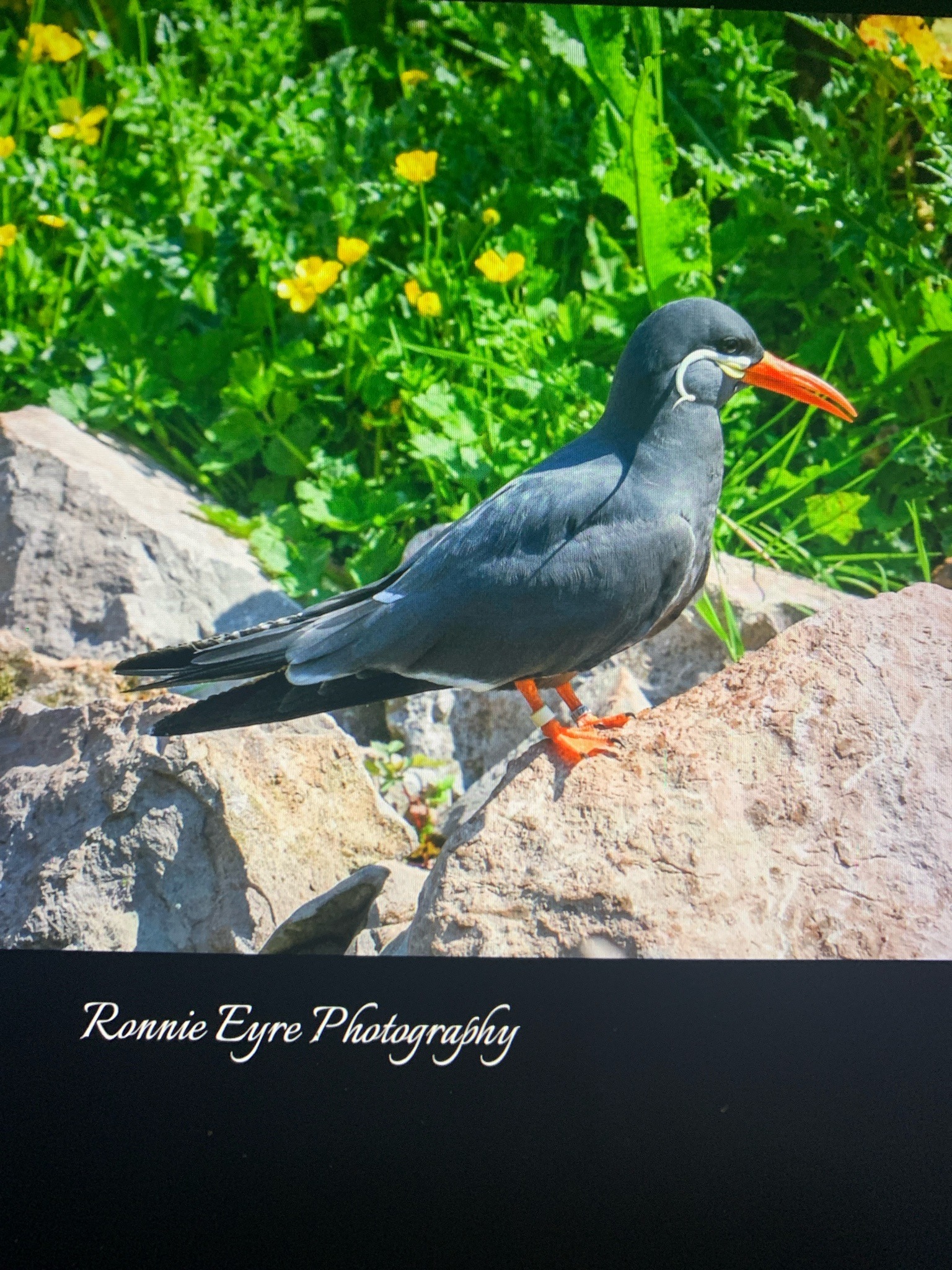
A medium-sized, distinctive seabird immediately recognizable by its dark grey plumage and iconic curling white mustaches on either side of its head, complemented by a vibrant red bill and legs.
Explore Inca Tern in the encyclopedia →Identify your own birds.
Get a report just like this from any photo or call, free.
Plumage & appearance
Dark grey body with white moustachial plumes that curl outwards at the base of the bill. The bill and feet are bright reddish-orange. White tips on the secondary wing feathers are often visible in flight. Juveniles are browner with less distinct white plumes.
Key field marks
Dark grey body, striking curled white mustachial plumes, bright red-orange bill and feet, and white wing-edge tips.
Size & weight
Length: 39-41 cm, Wingspan: approximately 70-80 cm, Weight: 165-215 g
Voice — call & song
Distinctive cat-like meowing calls, often described as a nasal 'mew' or laughing sound.
Diet & foraging
Mainly small fish such as anchovies, obtained by plunge-diving into the ocean or snatching prey from the surface.
Habitat
Coastal marine environments, rocky shores, cliffs, and offshore islands associated with cold, nutrient-rich upwelling currents.
Migration & movement
Generally sedentary or a local nomad, moving in response to changes in food availability caused by oceanic currents like El Niño.
Nesting & breeding
Nests in rock crevices, cliff ledges, or abandoned burrows of other animals. Usually lays 1 to 2 eggs, incubated by both parents.
Similar species
Unmistakable within its range due to the unique white mustaches and bright red bill; no other tern shares this exact combination.
Ecological significance
Acts as an important indicator of marine ecosystem health along the Humboldt Current and contributes to guano deposition on coastal islands.
Conservation status
Near Threatened with a decreasing population trend, primarily due to overfishing, El Niño events, and habitat disturbance.
Observation tips
Look along rocky coasts, cliffs, and islands within its South American range, often associating with fishing boats, sea lions, and other seabirds.
Interesting facts
The Inca Tern's curling white mustaches actually grow longer and more prominent as the bird ages, signaling maturity to potential mates.
More like this