Order: Charadriiformes, Family: Laridae
Black-legged Kittiwake
Rissa tridactyla
A pelagic gull species known for its cliff-nesting habits and distinctive call. It spends most of its life at sea, returning to steep coastal cliffs only to breed.
Explore Black-legged Kittiwake in the encyclopedia →Identify your own birds.
Get a report just like this from any photo or call, free.
Plumage & appearance
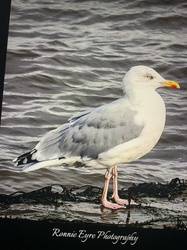
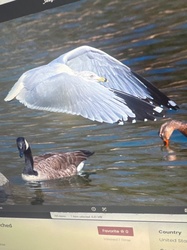
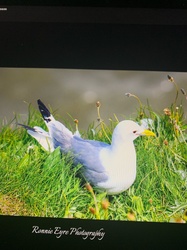
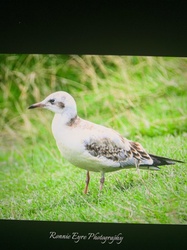
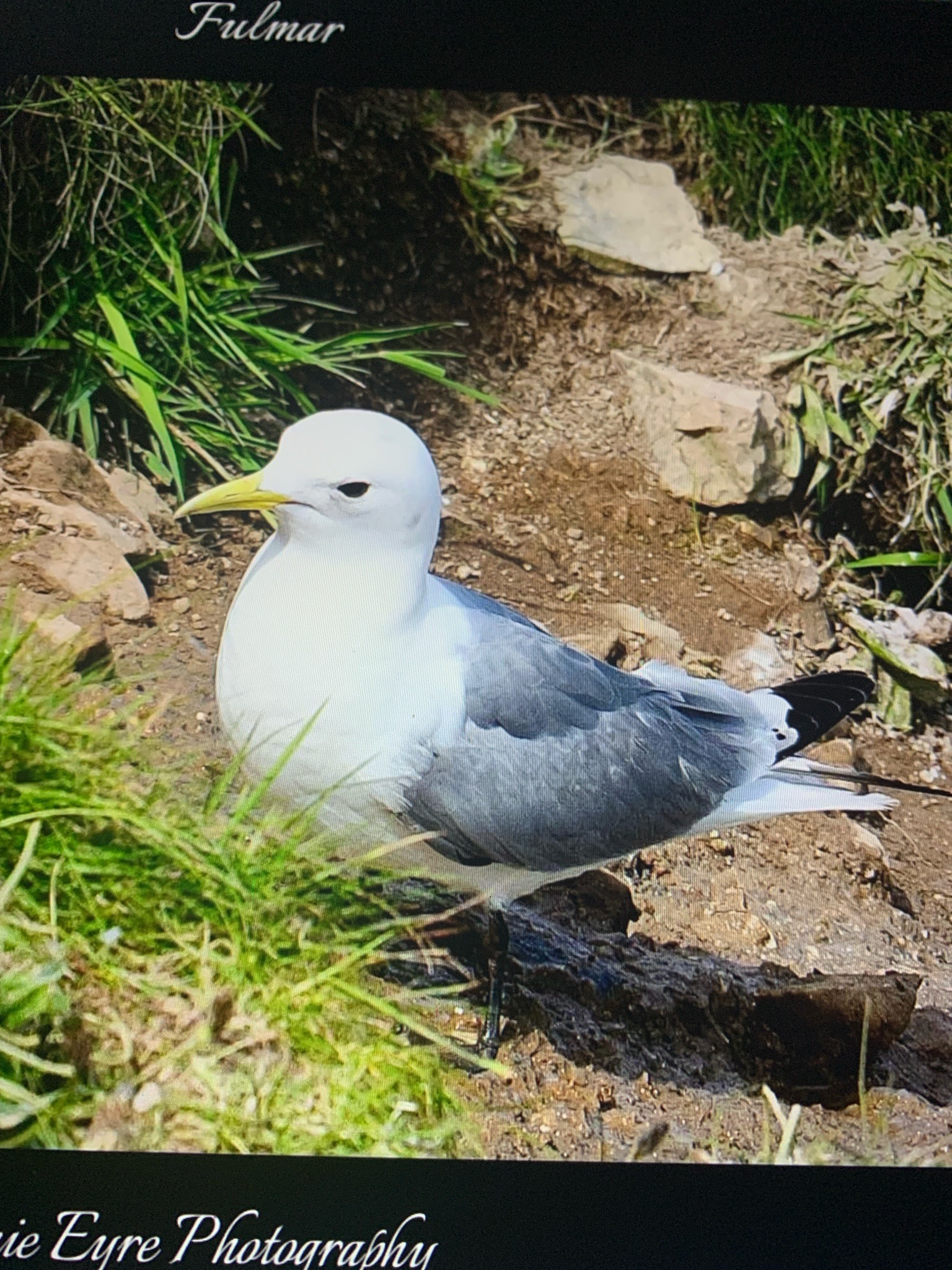
Adults have a pure white head, neck, and underparts, pearl-gray back and upper wings, and distinctive solid black wingtips that look as if they were dipped in ink. The bill is yellowish-green, and legs are black. Juveniles have a striking dark 'W' pattern across their wings and a black collar on the hindneck. Sexes are visually identical.
Key field marks
Pure white head without any dark markings in summer, bright yellow-green bill, solid black wingtips lacking white spots, and entirely black legs.
Size & weight
Length: 38-40 cm, Wingspan: 91-105 cm, Weight: 300-500 g
Voice — call & song
A loud, piercing, and rhythmic call that sounds remarkably like its name: 'kiti-wa-ak, kiti-wa-ak', especially noisy at breeding colonies.
Diet & foraging
Feeds primarily on small schooling fish (such as sand lances, capelin, and herring) and marine invertebrates like zooplankton and squid, obtained by surface-dipping or shallow plunging.
Habitat
Pelagic (open ocean) during the non-breeding season; coastal cliffs, rocky shores, and marine environments during the breeding season.
Migration & movement
Migratory and pelagic. Spends the winter months far out at sea in the North Atlantic and Pacific, dispersing widely rather than staying near land.
Nesting & breeding
Nests in dense colonies on exceptionally narrow ledges of sheer coastal cliffs. Constructs a cup-shaped nest from mud, moss, and seaweed. Usually lays 1 to 3 eggs, incubated by both parents.
Similar species
Can be confused with other small gulls like the Common Gull or Bonaparte's Gull, but distinguished instantly by its entirely black wingtips lacking white 'mirrors' and its preference for sheer cliff nesting.
Ecological significance
Acts as an important bioindicator of marine ecosystem health and fish stock availability in the North Atlantic and Pacific. Their breeding success often reflects changes in ocean temperatures and prey abundance.
Conservation status
Vulnerable (IUCN Red List), experiencing population declines primarily driven by climate change and depletion of forage fish.
Observation tips
Visit steep sea cliffs or offshore islands in the spring and summer where seabird colonies gather. Bring binoculars or a spotting scope to observe them on their narrow cliff-ledge nests.
Interesting facts
Unlike many gulls that nest on the ground and whose chicks are mobile, kittiwake chicks have adapted to sheer cliffs by instinctually staying still rather than wandering off the narrow ledges.
More like this