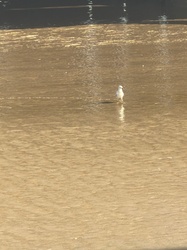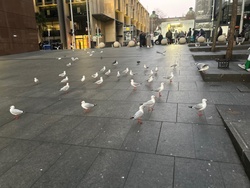
Order: Charadriiformes, Family: Laridae
Ring-billed Gull
Larus delawarensis
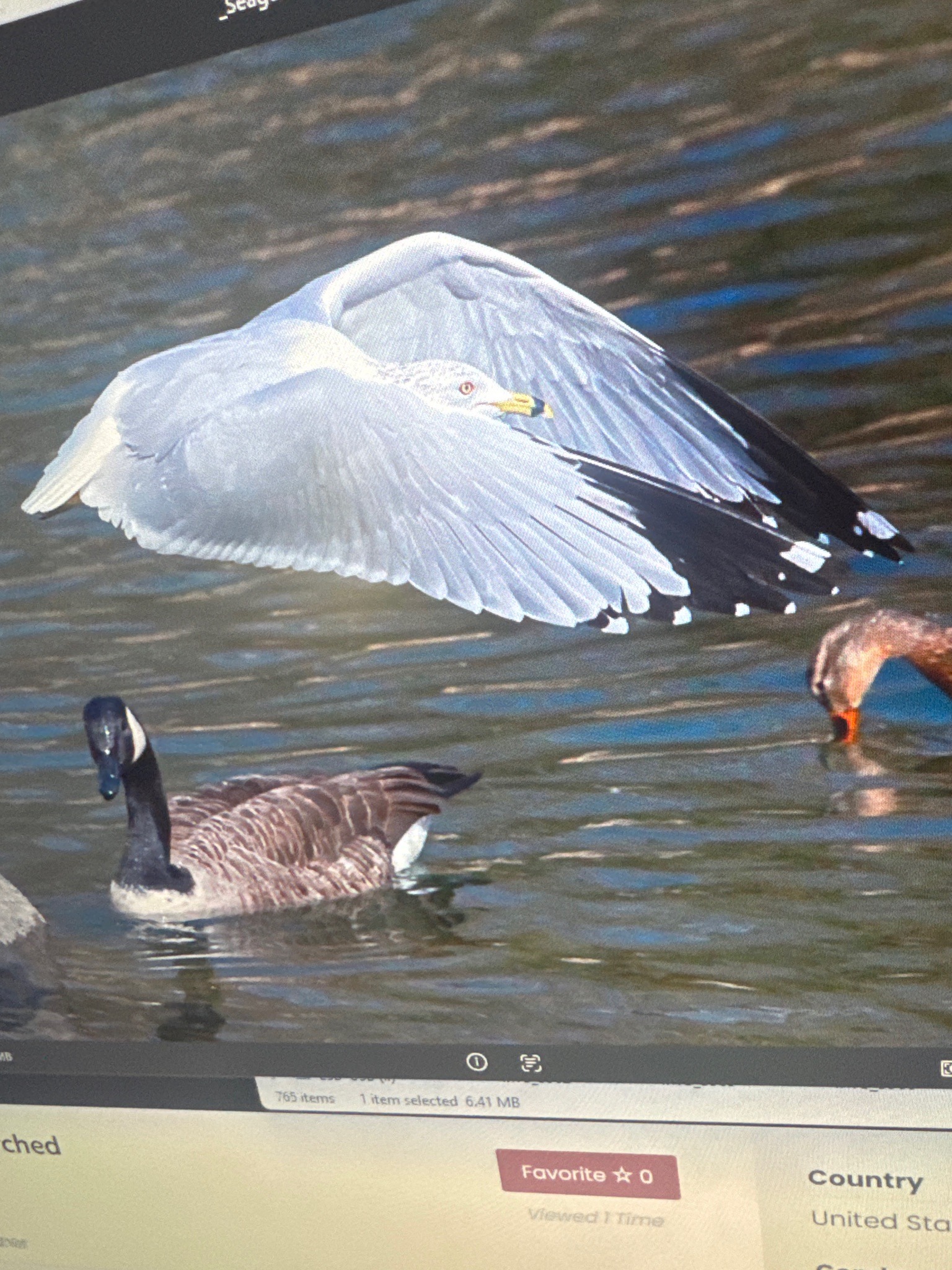
A medium-sized, elegant gull with bright yellow legs, a ringed bill, and graceful flight, commonly found near both bodies of fresh water and coastal marine environments.
Explore Ring-billed Gull in the encyclopedia →Identify your own birds.
Get a report just like this from any photo or call, free.
Plumage & appearance
Adults feature a pale gray back and wings, white head, neck, and underparts, black wingtips with white spots (mirrors), and a distinct black ring around the yellow bill. Juveniles are mottled brown with a pinkish-fleshy bill base and dark tip, taking about three years to reach full adult plumage.
Key field marks
Yellow bill with a clean black ring, pale gray mantle, black wingtips with white spots, and greenish-yellow legs.
Size & weight
Length: 43-54 cm (17-21 in), Wingspan: 122-124 cm (48-49 in), Weight: 300-700 g (10.6-24.7 oz)
Voice — call & song
A high-pitched, strident 'mewing' or laughing cackle, often transcribed as 'ki-ki-ki' or a sharp yelp when agitated or defending territory.
Diet & foraging
Omnivorous and opportunistic. Eats fish, insects, earthworms, rodents, grain, fruit, and human refuse or discarded food.
Habitat
Inland lakes, rivers, marshes, agricultural fields, coastlines, and urban environments such as parking lots and landfills.
Migration & movement
Migratory; most northern populations move south for the winter, though some populations remain resident near ice-free water bodies.
Nesting & breeding
Breeds in colonies on the ground on islands, beaches, or rocky outcrops. Constructs a shallow scrape lined with plant material. Usually lays 2 to 4 eggs, incubated by both parents.
Similar species
Herring Gull (larger, pink legs, lacks the distinct black ring on the bill) and Mew Gull (smaller, shorter bill without a ring, rounder head).
Ecological significance
Acts as an opportunistic scavenger and predator, helping to recycle organic waste and naturally controlling populations of small aquatic invertebrates and insects.
Conservation status
Least Concern, with stable or increasing population trends across North America.
Observation tips
Look near large inland lakes, rivers, agricultural fields, and fast-food parking lots. They are very habituated to humans and easy to approach closely for photography.
Interesting facts
Ring-billed Gulls are highly intelligent and adaptable, frequently using foot-paddling behavior on wet soil or shallow water to trick earthworms into coming to the surface.
More like this