Order Charadriiformes, Family Scolopacidae
Whimbrel
Numenius phaeopus
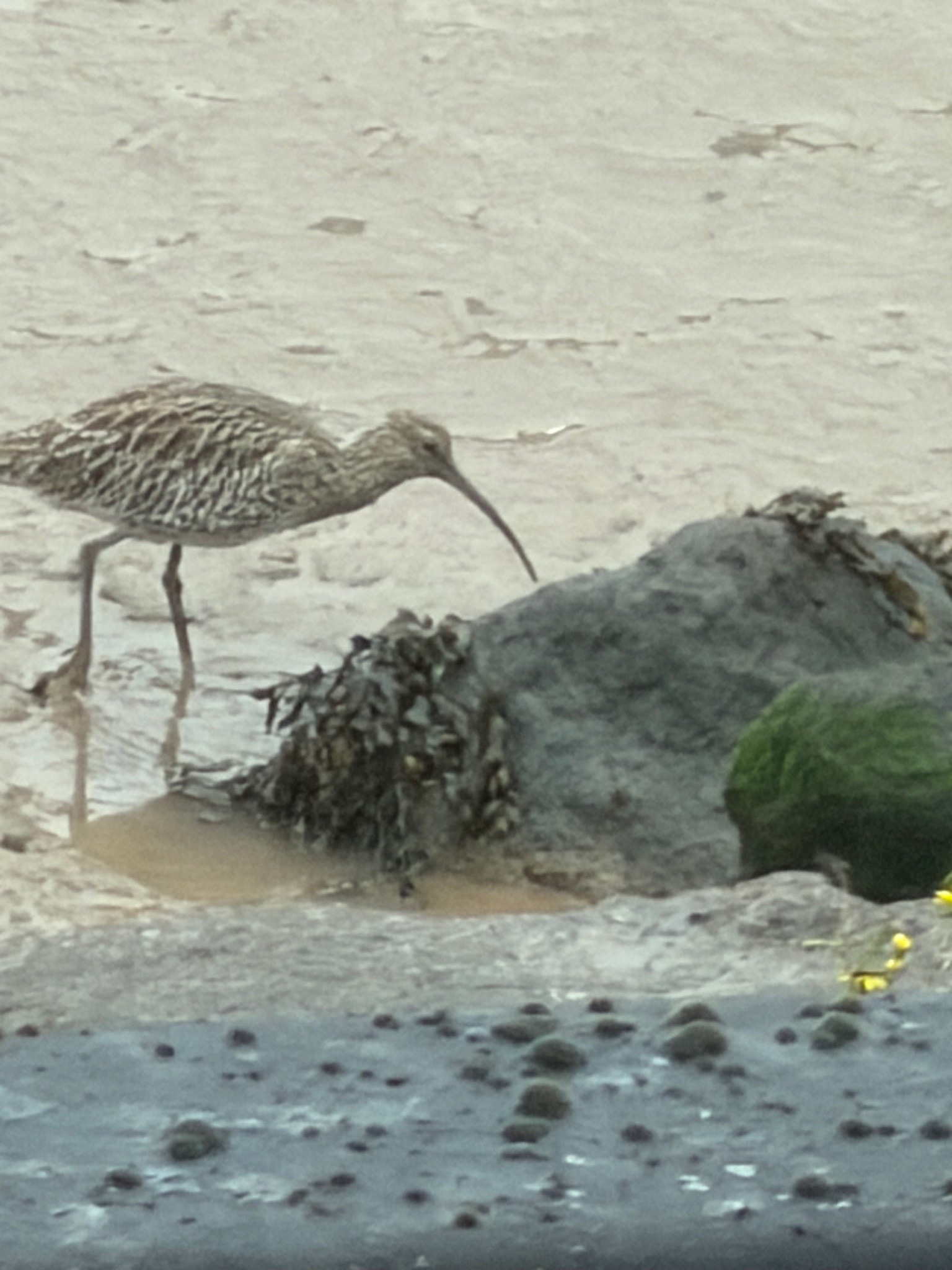
A medium-large shorebird characterized by its long, decurved bill and striped head pattern. Active and vocal when foraging along intertidal mudflats and rocky shores.
Explore Whimbrel in the encyclopedia →Identify your own birds.
Get a report just like this from any photo or call, free.
Plumage & appearance
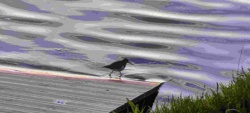
Mottled brown upperparts with dark streaks, buffy underparts with dark streaking on the breast and flanks. Distinctive pale central crown stripe bordered by dark lateral crown stripes. Sexes are similar in appearance, though females often have slightly longer bills.
Key field marks
Decurved bill (shorter and more evenly curved than a curlew's), striped crown with a pale central line, and mottled brown plumage.
Size & weight
Length: 37-45 cm, Wingspan: 75-90 cm, Weight: 270-490 g
Voice — call & song
A characteristic, bubbling series of whistling notes that often accelerates and descends in pitch ('titi-ti-ti-ti').
Diet & foraging
Mainly crabs, marine worms, mollusks, insects, and occasionally berries during the breeding season. Forages by probing mud or picking prey from the surface with its curved bill.
Habitat
Coastal mudflats, estuaries, sandy beaches, rocky shores, and sometimes inland tundra during the breeding season.
Migration & movement
Highly migratory, undertaking long-distance flights between Arctic breeding grounds and tropical/temperate coastal wintering areas.
Nesting & breeding
Nests on the ground in a shallow scrape lined with lichens and leaves, usually in open tundra. Clutch size is typically 4 eggs, incubated by both parents.
Similar species
Eurasian Curlew, which is significantly larger with a much longer bill and lacks the distinct crown stripes of the Whimbrel.
Ecological significance
Acts as an important predator of intertidal invertebrates, helping to regulate populations of crabs, worms, and mollusks in coastal ecosystems.
Conservation status
Least Concern, with stable to moderately declining global population trends depending on the flyway.
Observation tips
Look for them probing mudflats or resting on coastal rocks during low tide. They can be wary, so use binoculars or a spotting scope to observe them without flushing.
Interesting facts
Whimbrels are capable of flying non-stop for thousands of kilometers over open ocean during migration, relying on stored fat reserves.
More like this