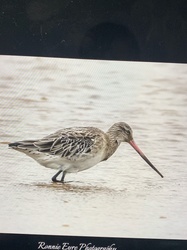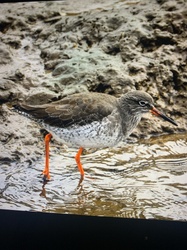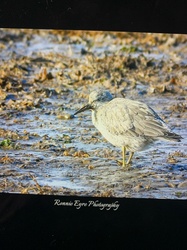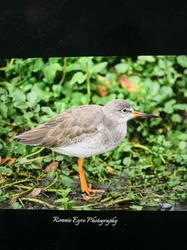
Order: Charadriiformes, Family: Scolopacidae
Pectoral Sandpiper
Calidris melanotos
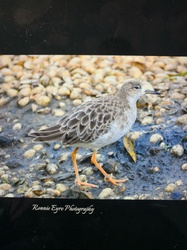
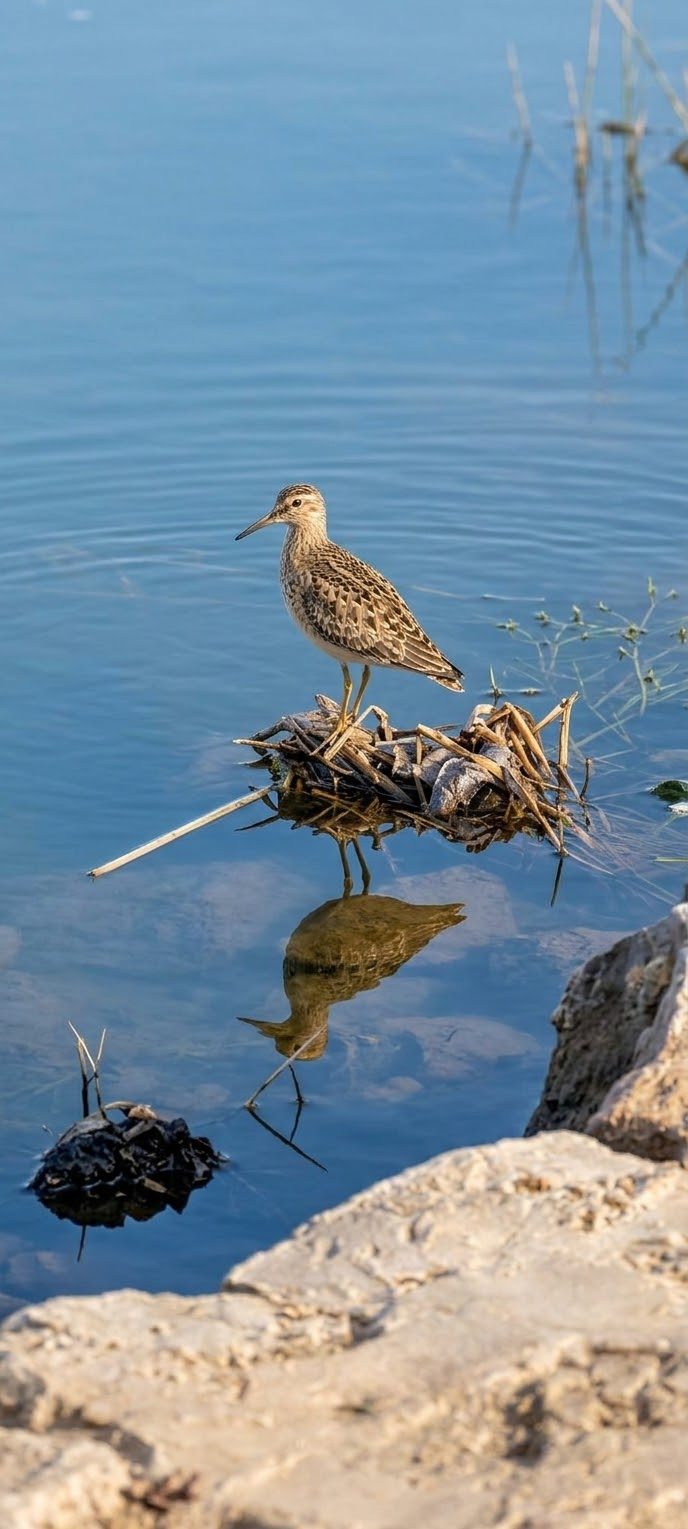
A medium-sized sandpiper with a slightly decurved bill, streaked brown upperparts, and a sharply defined breast band that contrasts sharply with a white belly. Known for standing upright and alert.
Explore Pectoral Sandpiper in the encyclopedia →Identify your own birds.
Get a report just like this from any photo or call, free.
Plumage & appearance
Mottled brown and black upperparts with distinctive buff-colored breast heavily streaked with dark brown, sharply contrasting with a clean white belly. Males are noticeably larger than females with a more distinctly demarcated breast band.
Key field marks
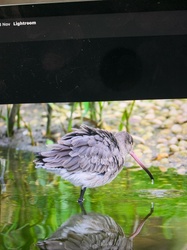
Sharp cutoff between the streaked buff breast and the clean white belly, medium-sized slightly decurved dark bill, yellowish legs, and a heavily patterned brown back.
Size & weight
Length: 19-23 cm (7.5-9 inches), Wingspan: 38-45 cm (15-18 inches), Weight: 40-120 g (depending on sex and migration stage).
Voice — call & song
A low, resonant, vibrating note or buzz given in flight during courtship, and a soft, dry 'prrit' call when flushed.
Diet & foraging
Insects, spiders, and small aquatic invertebrates, which they forage for by probing mud or picking food from the surface.
Habitat
Arctic tundra during the breeding season; muddy freshwater wetlands, flooded pastures, and temporary pools during migration.
Migration & movement
Highly migratory. Long-distance migrant traveling from arctic breeding grounds to southern South America and Australasia.
Nesting & breeding
Nests on the ground in a shallow scrape lined with leaves and moss, hidden in tundra vegetation. Clutch size is typically 4 eggs. The male performs elaborate aerial display flights and is polygynous, leaving parental care entirely to the female.
Similar species
Sharp-tailed Sandpiper, which is very similar in appearance but generally has a brighter rufous crown and is primarily found in Asia and Australia, though vagrants do occur.
Ecological significance
Acts as an important predator of aquatic and terrestrial invertebrates in tundra and wetland ecosystems, helping to regulate insect populations while serving as prey for larger avian and mammalian predators.
Conservation status
Least Concern, with a generally stable global population.
Observation tips
Look for them in muddy edges of freshwater marshes, flooded fields, and coastal mudflats during migration. They often freeze when approached, making them easier to spot.
Interesting facts
Male pectoral sandpipers have an inflatable throat sac used to produce a booming, low-frequency mating call during courtship displays, making them one of the most vocally unique shorebirds.
More like this