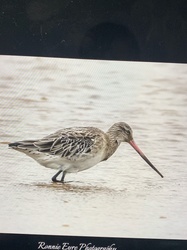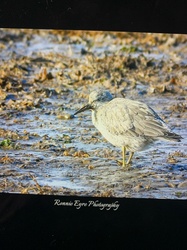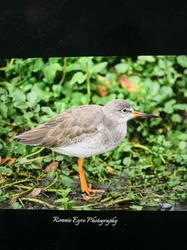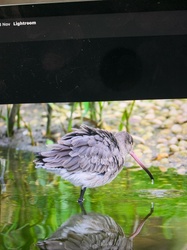
Order: Charadriiformes, Family: Scolopacidae
Red Knot
Calidris canutus
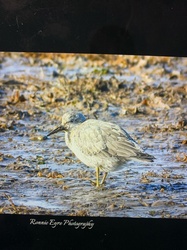
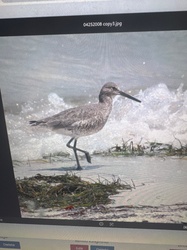
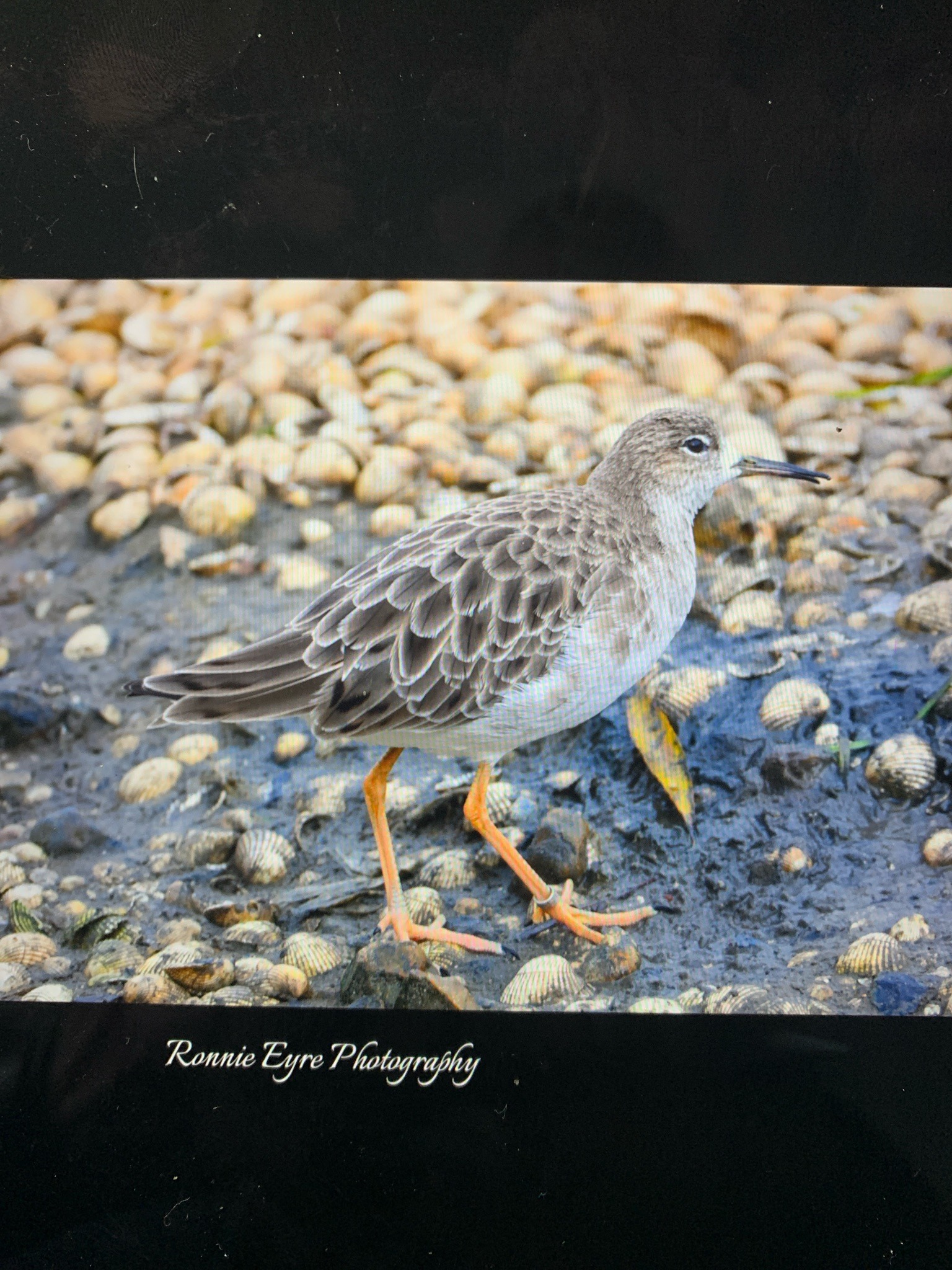
A medium-sized, stocky sandpiper with a short, straight dark bill, relatively short greenish or yellowish-orange legs, and a compact shape.
Explore Red Knot in the encyclopedia →Identify your own birds.
Get a report just like this from any photo or call, free.
Plumage & appearance
In breeding plumage, the face, breast, and underparts are a rich brick-red, while the upperparts are dark brown with buff and black scalloping. Non-breeding adults are plain gray above and whitish below with faint breast streaking. Juveniles feature scaled upperparts with buff fringes.
Key field marks
Stocky body, short dark bill, relatively short legs, plain gray winter upperparts or brick-red breeding underparts, and pale wing stripe in flight
Size & weight
Length: 23-25 cm (9-10 inches); Wingspan: 47-53 cm (19-21 inches); Weight: 100-200 g
Voice — call & song
A low, soft, musical 'knut' or 'tut-tut' call, often given in flight
Diet & foraging
Invertebrates such as hard-shelled mollusks, small crabs, and marine worms, swallowed whole and crushed by a muscular gizzard
Habitat
Arctic tundra during breeding season; coastal mudflats, estuaries, sandbars, and marine beaches during migration and winter
Migration & movement
Long-distance migrant, undertaking some of the longest journeys of any bird, traveling up to 15,000 km from the Arctic to southern wintering grounds
Nesting & breeding
Nests on the Arctic tundra in a shallow scrape on the ground lined with leaves and lichens. Clutch size is typically 4 eggs. Both parents incubate and tend to the young.
Similar species
Distinguished from other medium-sized calidrid sandpipers by its stockier build, shorter bill, and distinctive grayish non-breeding or reddish breeding coloration.
Ecological significance
Acts as a key indicator of coastal ecosystem health and plays a major role in intertidal food webs, notably synchronizing its migration with horseshoe crab spawning to feed on eggs.
Conservation status
Near Threatened globally, with some subspecies classified as Endangered due to habitat loss and decline in food sources
Observation tips
Look for them in large, tightly packed flocks on coastal mudflats, sandy beaches, and estuaries, often flying in synchronized, twisting formations.
Interesting facts
The Red Knot is famous for B95, an individual banded in Argentina that lived to be at least 20-22 years old and flew the equivalent of flying to the moon and back several times during its lifetime.
More like this