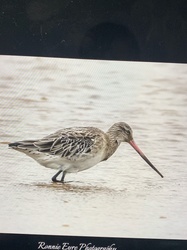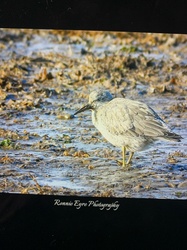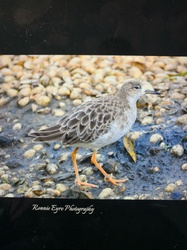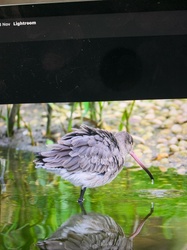
Order: Charadriiformes, Family: Scolopacidae
Redshank
Tringa totanus
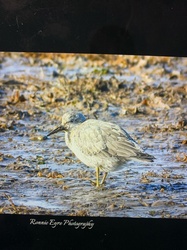
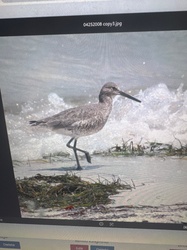
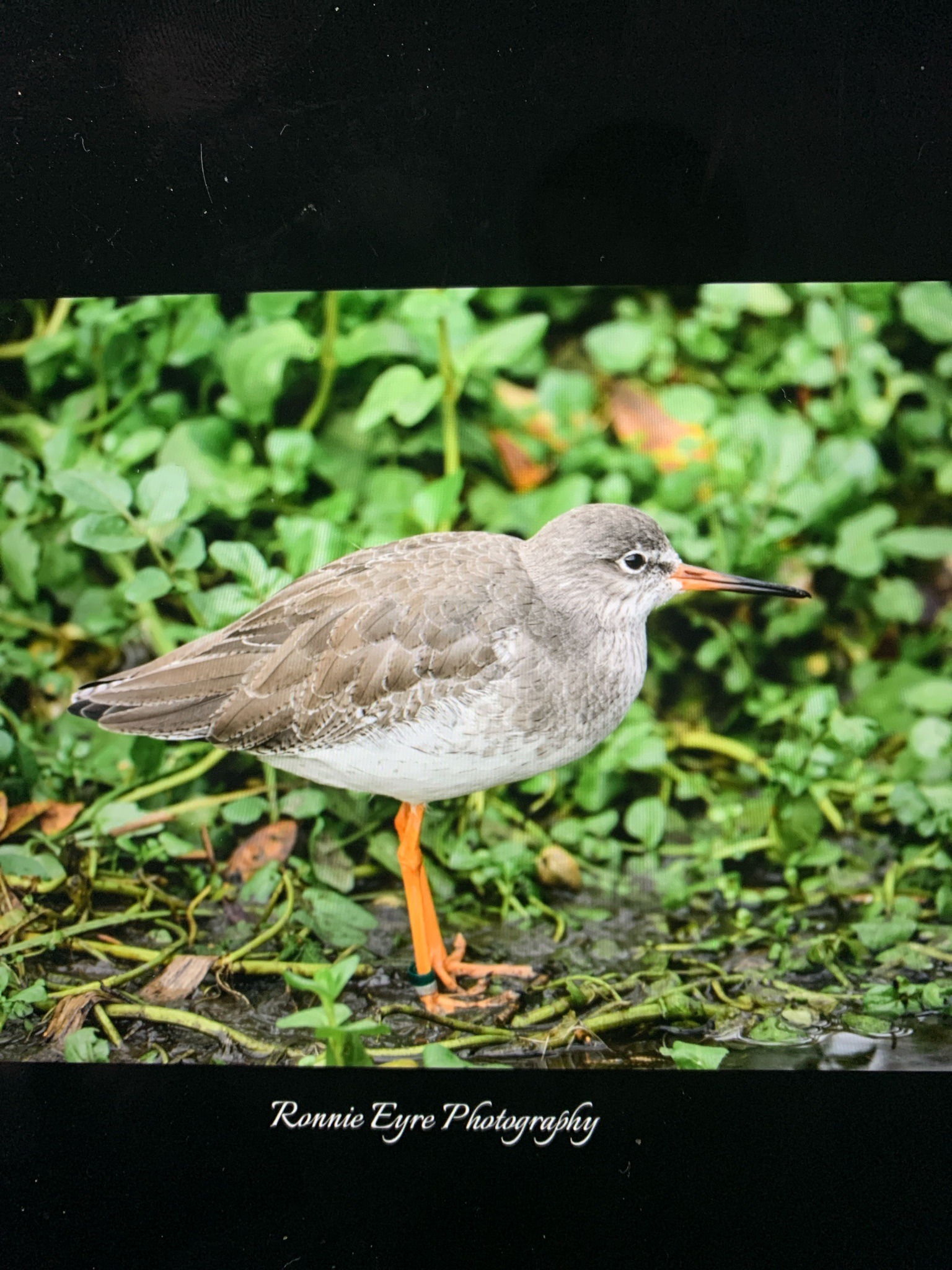
A medium-sized wader instantly recognizable by its vibrant bright orange-red legs and a long bill that is red at the base and dark at the tip. It is an alert, vocal, and often nervous bird that bobs its body when disturbed.
Explore Redshank in the encyclopedia →Identify your own birds.
Get a report just like this from any photo or call, free.
Plumage & appearance
Adults in breeding plumage have heavily streaked brown and grey upperparts with darker markings, and a whitish underbelly with dark spots and streaks on the breast. Non-breeding plumage is duller, more uniform grey-brown above with less distinct streaking below. Juveniles resemble non-breeding adults but have warmer, buff fringes on the upperpart feathers. Sexes are visually similar.
Key field marks
Bright orange-red legs, red-based bill with a dark tip, white trailing edge to the wings visible in flight, and a white wedge shape extending up the lower back.
Size & weight
Length: 24-27 cm, Wingspan: 47-53 cm, Weight: 85-155 g
Voice — call & song
A loud, musical, and piping 'tew-hu-hu' or a rhythmic fluting song given in display flight.
Diet & foraging
Invertebrates including insects, crustaceans, molluscs, worms, and occasionally small fish or seeds, foraged by probing mud or picking items from the surface.
Habitat
Wet grasslands, coastal saltmarshes, estuaries, mudflats, flooded inland fields, and the shores of lakes and slow-moving rivers.
Migration & movement
Partial migrant. Northern populations are strictly migratory, moving south for the winter, while western and southern European populations are largely resident.
Nesting & breeding
Nests on the ground in a shallow scrape hidden amongst tall grass or vegetation near water. Lays a clutch of typically 4 eggs. Both parents incubate and tend to the precocial chicks.
Similar species
Spotted Redshank (Tringa erythropus), which is larger, longer-legged, and has an all-dark bill in breeding plumage; Common Greenshank (Tringa nebularia), which is larger with an upturned greenish bill.
Ecological significance
Acts as an important predator of benthic invertebrates in wetlands and intertidal mudflats, helping to regulate populations and cycle nutrients in coastal and freshwater ecosystems.
Conservation status
Least Concern, with a generally stable global population trend, though locally affected by wetland drainage and agricultural intensification.
Observation tips
Look for them in coastal marshes, estuaries, and wet meadows. They are very vocal and will often sound an alarm as soon as human observers approach, making them easy to locate but challenging to approach closely without disturbing.
Interesting facts
Often referred to as the 'sentinel of the marshes' because its loud alarm calls warn other wetland birds and animals of approaching predators or humans.
More like this